


Patient-derived organoids in hematologic malignancies
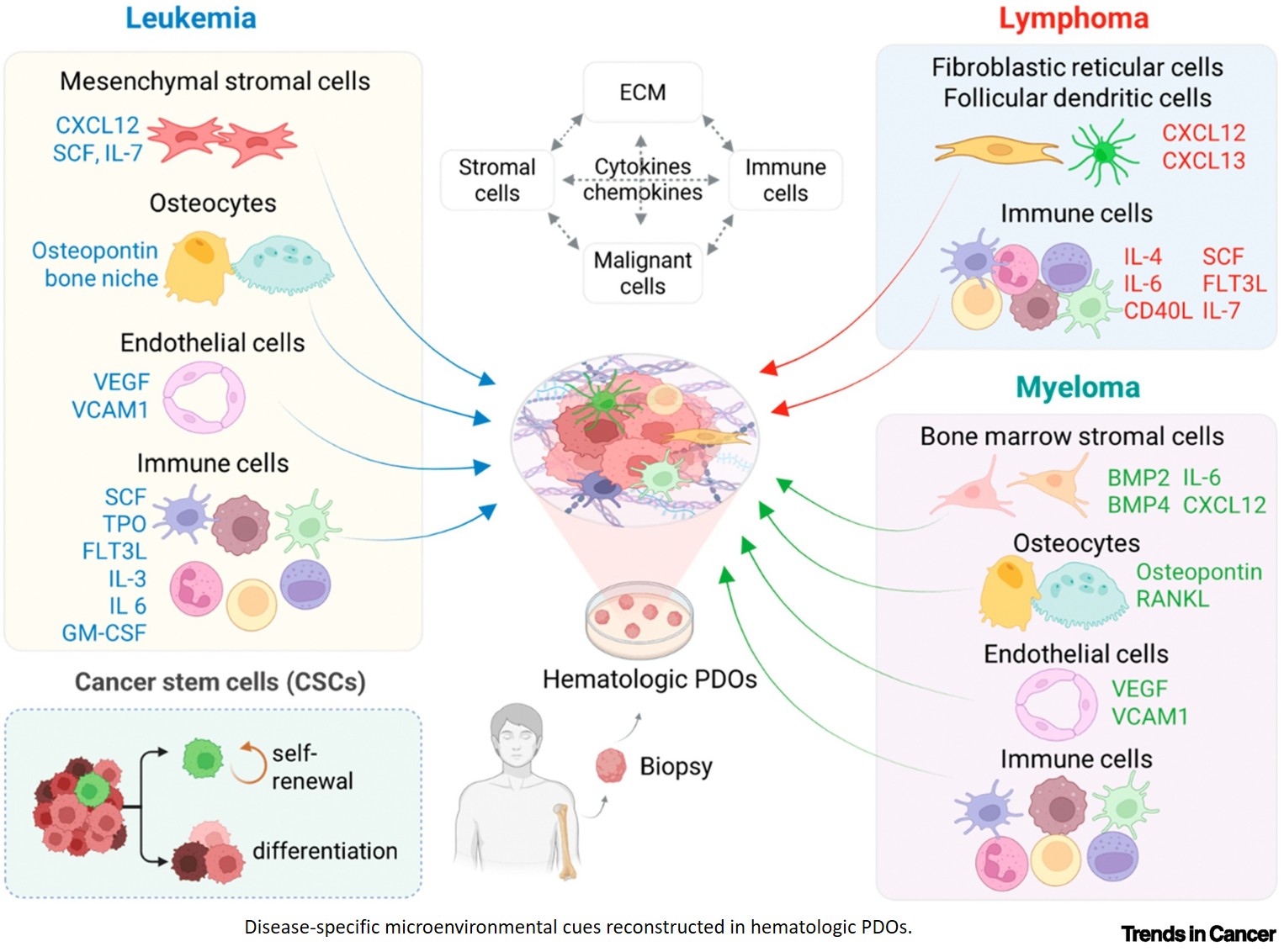
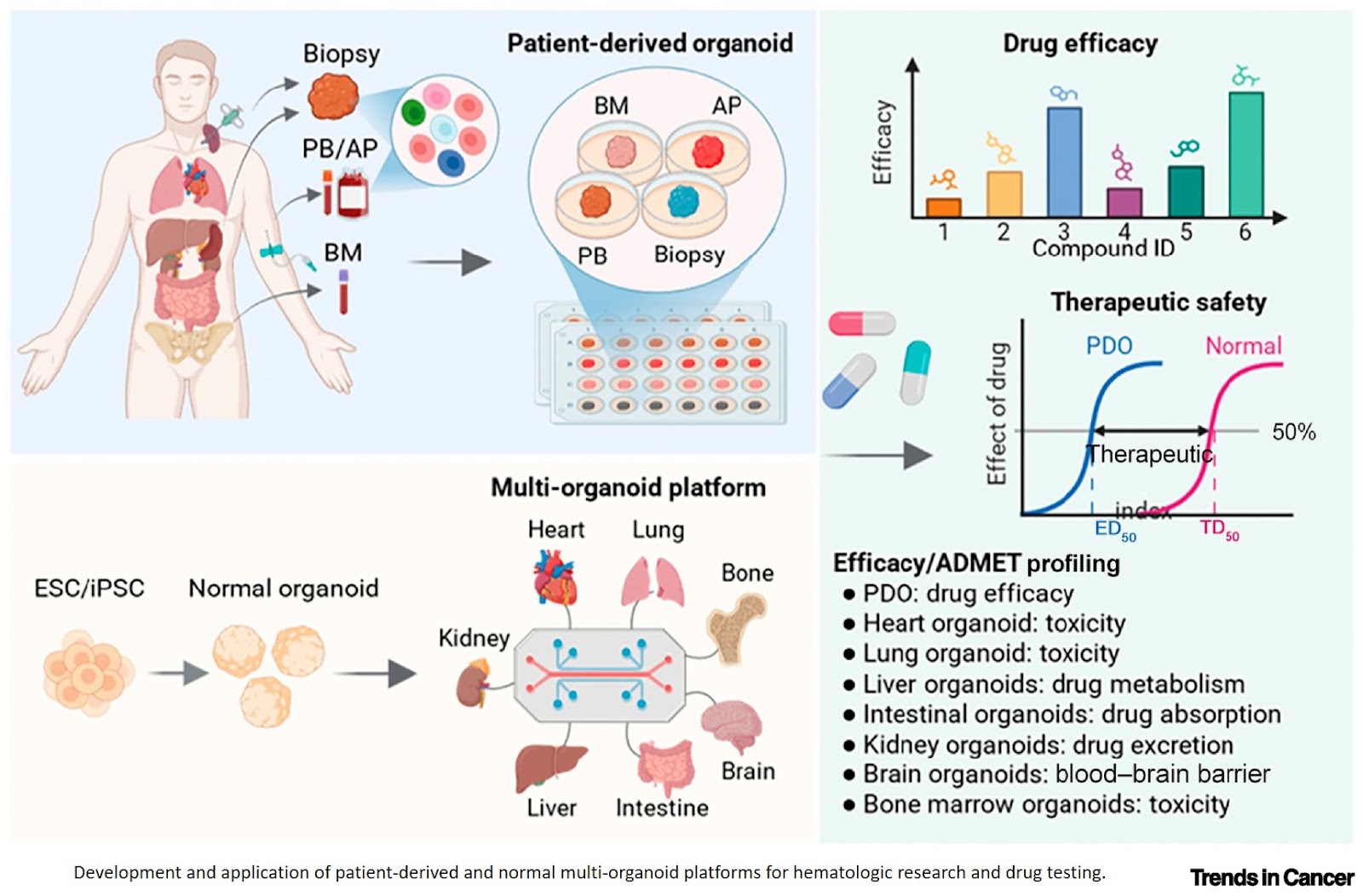
Hematologic patient-derived organoids capture niche-dependent biology, enabling human-specific modeling of drug resistance, immune evasion, and cancer stem cell dynamics across leukemia, lymphoma, and myeloma.
Immunocompetent, stroma-integrated patient-derived organoid models preserve native tumor architecture and microenvironmental cues, enabling physiologically relevant assessment of immunotherapies.
High-throughput platforms (microfluidics, bioprinting, and robotics) are enabling hematologic patient-derived organoid pharmacotyping and biomarker discovery for precision oncology.
Genetic manipulation in organoids (Clustered Regularly Interspaced Short Palindromic Repeats (CRISPR)-based editing and induced pluripotent stem cell-derived niches) accelerates mechanism-of-action studies and models therapy resistance in a human relevant context.
Multi-organoid systems integrating normal organoids with patient-derived organoids improve the prediction of systemic and metabolite-driven toxicities, reducing reliance on animal models.
https://www.cell.com/trends/cancer/fulltext/S2405-8033(26)00130-5