

Small number of ‘highly plastic’ cancer cells drive disease progression and treatment resistance
A small number of cancer cells with the ability to change their identities and behaviors appear to be a key driver of cancer progression and its ability to evolve resistance to treatment.
Targeting this subpopulation of “highly plastic” cells may make current treatments more effective and could potentially help prevent aggressive tumors from forming, according to a new study published in Nature.
“Scientists have suspected that it’s really a small subset of cells that drives cancer’s ability to adapt and resist treatment, but efforts to study and target these cells directly have been limited,” says the study senior author. “Our goal was to pinpoint these cells and understand their activity over the life of a tumor.”
For this study, the team used a mouse model of lung cancer and developed a sophisticated method that allowed them to highlight and track cells with high plasticity before and after different treatments.
And while the study was conducted specifically in lung adenocarcinoma models, the findings may hold true for other types of epithelial cancer — carcinomas that arise in the cells that line our organs and tissues — which account for 80-90% of all cancers, the researchers note.
You might think of these highly plastic cells as being like super stem cells, says study co-first author.
In healthy tissues, stem cells make new cells to replace those that are lost or damaged through normal wear and tear, the author explains. Most organs maintain themselves with resident stem cells tailored to that type of tissue — alveoli or bronchial cells in the lung, skin cells, intestinal cells, and so on.
But when an injury occurs, special injury repair programs get triggered that put stem cells in an even more flexible state — “like a super stem cell.” This allows the cell to expand its capabilities and produce a much wider variety of new cells.
“The problem is when cancer cells borrow these programs that are normally only available to stem cells,” the author says.
Indeed, it’s these highly flexible — highly plastic — cell states related to injury repair that cancer hijacks, says the study’s other first author.
“As we age, our cells accumulate small mutations that have the potential to become cancer — though the vast, vast majority of them never do,” the author says. “And what we uncovered is that what separates a premalignant lesion from one that becomes an aggressive cancer is the cells’ ability to enter into this highly plastic, injury‑regeneration-like state.”
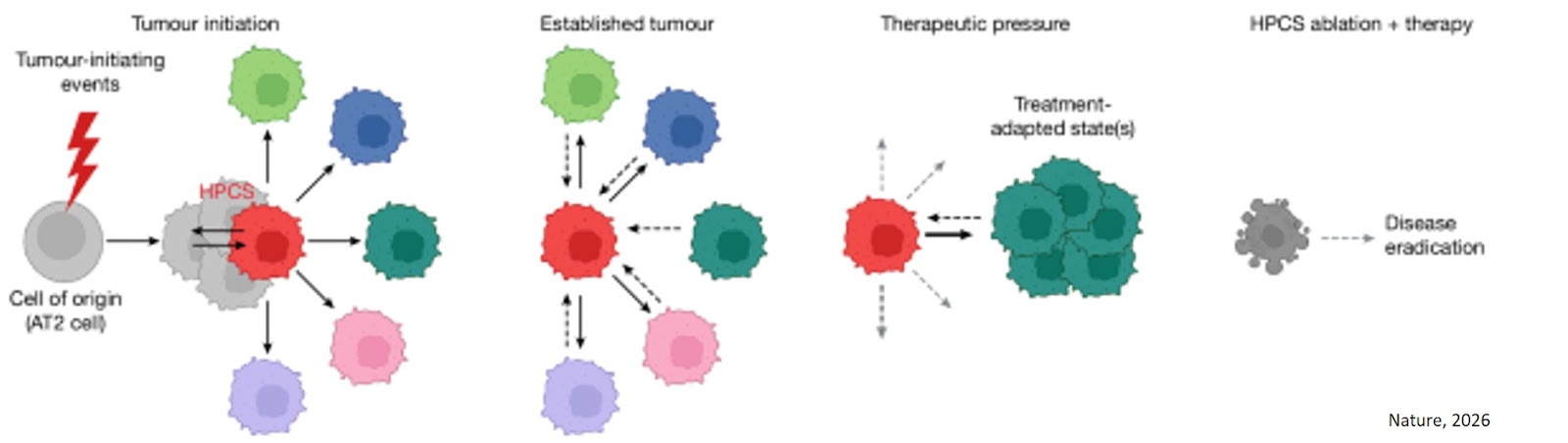
These highly plastic cells aren’t necessary to initiate a tumor. But they’re critical to cancer’s progression, the team found — including its ability to give rise to fast-growing cells, to evolve resistance to treatment, and to potentially help the cancer spread to other parts of the body.
“In our experiments, if we kill off these plastic cells very early in the initiation of a tumor, you can basically prevent mutated cells from ever becoming cancers,” the senior author adds.
The team also found that eliminating plastic cells from established tumors caused them to shrink significantly.
“It stalls their progression,” the author says, “because it blocks the tricks cancer cells use to develop resistance to treatment.”
Highly plastic cells become more abundant as these tumors grow, the researchers found. They account for about 3% of cells in precancerous lesions, about 15% in established tumors, and up to 30% in metastases, the author says.
When a tumor is attacked with chemotherapy or a targeted therapy like a KRAS inhibitor, these highly plastic cells can rapidly adapt into drug‑tolerant cell types — preserving a core part of the tumor to flourish anew, even as many of the other cancer cells are killed off by the treatment.
“So targeting this population of cells could present an opportunity for making current therapies more effective by eliminating pockets of resistant residual disease,” the author says. “It could also potentially help prevent aggressive cancer from forming in populations that are at high risk — such as smokers in the case of lung cancer.”
The study makes a strong case that these highly plastic cancer cells are actionable targets by zeroing in on a protein called uPAR, which is found on the surface of the cells.
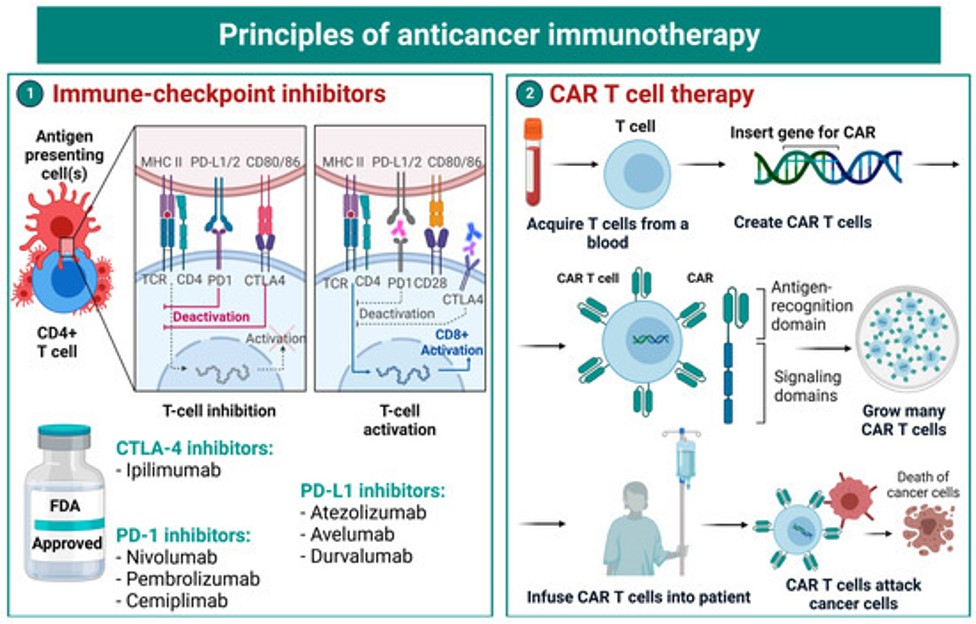
In their mouse models, the researchers successfully kill the plastic cells with CAR T cells that recognize uPAR on their surface. This produced a robust antitumor response and highlights an immediate therapeutic potential.
“We believe the approach could be effective because uPAR is present in cells with this repair-like program but not in most normal, healthy cells,” the author adds, “and eliminating them cuts off a tumor’s ability to adapt and regenerate.”
In classic models of cancer, cancer stem cells are a rare, stable subpopulation that acts like normal stem cells — both renewing itself and continuously generating the other cancer cell types that sustain a tumor.
The study identifies a different phenomenon: a high-plasticity cell state that cancer cells acquire in response to local injury-like signals — initially in a small subset early in tumor formation and later in additional cells as the tumor progresses.
Rather than being akin to steady-state stem cells, these highly plastic cells more closely resemble the temporary, regenerative program that normal tissues activate in response to an injury, te author explains.
In this model, highly plastic cells help a tumor transition between states: from hyperplasia (abnormal cell overgrowth) to adenoma (benign tumor) and, ultimately, to adenocarcinoma (malignant tumor).
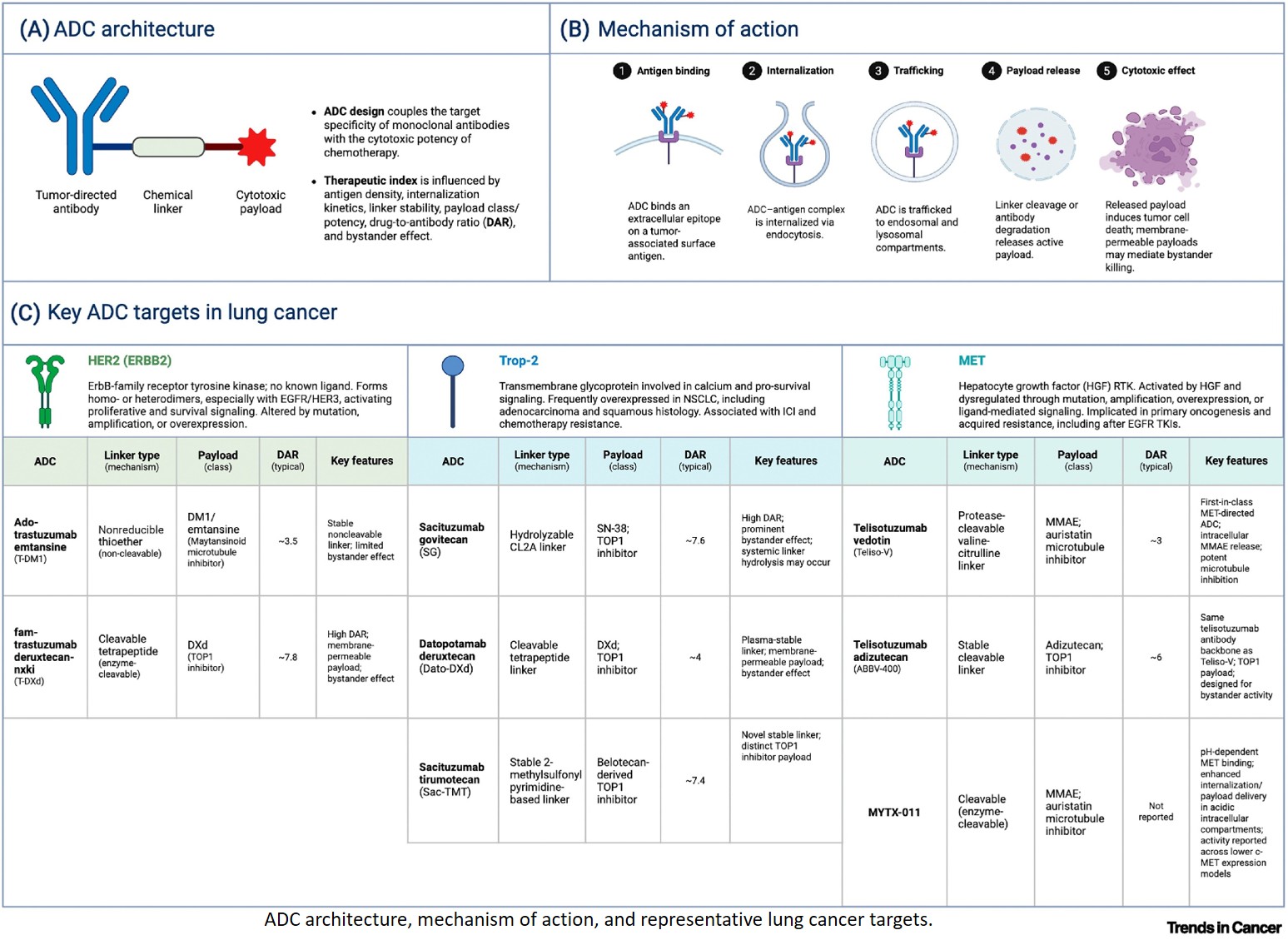
The research team is exploring ways to target these highly plastic cells with variety of approaches, including small-molecule drugs, antibody drug conjugates, and CAR T cells — as well as investigating opportunities to disrupt the molecular pathways that support and sustain the plastic cell state itself.
They’re also conducting additional research to test the applicability of their findings to carcinomas beyond lung cancer.