


Genetic differences between humans and chimpanzees
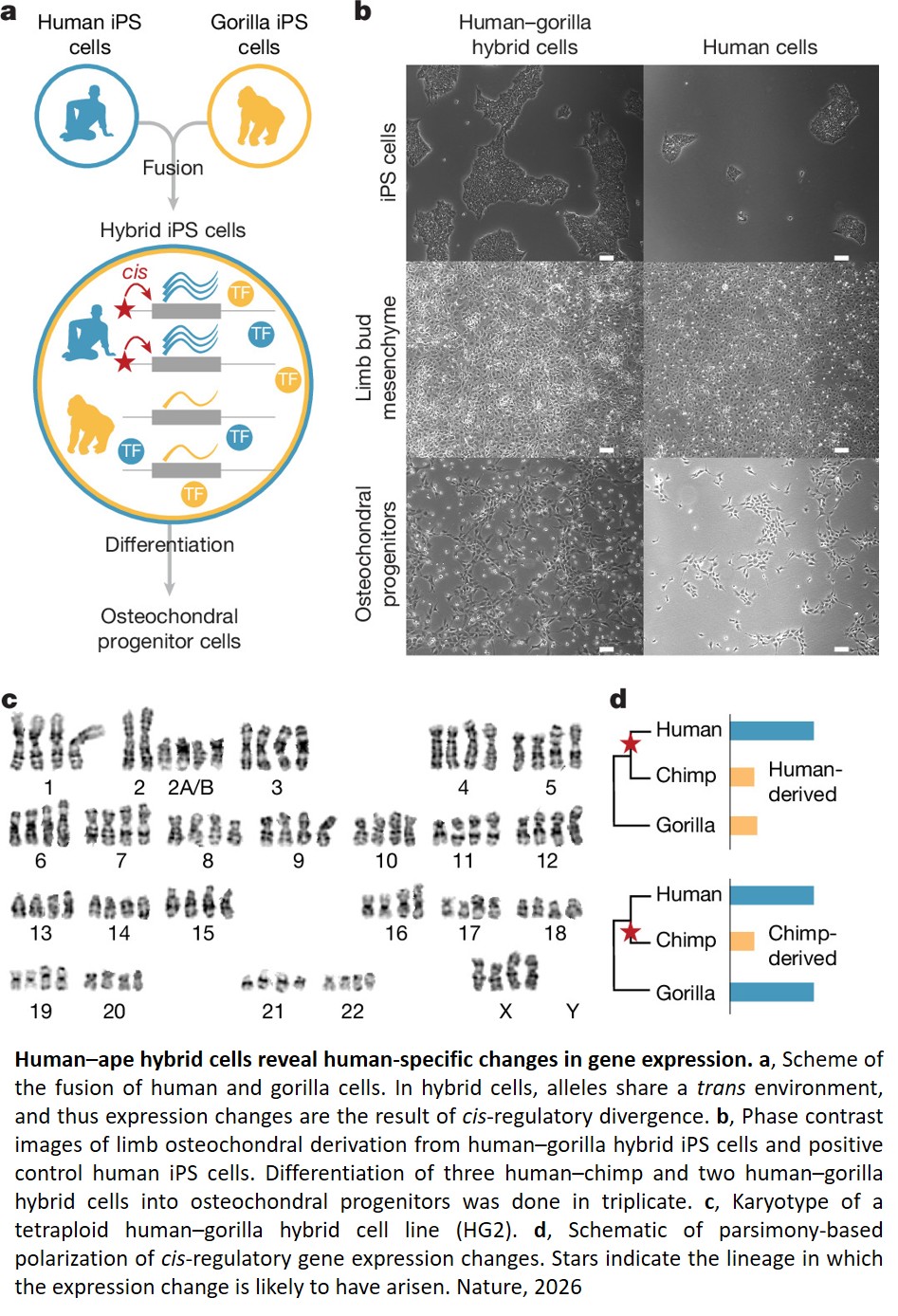
A new genetic atlas is helping scientists trace the DNA changes that transformed a shared primate ancestor into modern humans.
For the first time, researchers can systematically test which genetic differences between humans and chimpanzees affect gene activity. The study, published in Nature.
“Human and chimpanzee genomes are more than 98 per cent identical, but until now we had no way to know which genetic differences had meaningful biological effects,” said the first author.
Understanding those changes could reveal not only how humans evolved, but also why some diseases arise in the first place.
As a first test of the atlas, researchers examined the effect of hundreds of thousands of DNA differences on gene expression in skeletal cells.
“We were surprised to find that thousands of genetic changes appeared to have meaningful effects. That opens up a wealth of new avenues for future research,” said a co-author.
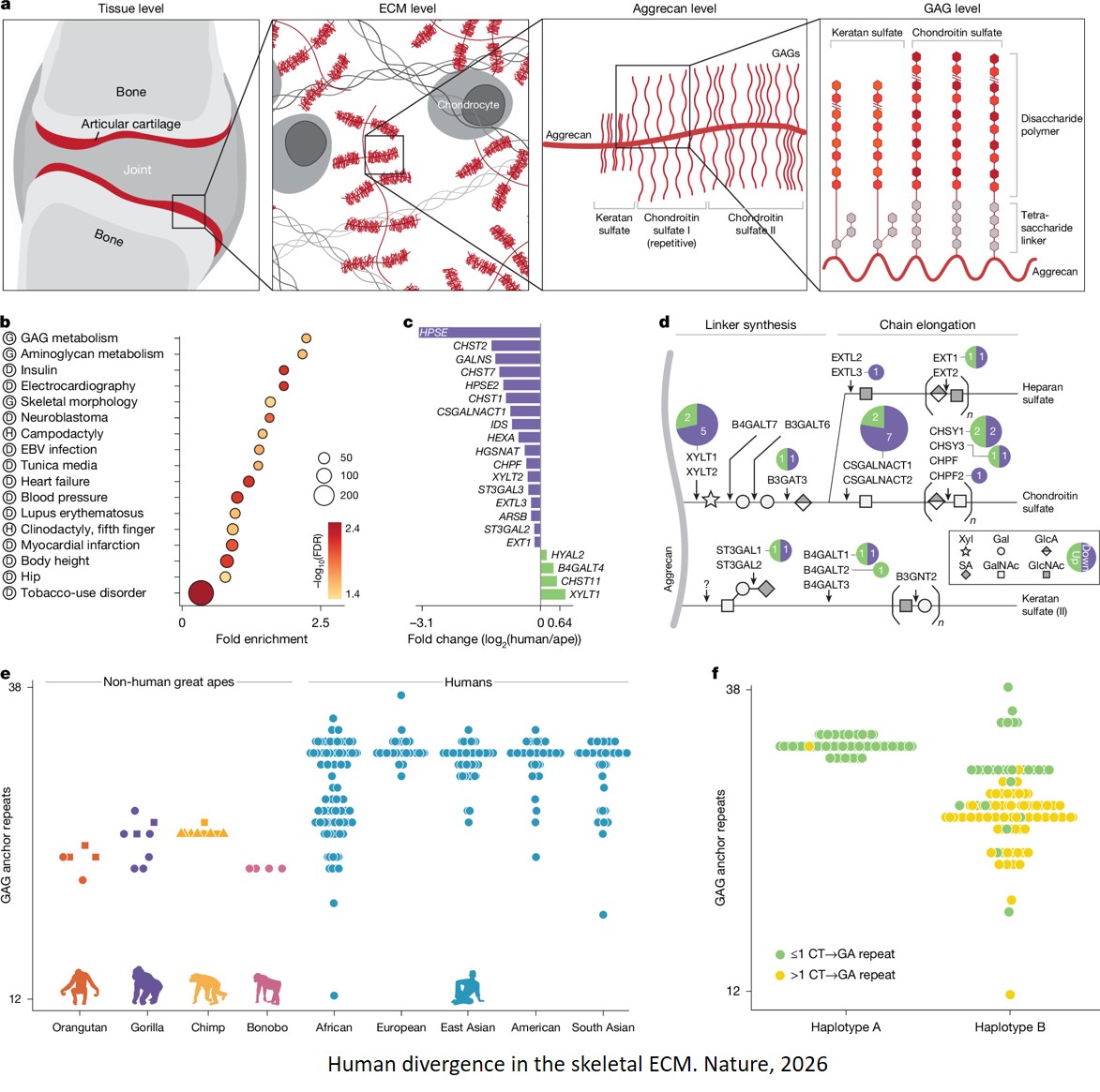
Researchers then narrowed the field to genes linked to cartilage development. Using massively parallel reporter assays (MPRAs) in chondrocytes, the authors assayed 561,410 human-derived substitutions in promoters and enhancers, identifying 15,077 loci with human-specific regulatory activity.
Their analysis suggests humans evolved to have lower levels of molecules that help cartilage retain water and withstand pressure than do other great apes. The study also revealed an extensive rewiring of the extracellular matrix (ECM), including a marked suppression of glycosaminoglycan (GAG) biosynthesis, leading to an approximately three-to-fourfold reduction in joint GAG content in humans compared with non-human apes.
While this shift may have helped shape distinctive features of the human skeleton, it may also help explain why humans are particularly vulnerable to some skeletal disorders.
The finding points to an evolutionary trade-off, the authors note.
“The genetic changes that gave humans new traits may also have created new vulnerabilities. Understanding those trade-offs can help us understand why some diseases exist today,” said the author.
In the case of the skeleton, that could mean a better understanding of conditions affecting cartilage and bone, including osteoarthritis and osteoporosis, the author added.
The team is now looking to apply the same approach to cells from other parts of the body, notably the brain, where the atlas could shed new light on the evolution of human cognition.