










A new mechanism of activation of plants immune defenses by soil bacteria
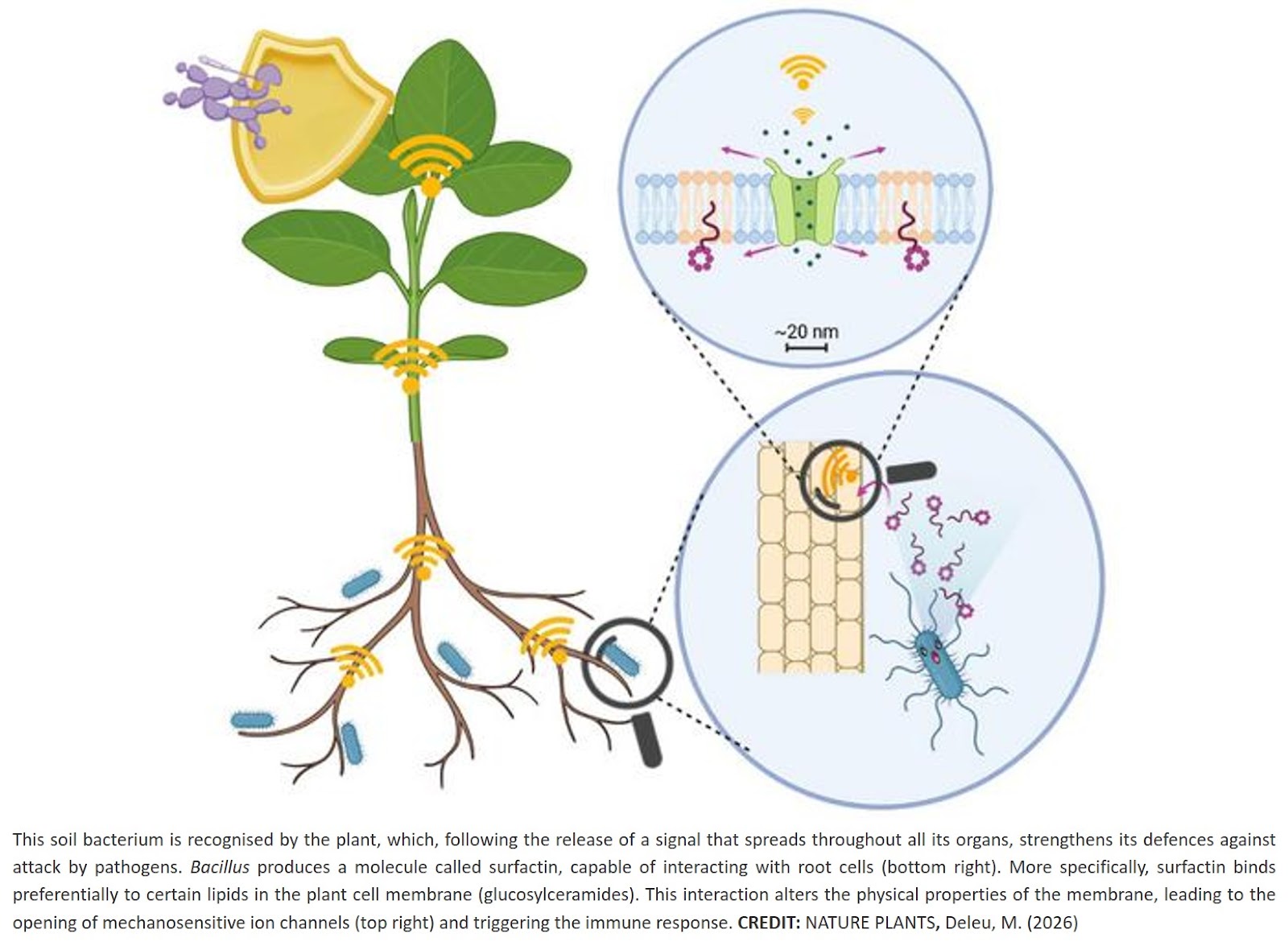
A study led by researchers reveals the mechanism by which surfactin, a molecule produced by beneficial soil bacteria, activates plants’ immune defences. This mechanism, distinct from the classical paradigm of immune recognition, relies on direct interaction with the plant cell membrane. This discovery opens up prospects for the development of next-generation biopesticides.
Plants are not defenseless against pathogens. Certain soil bacteria, far from being mere inhabitants of the roots, send chemical signals to plants that prepare them to resist pathogens. An international research consortium, has just elucidated the molecular mechanism behind this immunization.
This study shows that surfactin, a cyclic lipopeptide produced by bacteria of the genus Bacillus, acts not via a protein receptor, but by interacting directly with the lipids in the plant cell membrane.
"Plants have sophisticated defence mechanisms against disease," explains an author. Among these, immunity induced by beneficial soil microorganisms is attracting growing interest, both in fundamental and applied research. We already knew that certain rhizosphere bacteria, particularly those of the genus Bacillus, produce cyclic lipopeptides capable of stimulating plant defenses. But how these molecules were recognised by plant cells remained poorly understood until now."
The researchers focused on surfactin - one of these lipopeptides - and its interaction with Arabidopsis thaliana, a model plant commonly used in plant biology. Using a transdisciplinary approach combining cell biology, biochemistry and biophysics, they demonstrated that surfactin binds to sphingolipids - and more specifically to glucosylceramide - present in the root cell membrane.
“This interaction causes a slight remodelling of the membrane, increasing its tension, which activates mechanosensitive ion channels,” explains the author. This triggers a signalling cascade that spreads from the roots to the leaves and prepares the plant to better resist pathogens, including the fungus Botrytis cinerea, which causes grey mold.
This mechanism differs from the classical paradigm of plant innate immunity, in which the recognition of foreign molecules usually involves membrane protein receptors. Here, it is the physical modification of the membrane itself – rather than a lock-and-key interaction with a receptor protein – that acts as the triggering signal. This finding sheds new light on how plants can perceive their microbial environment and distinguish between beneficial bacteria and true pathogens.
In practical terms, this research forms part of efforts to develop a new generation of biopesticides. By understanding precisely how these bacteria or their molecules activate plant immunity, it becomes possible to envisage more targeted and effective crop protection strategies, partially replacing chemical inputs. These results thus provide a solid scientific basis for guiding the rational development of bio-based products for use in sustainable agriculture.
https://www.nature.com/articles/s41477-026-02270-3
https://sciencemission.com/immunity-in-Arabidopsis