



Maintaining stability of the plant proteome and controlling stress responses

A specific cellular mechanism regulates the protein balance of plants, thereby influencing how they respond to environmental stress. A particular protein complex plays a key role in that process. It dynamically controls the degradation and recycling of proteins, a discovery made by an international research team. The investigations provide new insights into how this basic process – known as N-terminal acetylation – maintains the balance in protein turnover, thus contributing to the stability of the plant proteome.
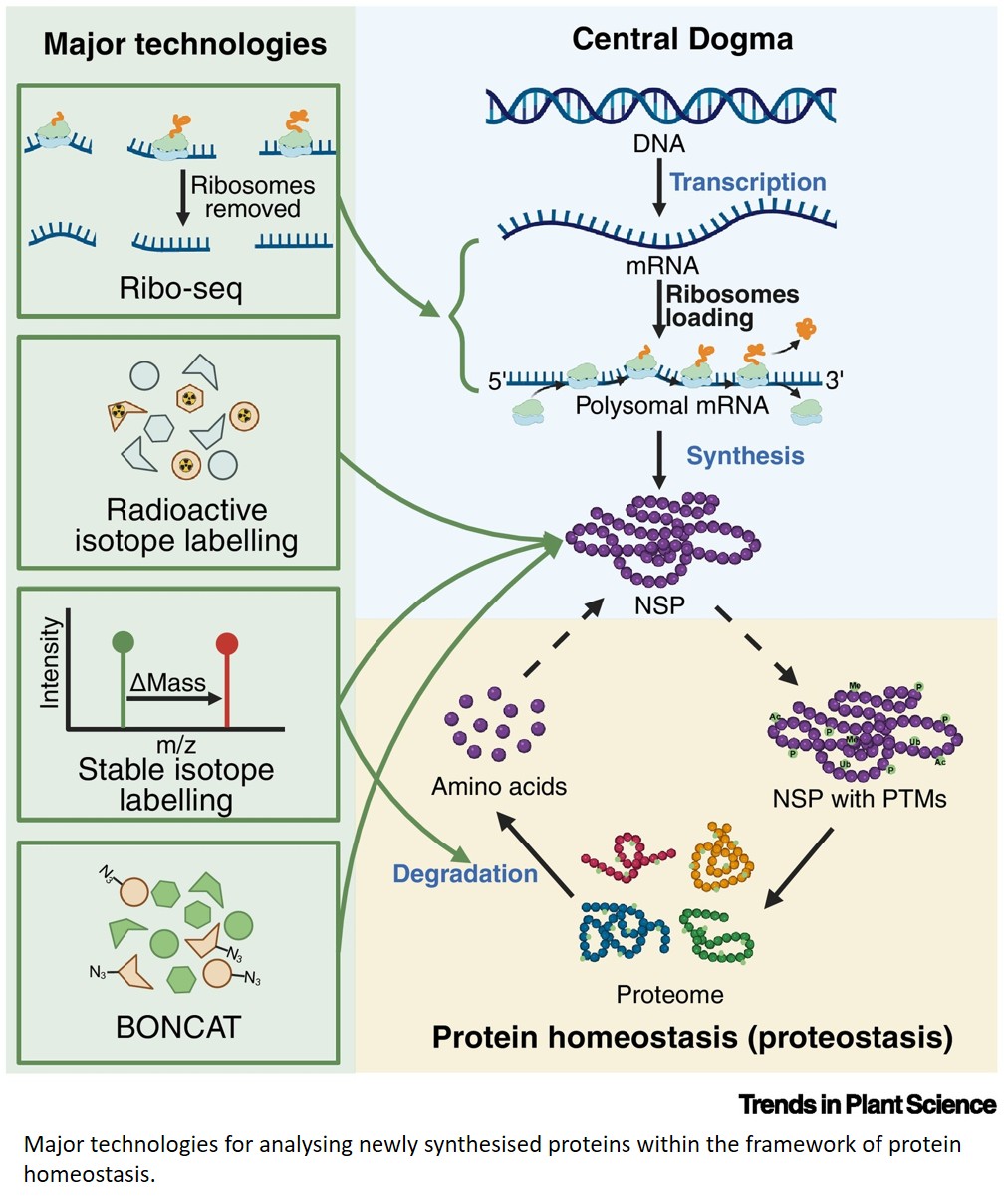
Proteins are macromolecules made up of amino acids and have a variety of functions. For example, they serve as building blocks for cells, or, in the form of enzymes, can accelerate chemical reactions. For the growth, development, and survival of plants under changing environmental conditions, it is absolutely essential that the plant proteome – the totality of all proteins in an organism – remains in balance. To this end, proteins are constantly being synthesized, broken down, or recycled in a process known as proteostasis, explains the leads author.
In recent studies using the model plant organism thale cress, the research team gained new insights into how a fundamental cellular process regulates the degradation and recycling of proteins. A protein complex known as N-terminal acetyltransferase B (NatB) is of central importance here. It modifies approximately 20 percent of all proteins in eukaryotic cells by adding an acetyl group at a specific site. This process of N-terminal acetylation contributes to the regulation of protein balance.
As the author explains, NatB plays a much more dynamic role in determining the fate of proteins in this process than previously assumed in research. “We were able to show that the NatB protein complex marks certain proteins for degradation through the process of acetylation. Using this mechanism, the NatB complex regulates the activity of a protein kinase that controls protein recycling in plants,” says the scientist.
To investigate this mechanism more closely, the researchers used genome editing to create plants in which the NatB protein complex was inactive. They observed a general decrease in protein turnover in these mutants. Quantitative analyses of the proteome also revealed that many proteins became more stable in the absence of NatB activity. This led to an accumulation of the protein kinase KIN 11, which is involved in the process by which plant cells recycle their components and recover nutrients under stress. Overall, the mutants that exhibited high KIN11 levels were significantly more resilient to a limited energy supply than untreated plants, particularly during prolonged darkness and the absence of photosynthesis.
The author said: “Our findings establish NatB as a central regulator coordinating the interplay between protein degradation and recycling, thus contributing to the stability of the plant proteome.” At the same time, they demonstrate that a single biochemical modification is enough to fundamentally influence the stress response of plants. “A better understanding of these mechanisms opens up new avenues for basic research and also highlights ways to increase crop yields even under adverse conditions,” emphasizes the scientist.