

How the liver’s internal clock influence metabolism
What if one of the keys to a healthier metabolism is understanding how and when the liver communicates with the rest of the body?
Researchers have uncovered how the liver’s internal clock coordinates the release of proteins that help regulate metabolism.
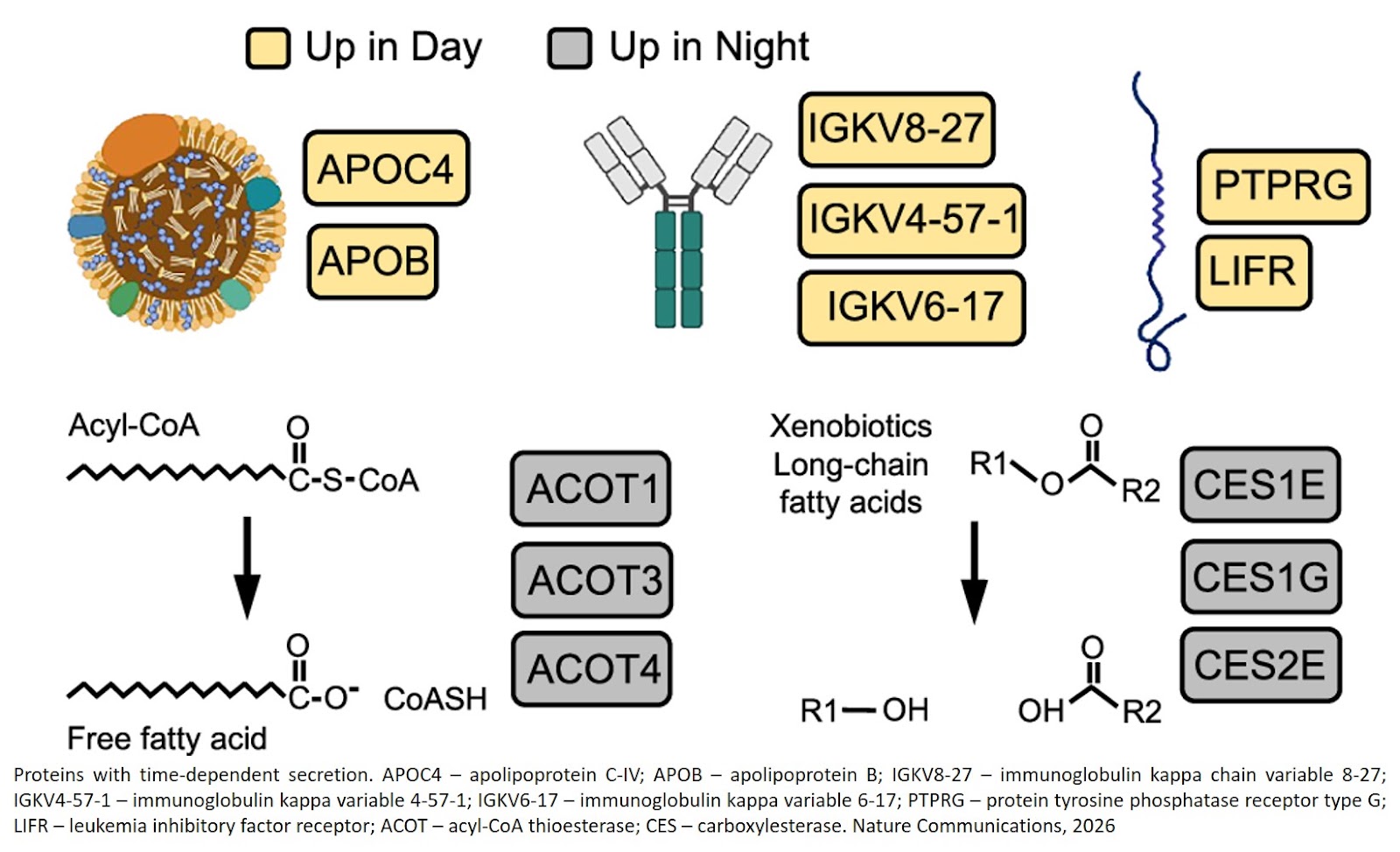
Published in Nature Communications, the study found that many of these proteins are released according to a precise daily schedule, allowing the liver to communicate with organs such as fat tissue at specific times of the day. The findings could help guide future research on metabolic disease, along with timing meals and medication.
For many biological functions, timing is everything. Nearly every cell in the body contains its own molecular clock, helping coordinate daily processes such as metabolism. Researchers are working to better understand how these clocks communicate with one another.
"Any cell with a nucleus is likely to express the molecular clock. We are interested in how cells work together and coordinate their activities,” said the senior author. “The clock is one way the body can organize physiology in an efficient and appropriate manner.”
Researchers have long known that disrupted sleep schedules and irregular eating patterns increase the risk of obesity, diabetes and other metabolic disorders. Because the liver plays a central role in metabolism, scientists wanted to better understand how its internal clock regulates the release of proteins that communicate with other organs.
The first author on the study said that while researchers have known the liver regulates the secretion of some of the proteins, they lacked a developed measure of how and when proteins were released.
"We thought the time-dependent release of proteins may be important for coordinating metabolism in tissues like fat or muscle,” said the author. “The core idea is that the clock regulates protein secretion and can influence metabolism across the day, and in other tissues.”
One of the study’s biggest discoveries was that a liver protein called endostatin was most effective at helping break down fat when it was released on the liver’s natural daily schedule. The finding suggests that future treatments based on this protein may work best if they’re given at the right time of day. The research team is continuing to investigate new approaches that could lead to future therapeutic benefits.
“We are interested in developing and characterizing novel peptides. We want to find the next GLP-1 drug, or even something better that is waiting to be discovered,” said the senior author.