

Role of microglia in regulating hippocampal adult neurogenesis
Breakthrough research is revealing how immune cells in the adult brain can regulate the generation of new neurons.
The study, recently published in the journal Nature Communications, is leading to a new understanding of how immune cells can influence adult neurogenesis, the process of creating new neurons in the brain. Neurons are the brain's fundamental information messengers, and the immune cells conduct surveillance and send messages to new neurons.
“Adult neurogenesis is vital for learning, memory and mood regulation, and we hope to discover novel ways to enhance this process,” said the senior author. Factors such as exercise, sleep and learning can stimulate neurogenesis, while stress and aging can decrease it — offering one possible explanation for cognitive decline.
The author said it has long been debated whether adults even have the capacity for neurogenesis. Does the human brain make new neurons in adulthood?
Then research published in the journal Science in the summer of 2025 concluded, yes, neurogenesis happens in the adult human hippocampus, the part of the brain that handles learning and memory.
So the authors turned their attention to the mechanisms that regulate adult neurogenesis, and their research in Nature Communications reveals two breakthroughs.
The first is that immune cells in the brain, known as microglia, have the capacity to regulate neurogenesis in the hippocampal region of the adult brain.
“The status of microglia in the hippocampus is critical in the process,” said the author.
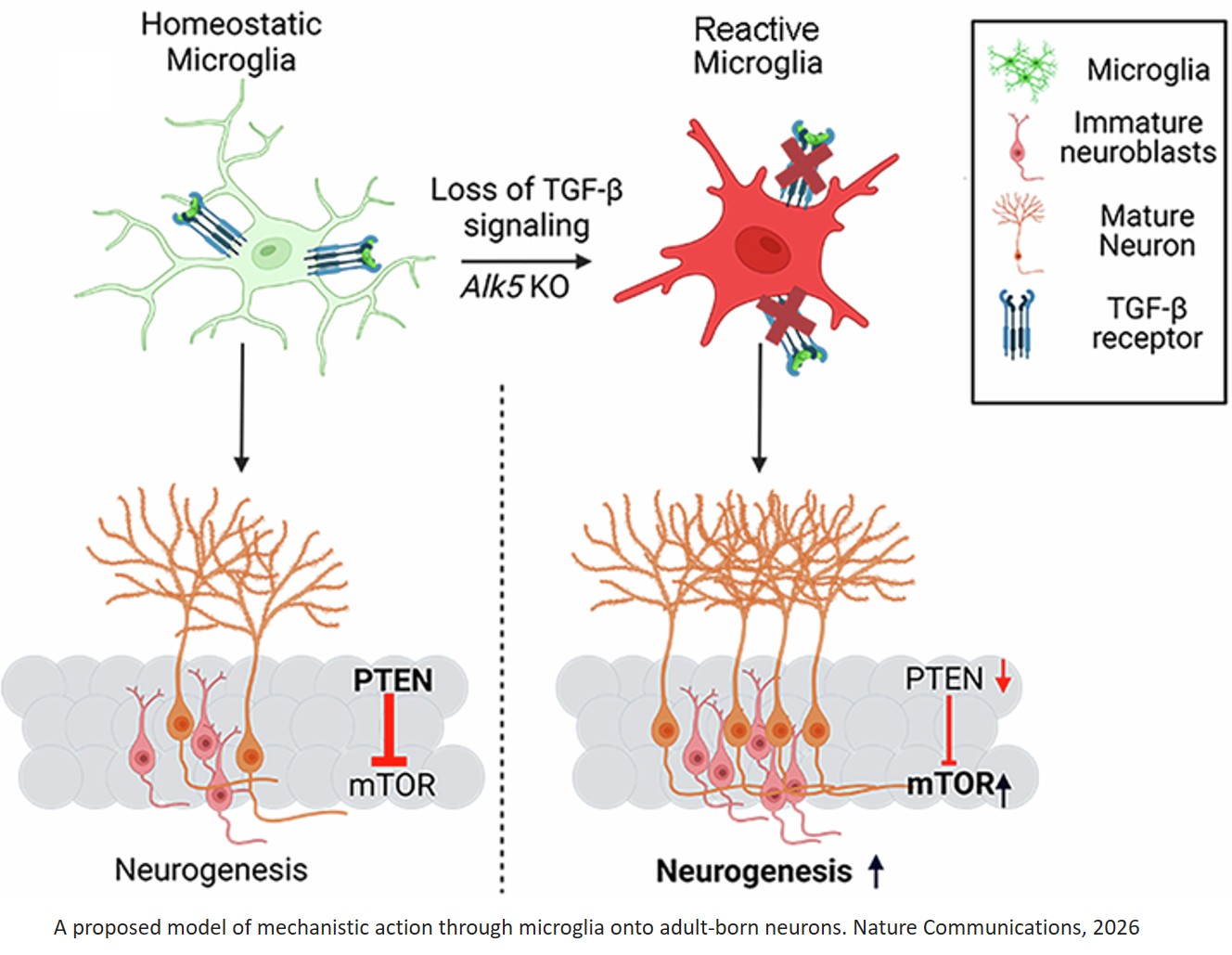
The second breakthrough concerns activated microglia, which lack TGF-beta signaling, and, in turn, stimulate adult neurogenesis through microglia-neural stem cell signaling crosstalk — the complex interplay in which cellular pathways communicate.
Neurogenesis in TGF-beta deficient mice is accompanied by altered anxiety-like behavior in KO mice. Mechanistically, the authors observed decreased PTEN signaling, and increased mTOR activity in DCX+ newly born neuroblasts at the SGZ in iKO mice. Inhibition of mTOR signaling by rapamycin reverses the heightened SGZ neurogenesis in iKO mice.
For now, research on adult neurogenesis has been in animal models, but microglia-integrated human organoids are in development for future testing.
https://www.nature.com/articles/s41467-026-68885-4
https://sciencemission.com/Inhibition-of-TGF-%CE%B2-signaling-in-microglia-stimulates-neurogenesis