


Role of nervous system in cancer-associated cachexia
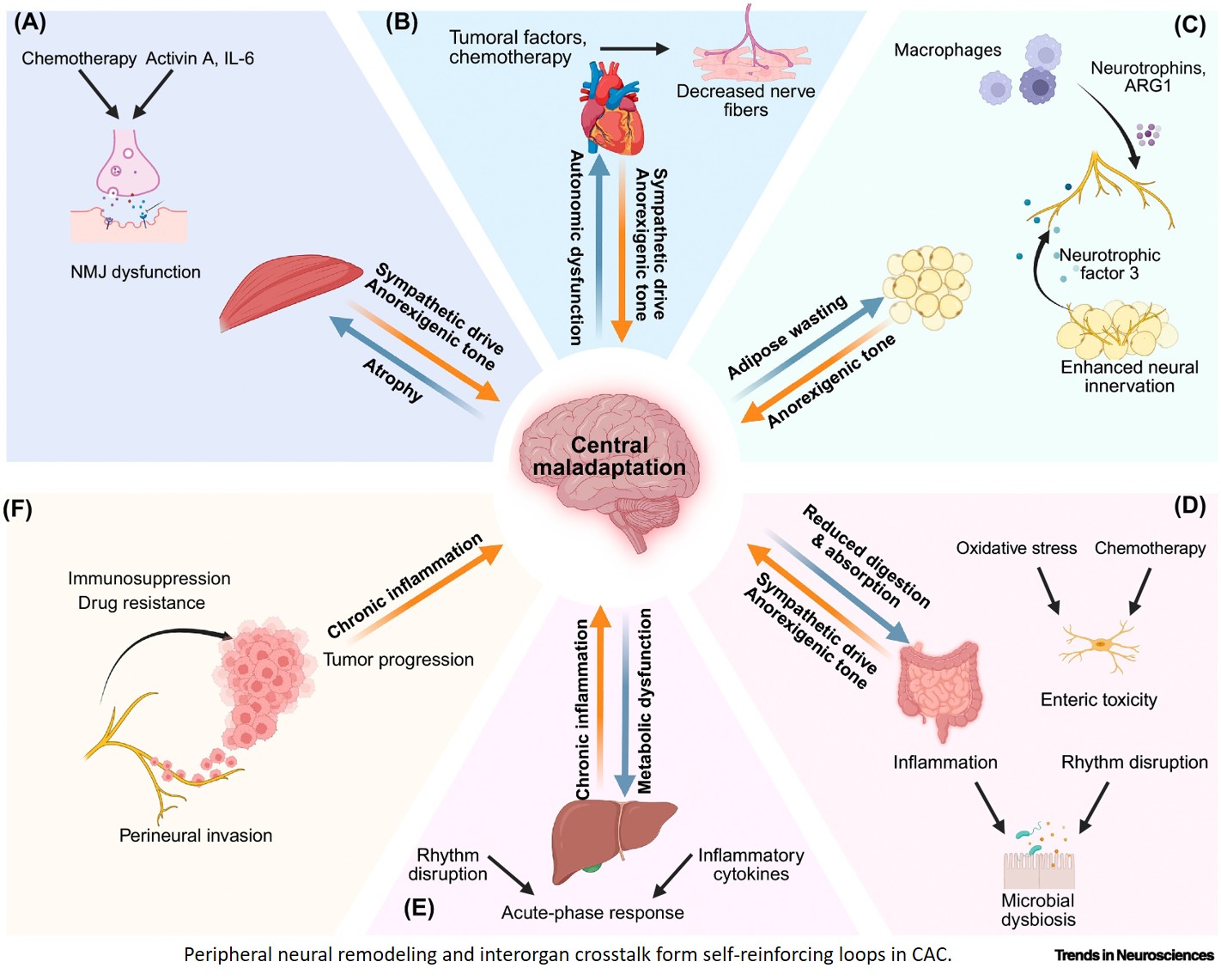
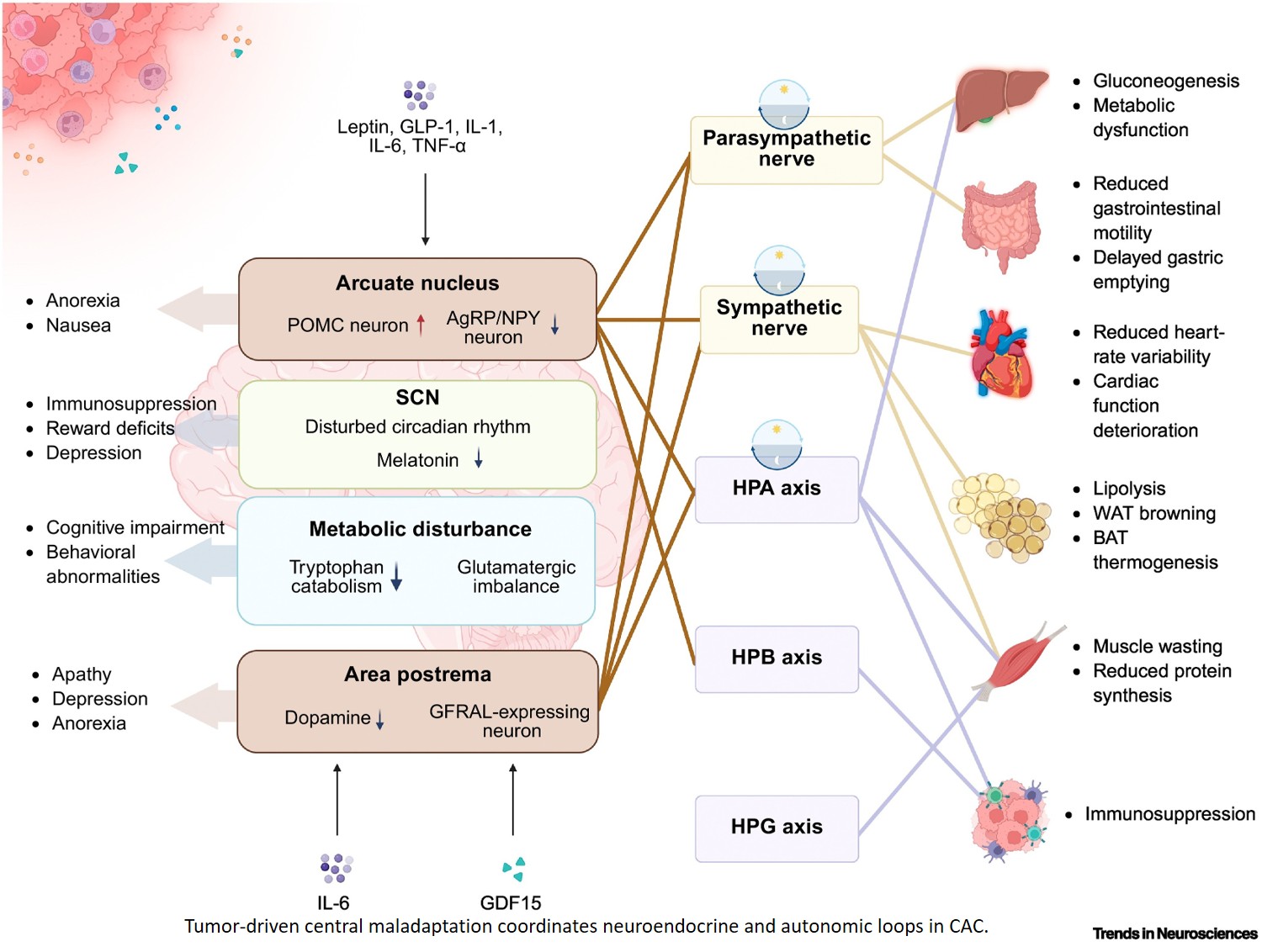
Cancer-associated cachexia is increasingly characterized as a systemic disorder driven by the subversion of brain–body crosstalk, in which tumors co-opt central neural circuits to coordinate multiorgan metabolic, immune, and behavioral reprogramming.
Cachexia progression involves peripheral neural changes across key metabolic organs, including neuromuscular junction denervation, cardiac autonomic imbalance, and adipose sympathetic overactivity.
Tumor-induced neuroinflammation and treatment-associated neurotoxicity converge on central circuits, driving affective disturbances and disrupting neuroendocrine output to sustain systemic wasting.
Defining the spatiotemporal dynamics of neural circuits or peripheral innervation offers a framework for understanding cachexia heterogeneity and delineates a translational frontier for clinical management.
https://www.cell.com/trends/neurosciences/fulltext/S0166-2236(26)00162-1