
Bacteria found in mouth and gut may help protect against severe peanut allergies
One of the big mysteries in food allergy is why two people with similar levels of peanut specific antibodies can react so differently. It turns out the answer may be in the mouth and gut’s bacteria.
A new study published in Cell Host & Microbe, shows for the first time how gut bacteria break down parts of an allergenic food and influence how a person reacts to peanuts. Peanut allergies are amongst the most common food allergies in Canada, and more generally one in two Canadian households are impacted by food allergy, positioning this discovery to help with predicting and potentially reducing life threatening anaphylaxis.
“Peanut allergies can cause serious reactions like difficulty breathing, and in some cases, can even be life threatening. However, some people with peanut allergies can still eat small amounts without having a reaction. We were curious about why this happens, and we discovered the answer while studying the microbes in our mouth,” says a postdoctoral fellow.
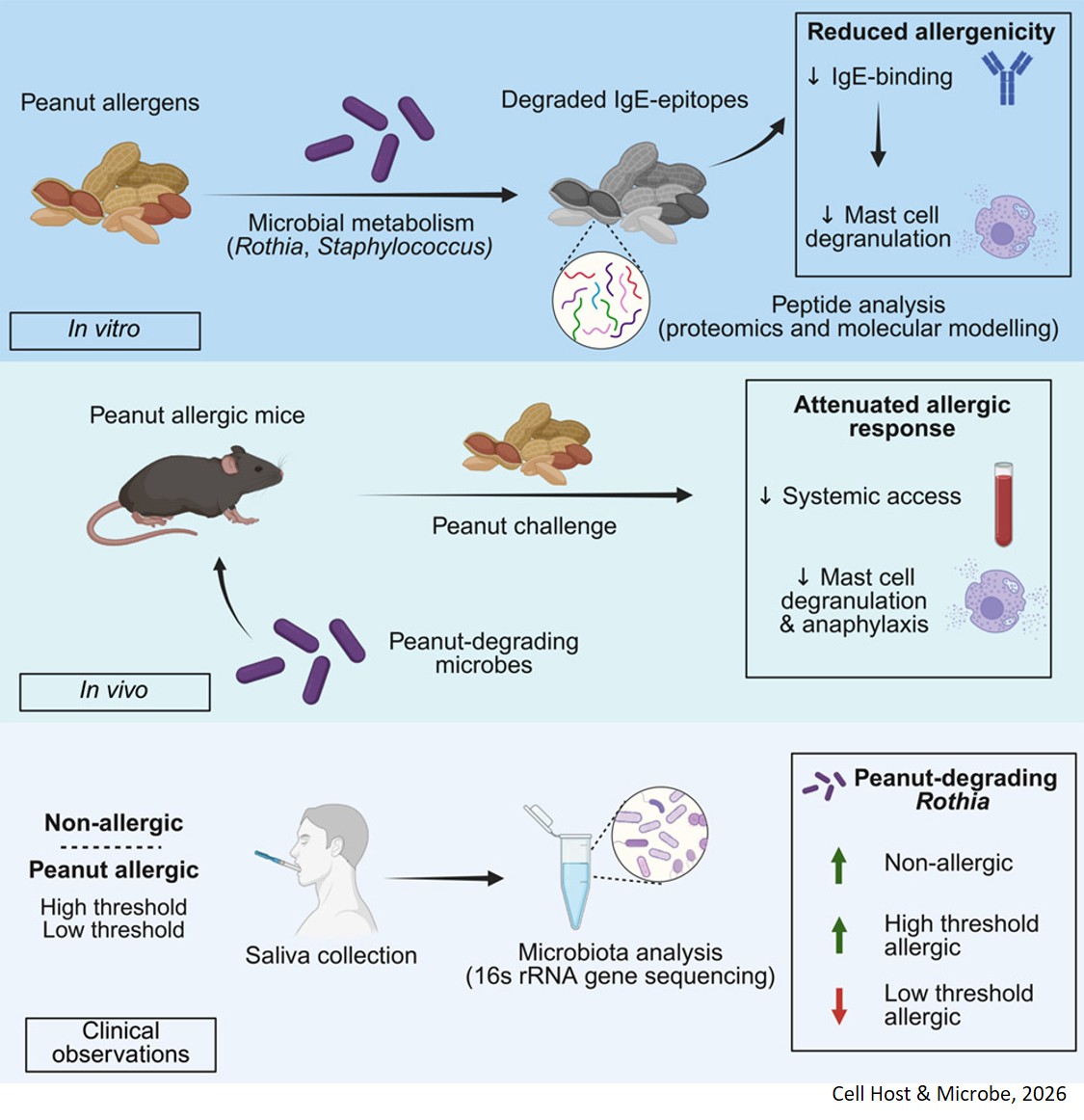
Researchers examined saliva and upper gut samples from healthy volunteers and identified several bacterial species that can break down major peanut allergens. Among these bacteria, Rothia species stood out because it could reduce the ability of peanut proteins to bind with antibodies, the process that triggers allergic reactions.
The researchers Isolated Rothia and Staphylococcus species and showed that they degraded PN allergens in vitro, generating proteins with reduced IgE binding and limited mast cell activation. Mice colonized with Rothia showed reduced local and systemic Ara h 1 and 2 levels and dampened anaphylaxis upon PN challenge.
Researchers also examined a cohort of participants with peanut allergies and found that those who had a greater abundance of bacteria capable of degrading allergens were able to tolerate higher amounts of peanuts before a reaction occurred.
“Microbes in the mouth and gut play an important role in digestion. In our study, we found evidence that some of these microbes may help break down peanut components in ways that could influence allergic responses. These findings point to a newly identified pathway linking the oral and gut microbiome with food allergy, and they may help guide future work on prediction and treatment,” says a co-senior author.
The research team validated these findings in an external dataset of 120 children, showing that Rothia species were significantly more abundant in children with higher peanut reaction thresholds. In pre-clinical experiments, researchers found that Rothia reduced the amount of peanut allergens from reaching the bloodstream, lowered the activation of the immune cells that cause anaphylaxis, and sparked a significantly milder allergic reaction following exposure.
Peanut allergy is the most common food allergy among Canadian children. Strict avoidance is the only recommended management. Despite this, accidental exposures are frequent, with about one-third of affected children experiencing at least one each year. Peanut allergy is the leading cause of allergy-related deaths in children.
The findings open the door for potential new approaches in allergy prevention and treatment, such as new microbial or probiotic therapies and improved oral immunotherapy strategies.
https://www.cell.com/cell-host-microbe/fulltext/S1931-3128(26)00081-8
https://sciencemission.com/Microbial-metabolism-of-food-allergens