




Viral infections can accelerate the progression of ALS
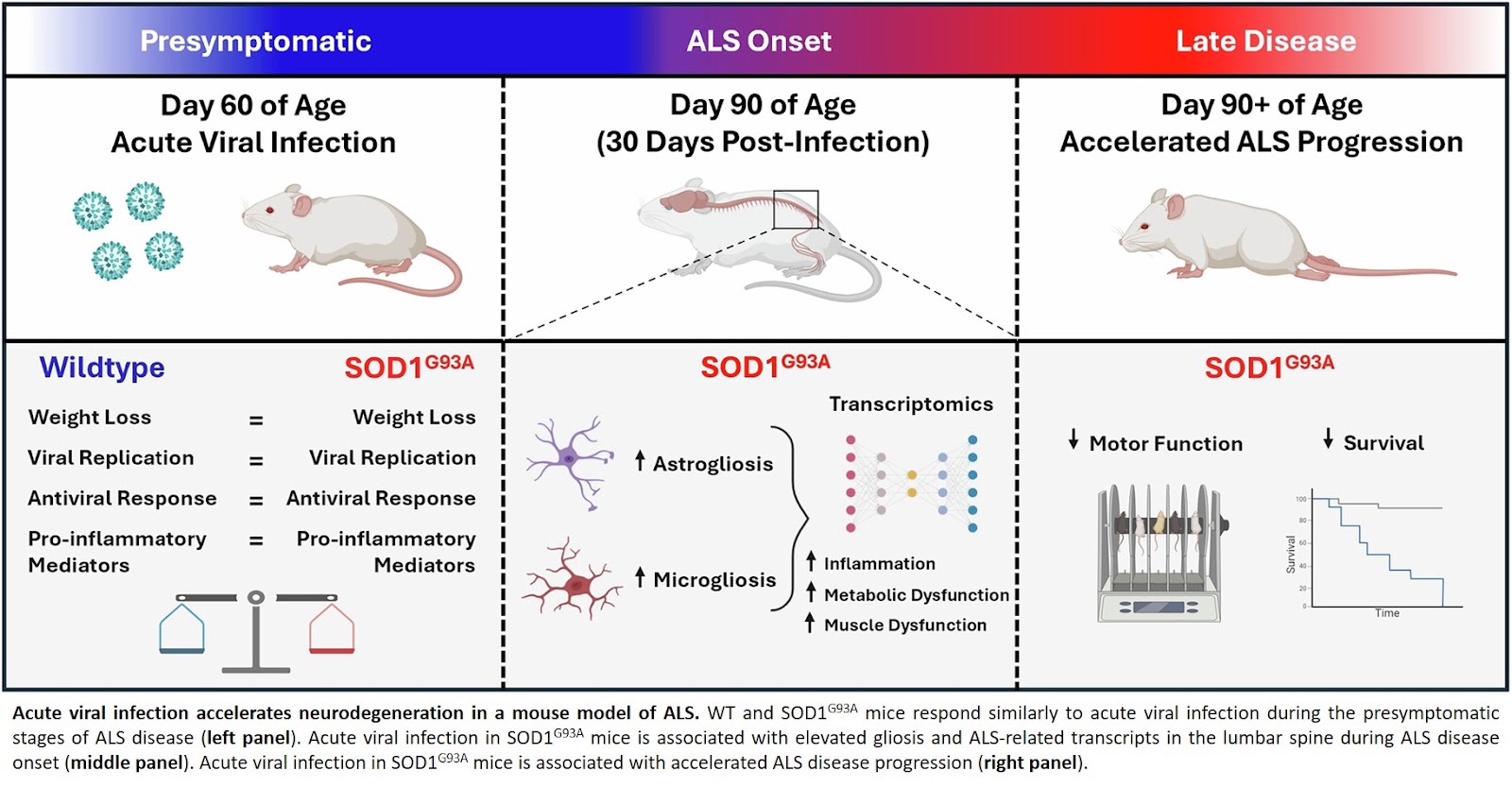
A new study suggests that common viral infections — like influenza or COVID-19 — may accelerate the onset and progression of amyotrophic lateral sclerosis, or ALS.
While viral infections have long been associated with neurodegenerative diseases, it has been unclear how infections caused by very diverse viruses all seem to increase risk. The new findings — published in the journal Nature Communications — suggest that it is the immune response triggered by these infections that accelerates the onset and progression of ALS.
“ALS is a debilitating and incurable disease, so it’s critical that we improve our understanding of the common environmental factors that can hasten its onset and accelerate its progression,” says the principal investigator on the new study. “Understanding what triggers or accelerates the disease could illuminate new strategies for slowing or even stopping it.”
Commonly known as Lou Gehrig's disease, ALS is the most common motor neuron disease, affecting about one in 300 Canadians. ALS progressively damages the nerve cells responsible for mobility, ultimately leading to severe weakness, paralysis, and death. With no known cure, researchers are working to better understand the key factors that contribute to the disease, so that new treatment options can be explored.
Researchers in the lab monitored animal models of ALS following infection with either influenza A virus or SARS-CoV-2, the virus that causes COVID-19. They then compared these models to a cohort of uninfected animals and observed that the animals that experienced infection also experienced a much more rapid decline in motor function.
The research team took a novel approach to the study, focusing not only on the potential connections between infections and ALS, but also on why infections might influence disease progression in the first place.
“A lot of the previous work in this area has been epidemiological in nature, without much focus on the molecular mechanisms that actually underpin the connection between infections and ALS,” says a co-first author of the new paper. “What makes our study unique is that we did take a mechanistic approach — we explored why this connection might exist.”
What the researchers found was that even common respiratory viruses that do not infect neurons can leave lasting changes to the nervous system.
In their animal models, the team observed that COVID-19 and flu infections triggered an inflammatory response from immune cells in the nervous system — a process called gliosis — that remained elevated in the spinal cord even after the virus had been cleared from the body. Gliosis is already known to play an important role in ALS, but the findings suggest that an infection may amplify this process, helping to accelerate the disease. The authors show that a single infection could prompt elevated gliosis, or scar tissue, in the spine.
“In our pre-clinical models, just one viral infection was enough to significantly accelerate ALS progression, even after the infection itself had resolved,” says the author. “These findings strongly suggest that viral infections — and the inflammatory responses that they trigger — may fundamentally influence the course of the disease.”
In fact, during this study, the team treated infections with antivirals and supressed gliosis with anti-inflammatories, and in both cases saw a significant reduction in the rate of ALS progression.
“Developing better vaccines and antiviral therapies — and improving the public’s trust in them — could have health benefits that we don’t fully appreciate,” says the senior author. “Our work here suggests that preventing or limiting common infections could at the same time protect your nervous system from the damage that accelerates ALS.”