



Brain circuit that remembers stresses identified!
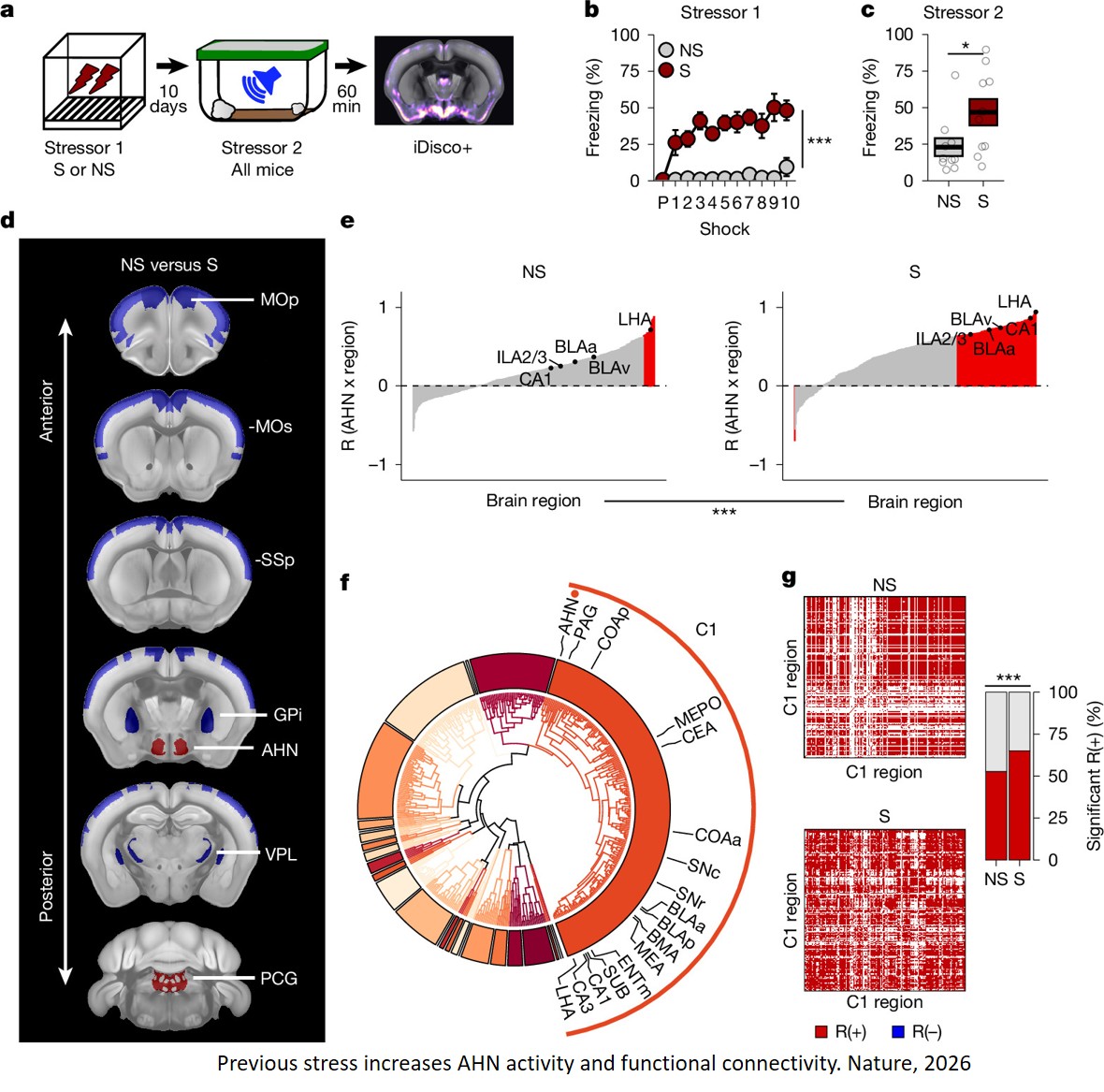
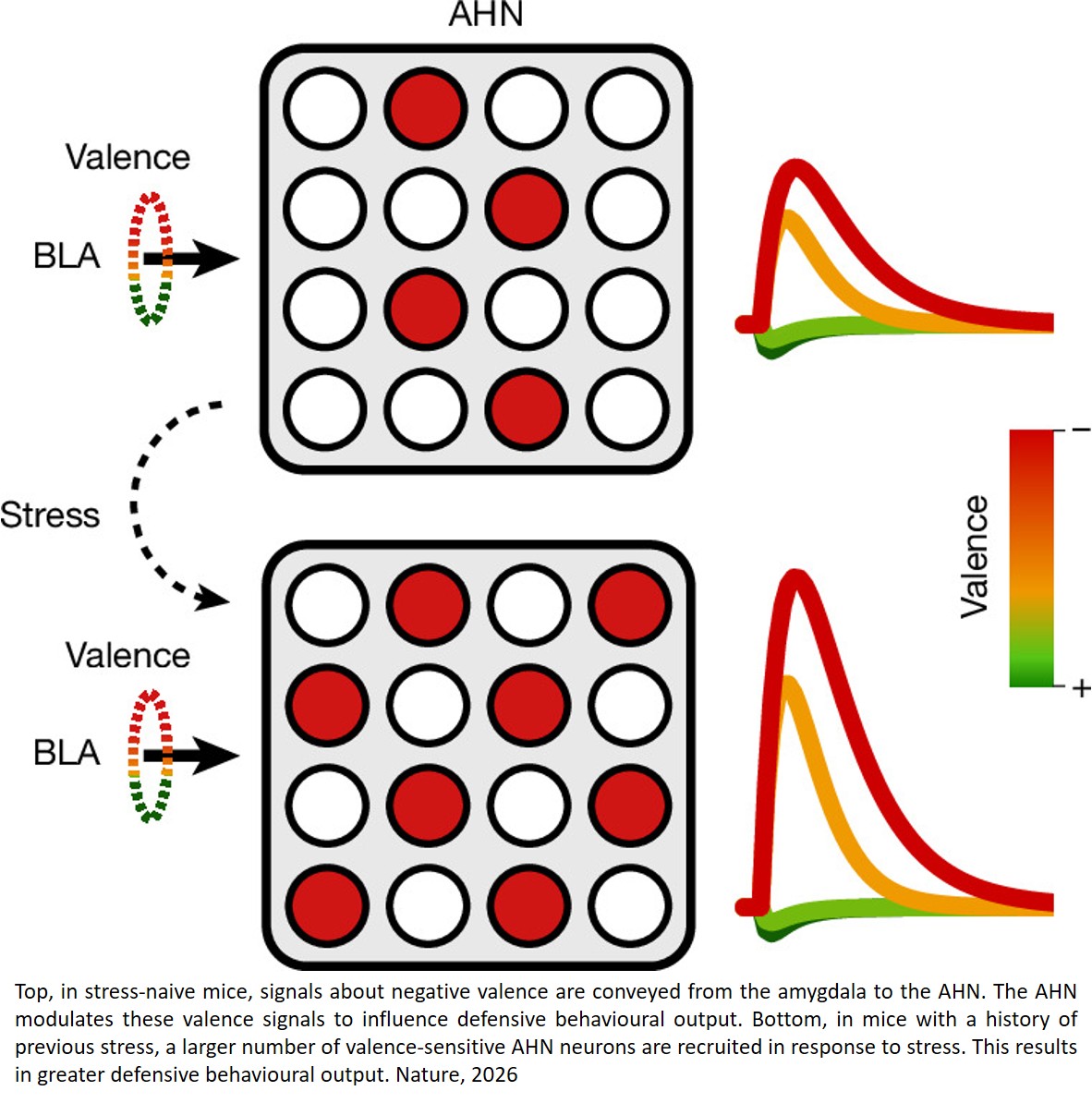
The study, published in Nature and conducted in mice, identifies a small, deep brain structure called the anterior hypothalamic nucleus (AHN) as a critical hub that scales the brain’s response to threatening events. The research team found that dialing its activity up or down directly altered how strongly the animals responded to stress.
“Why do some people develop debilitating mental health conditions in response to stress while others do not? One known risk factor for heightened stress sensitivity is a history of prior stress, such as early childhood adversity or adult traumatic stress. However, at a biological level, we still do not fully understand why this is the case,” says the lead author of the paper.
“Here, we identified a new pathway in the brains of mice that contributes to heightened stress sensitivity following a prior stressful experience,” the lead says. “Although we still need to determine the contribution of this pathway to stress sensitivity in humans, we are excited by the prospect of finding ways to target this pathway to alleviate symptoms in conditions like post-traumatic stress disorder (PTSD).”
It has long been known that people who have experienced early-life adversity or prior psychological trauma are more likely to develop conditions such as PTSD, anxiety, and depression after a subsequent stressful event. Yet the underlying brain circuitry driving this heightened vulnerability has remained poorly understood. Most previous research has focused on a small set of regions, including the amygdala, prefrontal cortex, and hippocampus.
“We usually look for the effects of stress in familiar brain regions such as the amygdala, hippocampus, and prefrontal cortex. But Zach wanted to know what we might be missing, so he took an unbiased approach and looked across the entire brain,” says the senior author of the study. “The anterior hypothalamus was a genuine surprise. This region has traditionally been studied for regulating basic bodily functions and defensive behaviors. We did not expect it to carry the history of prior stress and help determine how strongly the brain responds to the next stressful event.”
Rather than focusing on brain regions already associated with stress, the team searched across the entire brain. This unbiased approach led them to the AHN, a small region not traditionally considered a major focus of stress research. The researchers then used miniature microscopes to watch individual neurons in the AHN as freely moving mice encountered experiences of different intensities. They found that the circuit tracked how negative an experience was and became more sensitive in animals with a history of prior stress. The AHN also became more strongly coordinated with a broader network of threat-related regions, including the amygdala, hippocampus, and medial prefrontal cortex.
The researchers found the AHN was not simply registering stress; rather, it was controlling the magnitude of the response. Increasing AHN activity intensified defensive responses, while decreasing its activity reduced them. Most strikingly, silencing the pathway carrying information from the amygdala to the AHN prevented prior stress from amplifying the animals’ response to a later threat. Together, the findings suggest that this circuit helps the brain use the past to set the intensity of its response to what happens next.
“What surprised me most was how much influence such a small circuit could have. By turning its activity up or down, we could increase or decrease how strongly the animals responded to stress. It acted almost like a volume knob, amplifying or dampening the impact of a threatening experience,” says the senior author.
“If we want more precise treatments for stress-related disorders, we cannot limit ourselves to the brain regions we already know,” the author adds. “Unbiased discovery can reveal entirely new circuits and new places to intervene. This study gives us an unexpected candidate for understanding how trauma and adversity leave lasting marks on the brain.”
“Stress can have profound negative impacts on our mental and physical health, so understanding the biology of stress sensitivity could provide new ways to intervene in these pathologies,” says the lead author. “We all experience stress on a near-daily basis, and sometimes we are better equipped to handle it than others. Some days we let a stressor roll off our backs, while other times our days are consumed by it. Understanding this fluctuation is fundamental to a huge part of our lives.”
https://www.nature.com/articles/s41586-026-11075-5
https://sciencemission.com/amygdala-to-anterior-hypothalamic-circuit-gates-stress