





Mechanism of skeletal muscle mitochondrial imbalance in type 2 diabetes
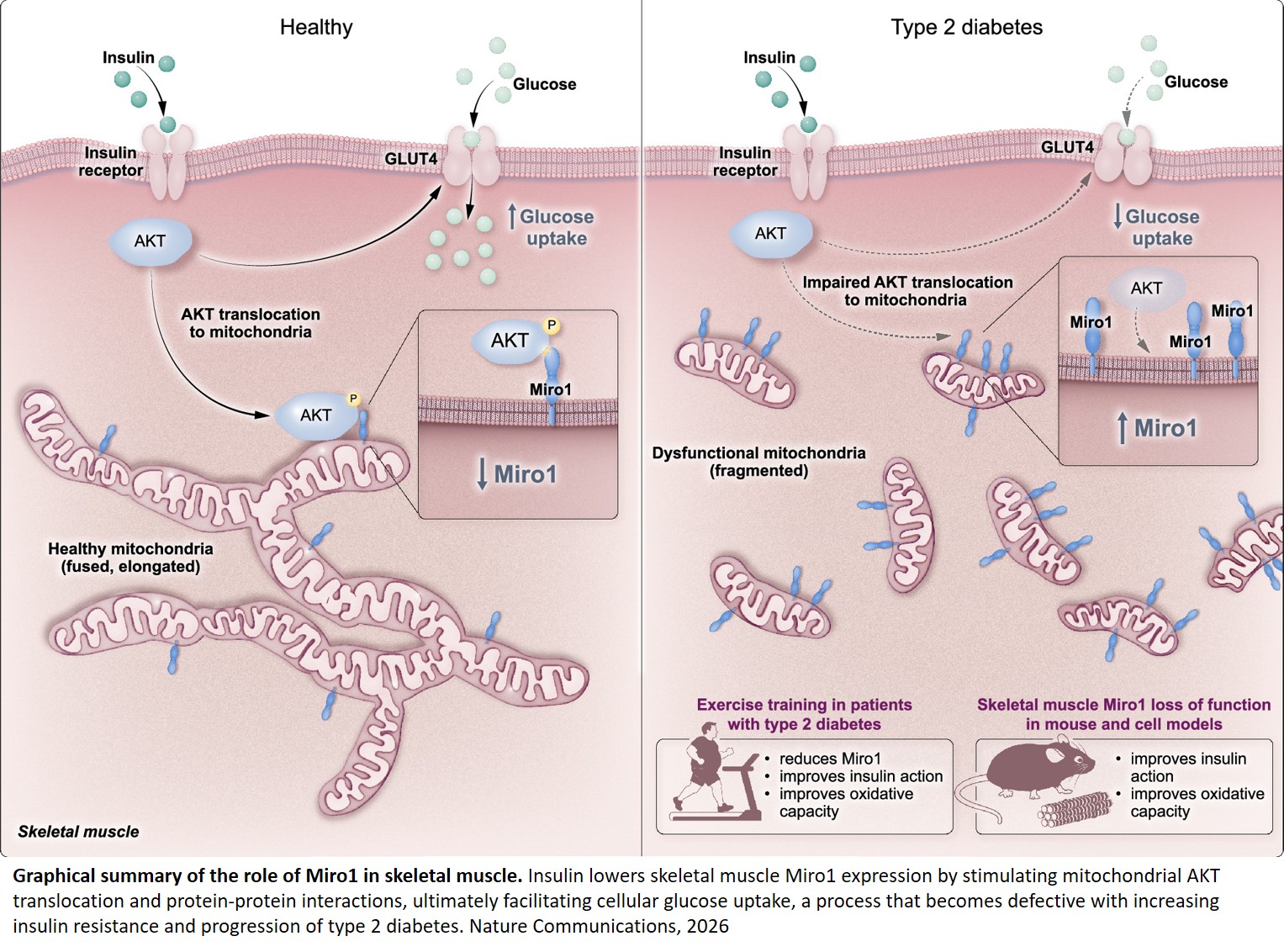
A protein called Miro1 found at elevated levels in the skeletal muscle of people with Type 2 diabetes may contribute to insulin resistance, potentially making it a target for future treatments that help the body regulate blood sugar, according to a study published in Nature Communications. Researchers found that removing Miro1 restored the muscles’ response to insulin in preclinical models, while exercise reduced the protein’s levels in people with Type 2 diabetes.
Miro1 (Mitochondrial Rho GTPase1) is a protein found on the outer membrane of mitochondria, the structures inside cells that produce energy. To better understand its role in diabetes, the team examined the protein in cells, preclinical models and people with Type 2 diabetes. This approach allowed the researchers to investigate Miro1’s effects on muscle function from the cellular level to its potential relevance in people with the disease.
“Insulin resistance in muscle is at the heart of Type 2 diabetes, and its molecular causes have remained frustratingly unclear. This study, the product of years of work, identifies Miro1 as a key part of the answer. By tracing Miro1 from cells to preclinical models to patients, we show that Miro1 accumulation impairs the muscle’s response to insulin, that removing it causally restores that response in our models, and that exercise reverses its buildup in people. For the field, this is a new therapeutic target. For patients, it deepens our understanding of why exercise is so effective and opens a path toward treatments that could one day complement it,” the author said.
Accumulation of Miro 1 was explained by inadequate insulin-mediated interaction between AKT and Miro1 at the outer mitochondrial membrane.
The role of exercise was established through a randomized controlled trial involving people with obesity and Type 2 diabetes, during which researchers compared aerobic exercise with standard medical care. Participants in the exercise group experienced reductions in muscle Miro1 levels, along with improvements in insulin sensitivity and the muscles’ ability to produce energy.
Although more research is needed to determine whether targeting Miro1 could lead to new treatments, the findings provide a foundation for further investigation into the causes of insulin resistance.
https://www.nature.com/articles/s41467-026-77278-6
https://sciencemission.com/Miro1-mediates-skeletal-muscle-insulin-resistance