

How sleep disturbance leads to intestinal diseases
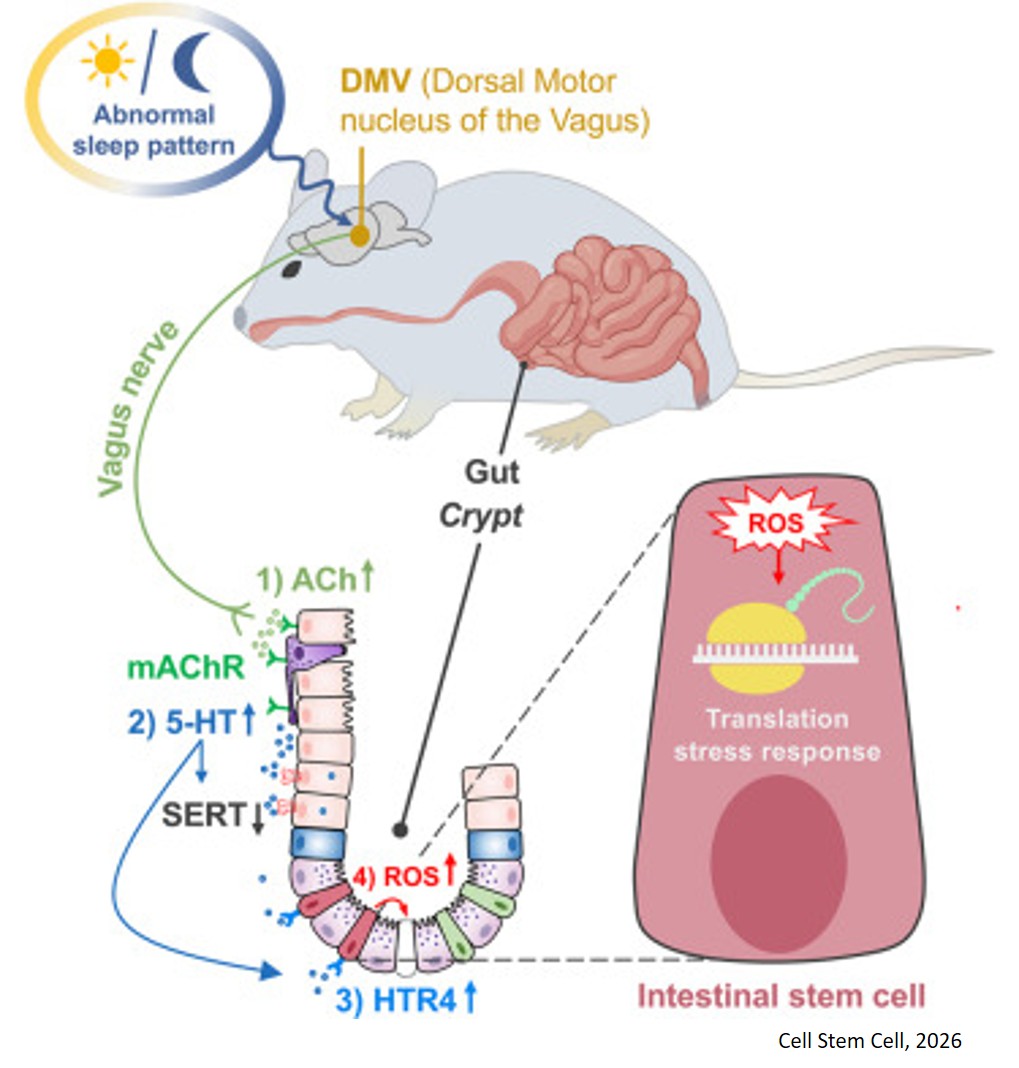
Various chronic disorders have been associated with sleep disturbances, one of them being chronic gastrointestinal diseases but the mechanism of sleep disturbance-induced aberrant neural signaling from the brain to the gut is not well understood.
The researchers show impairment in intestinal stem cell (ISC) function, resulting in shortening of crypt-villus architecture and Paneth cell loss in an acute sleep deprivation model.
They also demonstrate that mechanistically sleep deprivation activates dorsal motor nucleus of vagus (DMV) neurons, driving excessive acetylcholine release from the vagus nerve into the gut, which in turn triggers 5-hydroxytryptamine (5-HT) release by enterochromaffin cells and suppresses its reuptake via muscarinic receptors, thereby causing a spike in 5-HT levels, that induces excessive oxidative stress in ISCs through its receptor HTR4, promoting gut pathologies.
Thus, targeting the dorsal motor nucleus of vagus-vagus nerve-5-HT axis offers therapeutic opportunities for sleep disturbance-associated gastrointestinal disorder.
https://www.cell.com/cell-stem-cell/fulltext/S1934-5909(26)00025-1