

Refinement of thalamic reticular circuits during adulthood!
The dominant theory in neuroscience has been that the sensory processing circuits in our brain are finalized in early childhood and fixed afterwards. A recently published study, however, overturned this widely believed theory, and suggested that the brain remodels its own circuits even during adulthood and increases the precision of sensory perception.
In a collaborative study, the researchers showed for the first time that the brain’s “sensory checkpoint” is elaborately reorganized even during adulthood and this process is essential for high-resolution sensory perception. This study, which suggests a new paradigm that the maturation of brain circuits continue beyond adolescence into adulthood, was published in Neuron, which is one of the most prestigious neuroscience journals in the world.
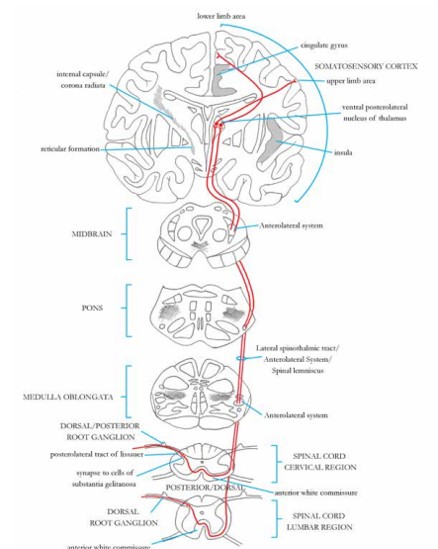
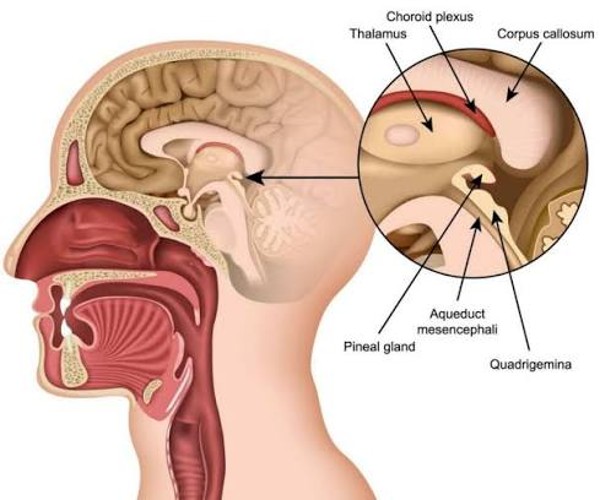
The reason humans are able to adapt and survive in complex environments is our ability to selectively receive only important information from other stimuli. The thalamic reticular nucleus (TRN) located in the thalamus of the brain serves as a “sensory checkpoint” that modulates external stimuli before they are transmitted to the cerebral cortex.
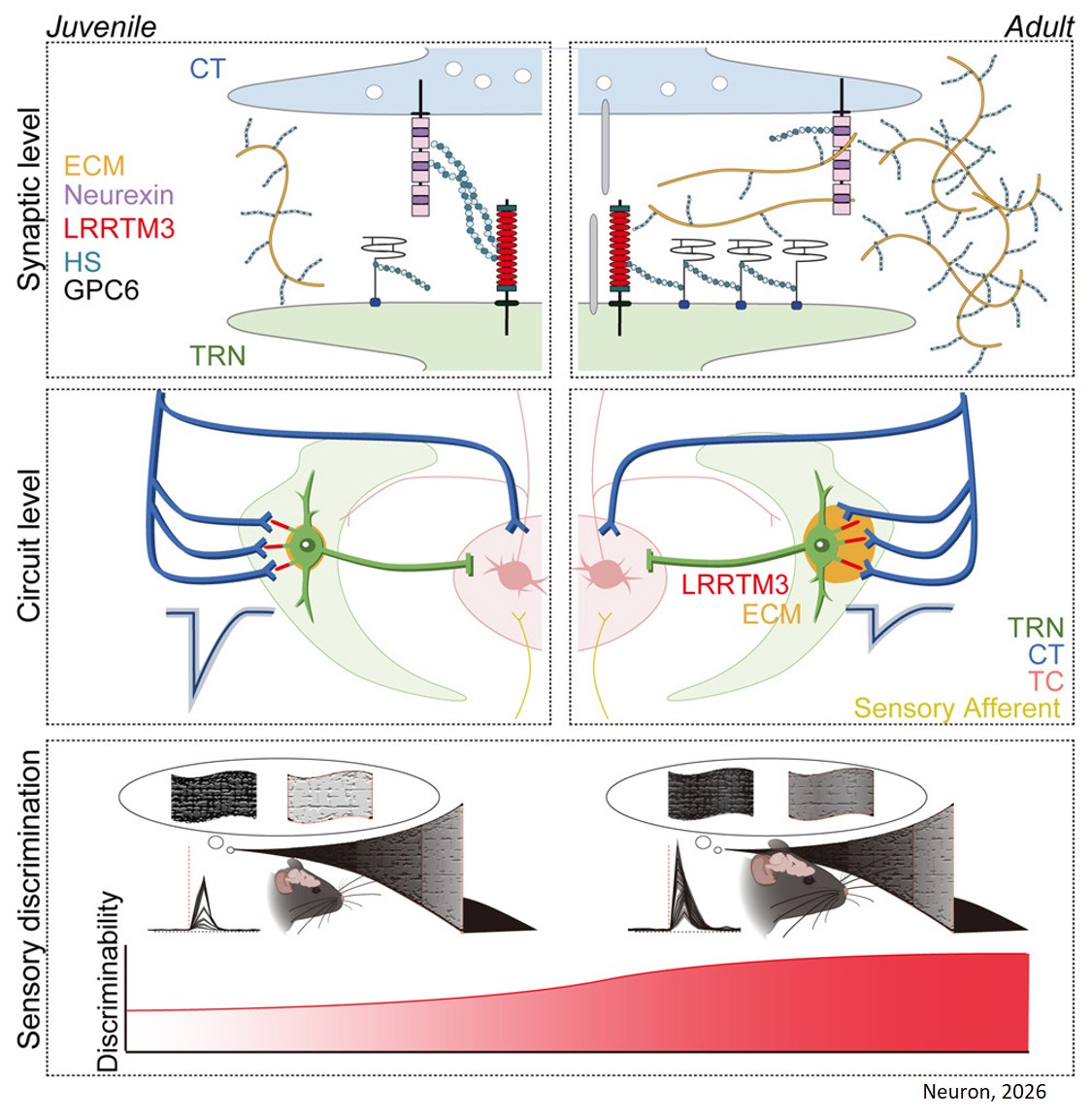
Academia has long believed that the design of this checkpoint is fixed after the “critical period in childhood. By precisely analyzing the developmental stages of the mouse model, however, the research team found that the TRN circuits are reorganized during the transition from adolescence to adulthood.
According to the findings, certain excitatory inputs to the TRN decrease during adulthood, which subsequently reinforces the ability to distinguish subtle tactile differences. The research team suggested that this change is not simply an accumulation of experiences but a proactive maturation process, during which the adult brain readjusts its circuits to optimize the way it processes sensory information. In other words, the brain “upgrades” at the circuit level even during adulthood to filter out unnecessary sensory signals more precisely and receive only important information more clearly.
The research team pinpointed synaptic adhesion protein LRRTM3 as a key molecule in this process. LRRTM3, which is specifically distributed in the TRN, fine-tunes connections between neurons and helps the brain switch to adult high-resolution sensory perception mode. In fact, mice, which had the LRRTM3 gene removed from the TRN, did not have sufficient readjustment of the circuits, which should have occurred in adulthood. As a result, the mice’s ability to distinguish subtle tactile sensations was greatly reduced.
The findings demonstrate that the enhanced sensory ability during adulthood is not just a learning effect but is directly linked to circuit redesign based on modulation at the molecular level.
The findings of this study hold social and industrial significance. Imbalances in sensory information processing are reported as an important feature across a variety of neuropsychiatric disorders, including autism spectrum disorder, attention deficit hyperactivity disorder (ADHD), and schizophrenia.
This study provided a scientific reference for understanding sensory and cognitive disorders not as a personality or behavioral problem but in terms of adult maturation and modulation mechanisms of the sensory checkpoint (TRN) circuits. Moreover, by specifically presenting the existence of brain plasticity during adulthood, this study is expected to provide important clues for identifying therapeutic targets aimed at restoring sensory and cognitive functions, establishing circuit-based neuromodulation strategies, and developing digital therapeutic and rehabilitation technologies in the future. At a time when the population is aging across society, sensory and cognitive decline is directly linked to quality of life. Hence, this study has a huge impact as it broadens the potential for functional recovery even in adulthood.