



Timing of exercise may help with type 2 diabetes
Circadian clock gene rhythms are disrupted in type 2 diabetes, contributing to impaired glucose metabolism and hormonal dysregulation.
Exercise acts as a zeitgeber (time-giver) that modulates internal biological clocks, with timing emerging as an important factor for metabolic outcomes in type 2 diabetes.
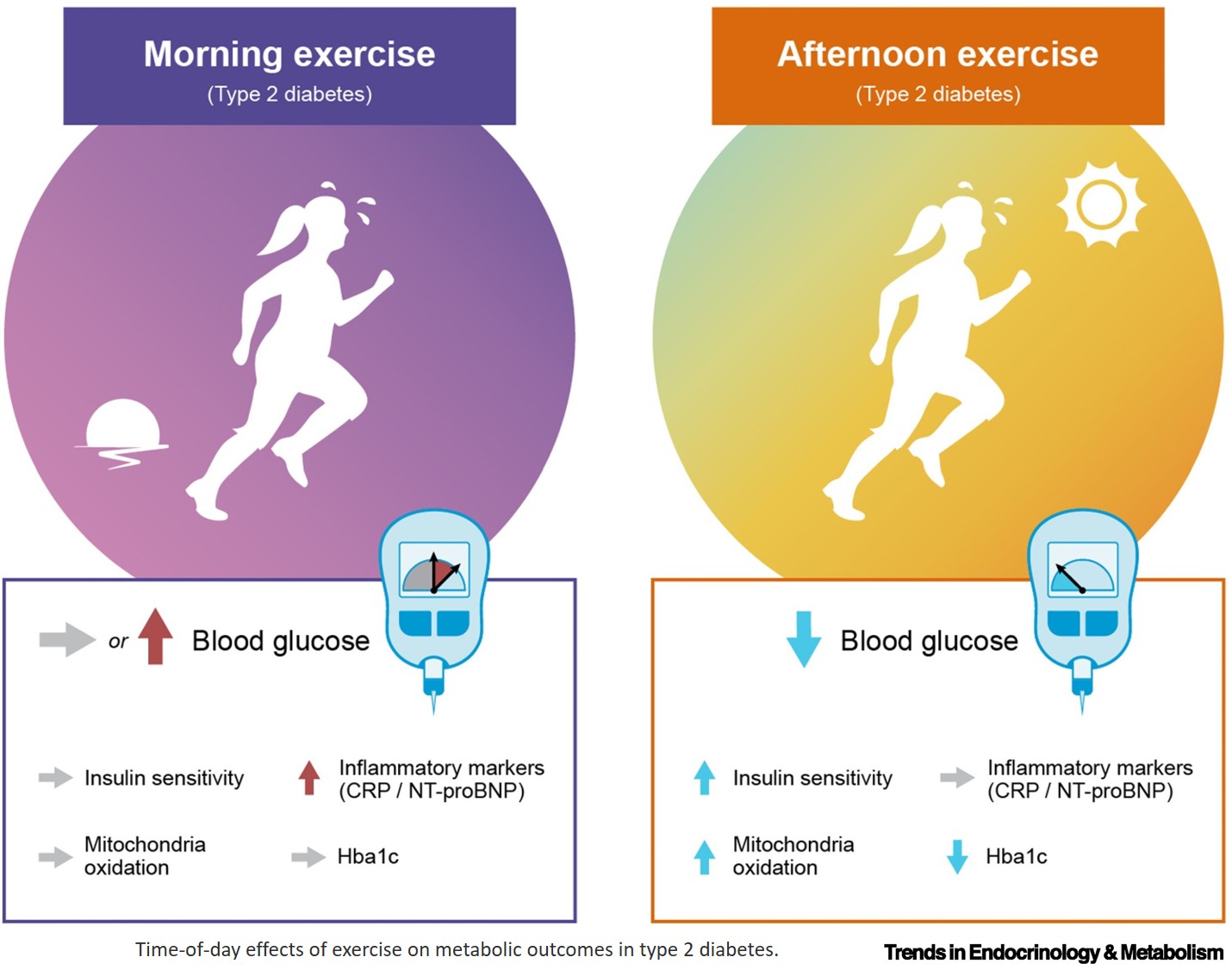
Afternoon and evening exercise (moderate to high intensity) consistently improves glycem ic control and insulin sensitivity in type 2 diabetes, whereas morning exercise has little effect or may worsen metabolism by raising blood glucose levels.
Afternoon exercise in type 2 diabetes is associated with lower cortisol and inflammation levels, as well as greater oxidative capacity, compared with morning exercise.
The timing-dependent effects of exercise in type 2 diabetes appear to be intensity dependent, highlighting an important interaction between when and how intensely individuals with type 2 diabetes exercise.
https://www.cell.com/trends/endocrinology-metabolism/fulltext/S1043-2760(26)00030-5