

How vitamin B2 could play a role in cancer therapies
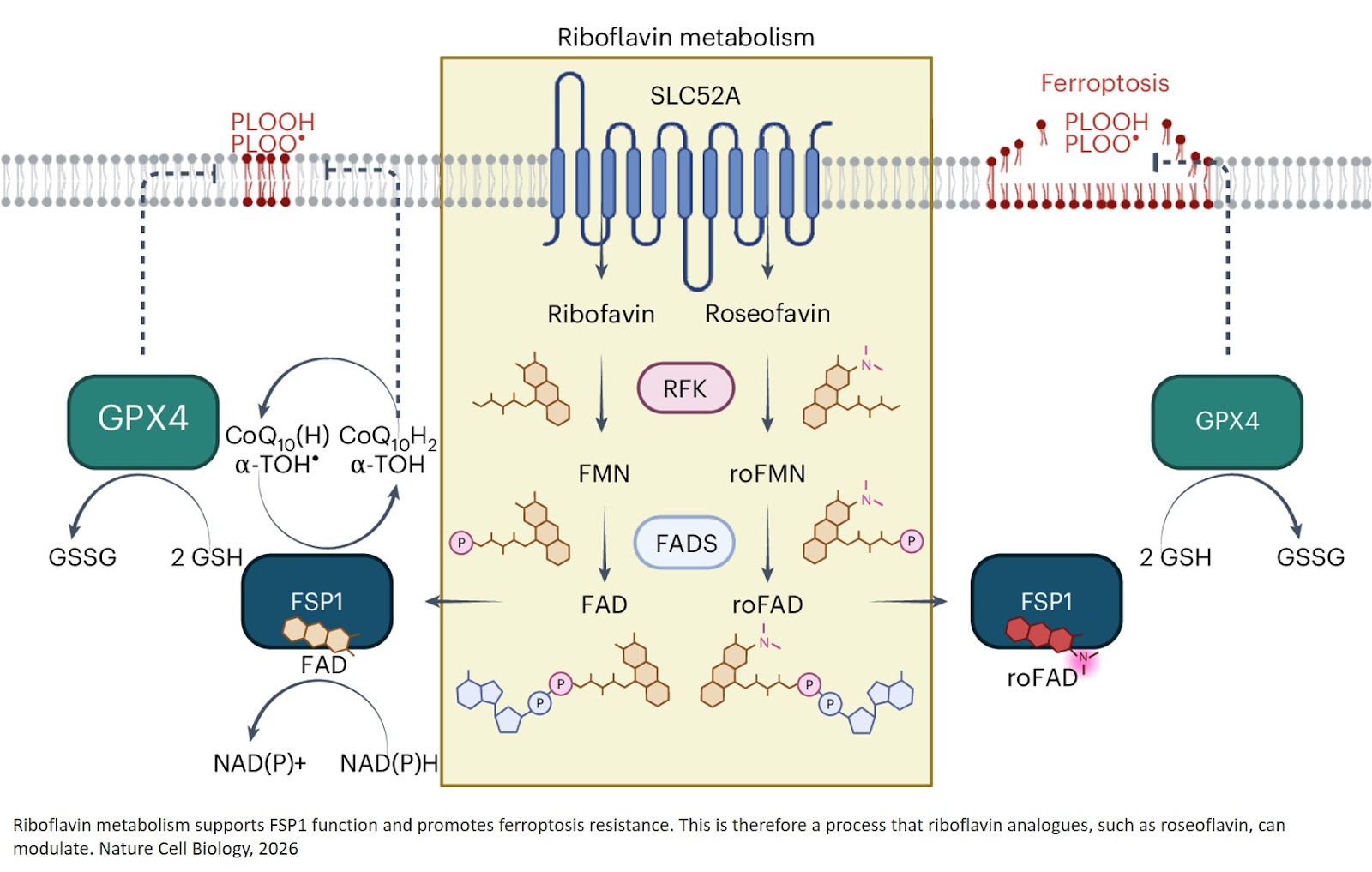
The human body cannot produce vitamin B2 – also known as riboflavin – itself; it must absorb the important substance through diet. The vitamin can be found in dairy products, eggs, meat and green vegetables. The metabolism converts it into molecules that protect the cell from oxidative damage, among other functions.
Researchers have discovered that this function of the vitamin also has a downside: it also protects cancer cells.
"Vitamin B2 plays a crucial role in protecting cancer cells from ferroptosis, a special form of programmed cell death," says a PhD student. The results have been published in the renowned journal Nature Cell Biology.
The human body uses the mechanism of programmed cell death to allow damaged or dangerous cells to "die" in a controlled manner without causing inflammation in the surrounding tissue. Specifically ferroptosis is associated with many pathological conditions, including cancer and neurodegeneration.
Unlike other cell-death pathways, ferroptosis is triggered when iron-driven lipid peroxidation overwhelms a cell’s antioxidant protection. Cancer cells often evade ferroptosis by boosting redox defense systems. This study highlights vitamin B2 metabolism as an important contributor to those defenses, implying that targeting riboflavin-derived cofactors could weaken ferroptosis resistance and make tumours more vulnerable.
The protein FSP1, a focus of the working group’s research, is among the components responsible for protecting healthy cells from cell death. Vitamin B2 supports the protein in this task. Using genome editing and cancer cell models, the researchers observed that a deficiency of the vitamin made cancer cells more susceptible to ferroptosis.
Ideally, it should be possible to utilise this therapeutically: Switching off the metabolic pathway of vitamin B2 and thus specifically triggering the death of cancer cells. "However, an inhibitor that can do this is still missing," says the author. The researchers addressed this limitation by employing roseoflavin, a natural compound with a structure like vitamin B2 and produced by bacteria.
In the laboratory, the team tested the active substance in cancer cell models: "It turned out that roseoflavin triggers ferroptosis in low concentrations," says the group leader, "our experiments show the feasibility of this concept." The study thus paves the way for the development of targeted cancer therapies based on ferroptosis.
In the next step, the working group will focus on developing inhibitors of vitamin B2 metabolism; the aim will be to evaluate their use in preclinical cancer models.
The senior author adds: “Ferroptosis is not only relevant to cancer. Increasing evidence suggests that it also contributes to pathological processes in neurodegenerative diseases and in tissue damage following organ transplantation or ischemia-reperfusion injury.” Understanding how vitamin B2 metabolism influences ferroptosis may therefore have broader implications for diseases in which excessive or insufficient ferroptosis is implicated.
https://www.nature.com/articles/s41556-025-01856-x
https://sciencemission.com/Riboflavin-metabolism