



Anaerobic oxidation of short-chain volatile alkanes
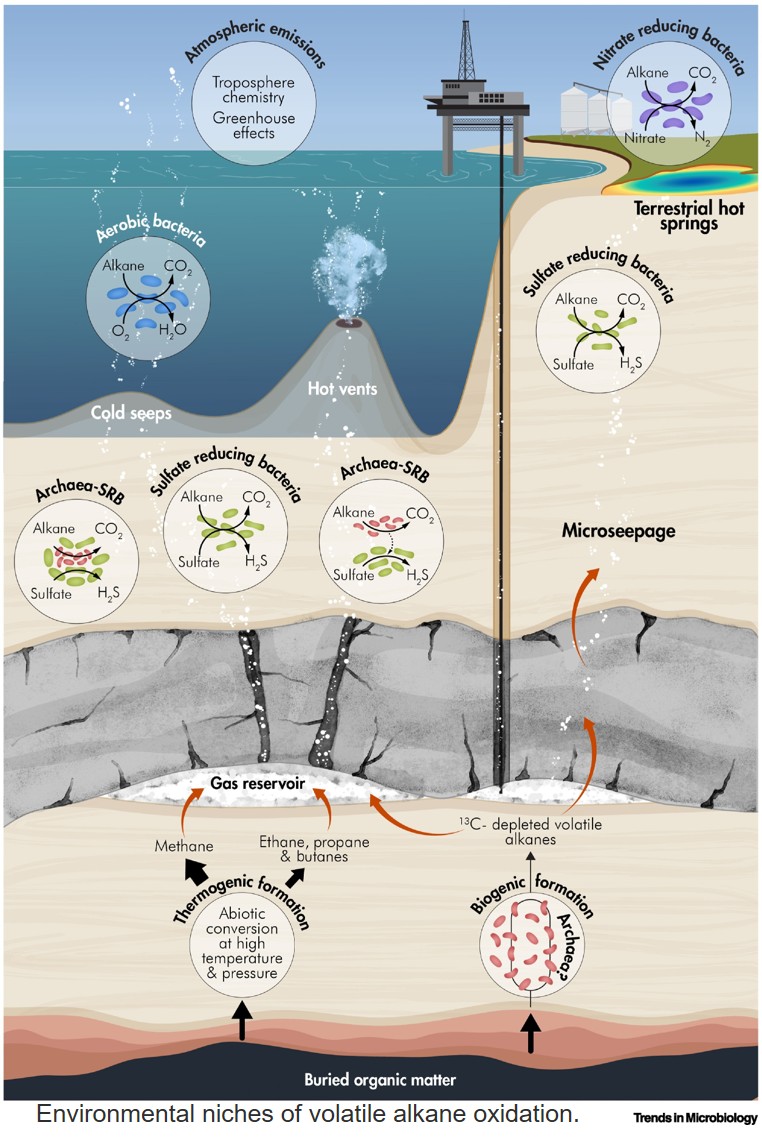
Emissions of short-chain volatile alkanes, which constitute major fractions of natural gas reservoirs, impact global carbon cycling and climate regulation.
Anaerobic oxidation of volatile alkanes is limiting atmospheric emissions across diverse anoxic environments, from gas reservoirs and deep-sea sediments to wastewater treatment plants.
Nitrate- and sulfate-reducing bacteria activate volatile alkanes by addition to fumarate, forming alkylsuccinates as key intermediates.
Alkane-oxidizing archaea, partnering with sulfate-reducing bacteria in syntrophic associations, activate volatile alkanes via alkyl-coenzyme M reductases, a paradigm-changing mechanism.
Isotope probing, metabolite analysis, and environmental sequencing revealed a broad microbial and metabolic diversity of anaerobes thriving on volatile alkanes.
https://www.cell.com/trends/microbiology/fulltext/S0966-842X(25)00189-1