

Mechanisms of α-ketoglutarate signaling to chromatin
Scientists have identified a new mechanism by which mitochondria, the powerhouses inside cells, communicate to cell nuclei to program changes in gene expression in neurons supporting brain development.
The team’s study, published in Science reveals that a deficiency in a particular metabolite in the nucleus is a key mechanism underlying the genetic disorder GPT2 deficiency.
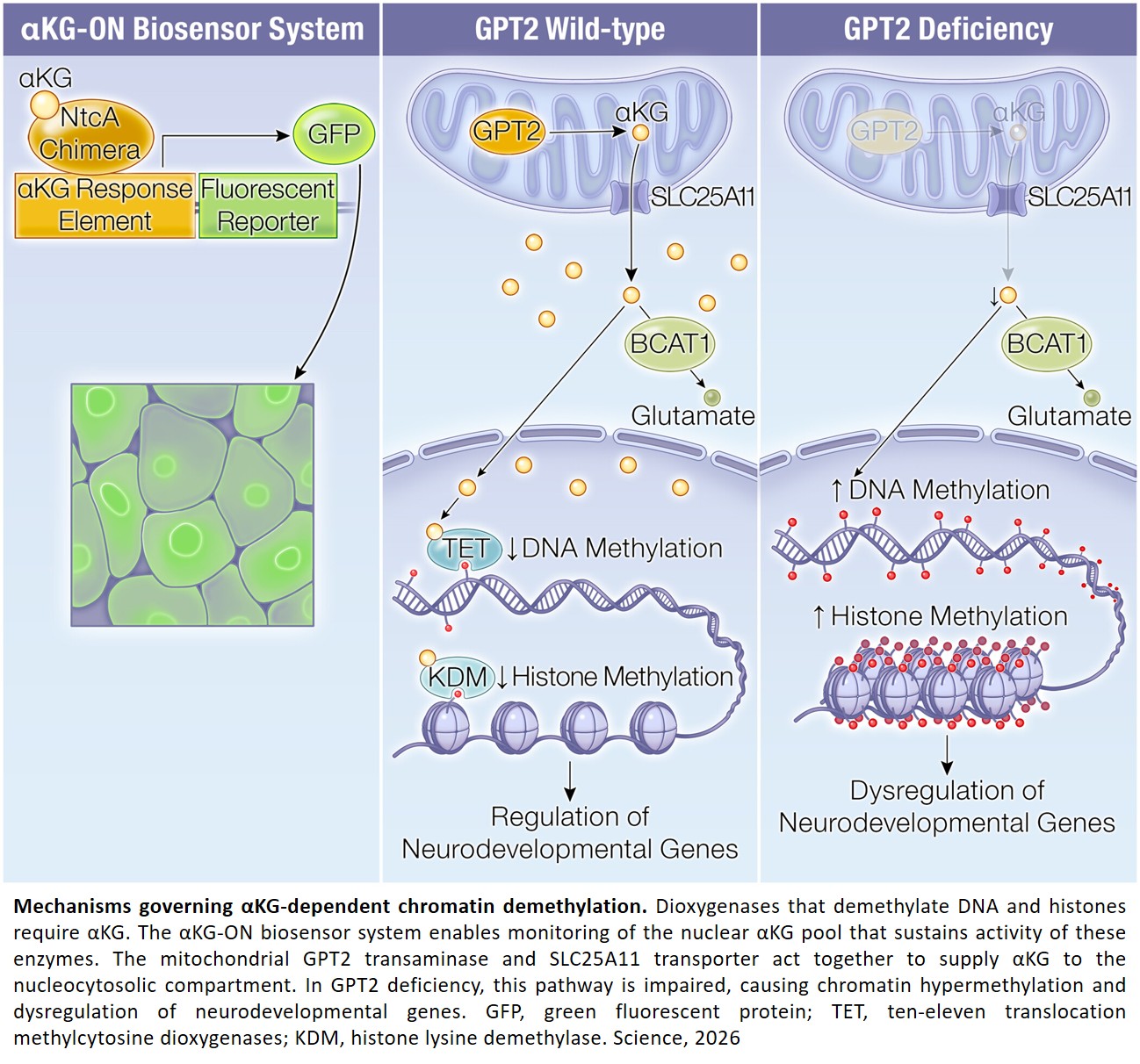
The mechanism involves the production of the metabolite alpha-ketoglutarate (aKG) in the mitochondria, which is then transported to the nucleus where aKG supports a process essential in unwinding DNA and ensuring appropriate regulation of gene expression programs critical for neurodevelopment.
The mitochondrial enzyme GPT2 was known to produce aKG and thereby to drive neuron energy production and growth and brain development in babies. In 2016, the disorder GPT2 deficiency, in which babies born with a genetic condition causing loss of the GPT2 enzyme demonstrate intellectual and motor disabilities.
In recent and seemingly unrelated studies focusing on cell growth in cancer, the researchers were studying how aKG regulates enzymes in the nucleus that modify DNA packaging and gene expression. They built a biosensor that reports the level of aKG specifically within the nucleus, and the team used it to discover that GPT2, even though positioned inside the mitochondria, was a major source of aKG for the nucleus.
According to the researchers, aKG plays a dual role in cell metabolism. In addition to being part of a mitochondrial process governing energy production and cell growth, it’s also used in the nucleus by enzymes that control how tightly DNA is bunched. aKG levels in both locations coordinate these two processes, thereby orchestrating cell metabolism and development.
Meanwhile, researchers in the lab had developed GPT2-deficient mouse models for use in studying metabolite supplementation to develop treatments for GPT2 deficiency. Working collaboratively at their respective institutions, the authors found that GPT2-deficient mice have abnormal signatures of DNA packaging and gene expression in the brain.
“The disruption of GPT2 activity causes substantial changes in DNA structure, most profoundly in brain cells, which dysregulates many important genes that must turn on during brain development,” the author said.
By supplementing aKG from birth in newborn mice lacking the GPT2 enzyme, measures of DNA packaging were improved, and the mice were less likely to show signs of disease such as faltering weight gain.
"We are really excited about the possibility of developing treatments, such as potentially dietary supplements, that will help patients,” the author said. “The discoveries in this paper provide important new insights on mechanisms, and we are engaged in additional preclinical studies to further investigate potential treatments.”
The findings in mice offer a new approach for research of GPT2 deficiency in humans.
“I think there's a high degree of hope that we might be able to employ this treatment strategy in patients and really move the needle in that disease context,” the author said. “We've nominated a metabolite supplementation strategy that might exert therapeutic activity and prevent some of the defects in neurodevelopment that afflict patients with GPT2 deficiency.”