

Risk in the use of artificial intelligence in genomics
Foundation models such as Nucleotide Transformer and Evo models have emerged as transformative tools, enabling multimodal DNA–RNA–protein design with demonstrated capabilities in identifying regulatory elements and generating functional biological elements including CRISPR-Cas systems and transposon arrays.
The first viable artificial intelligencedesigned bacteriophage genomes have been successfully created and tested in laboratory settings, with some exhibiting greater fitness and faster lysis dynamics than wild-type phages, proving that the principle of genomic design is practically feasible and elevating dual-use risk from a theoretical to an immediate concern.
Multiple complementary techniques are being developed to enhance model transparency, validate predictions, and enable the detection of model failures in high-stakes applications.
Implemented technical safeguards, including data filtering to remove human pathogens, are not sufficient to protect against the potential harms of genomics foundation models and need to be improved.
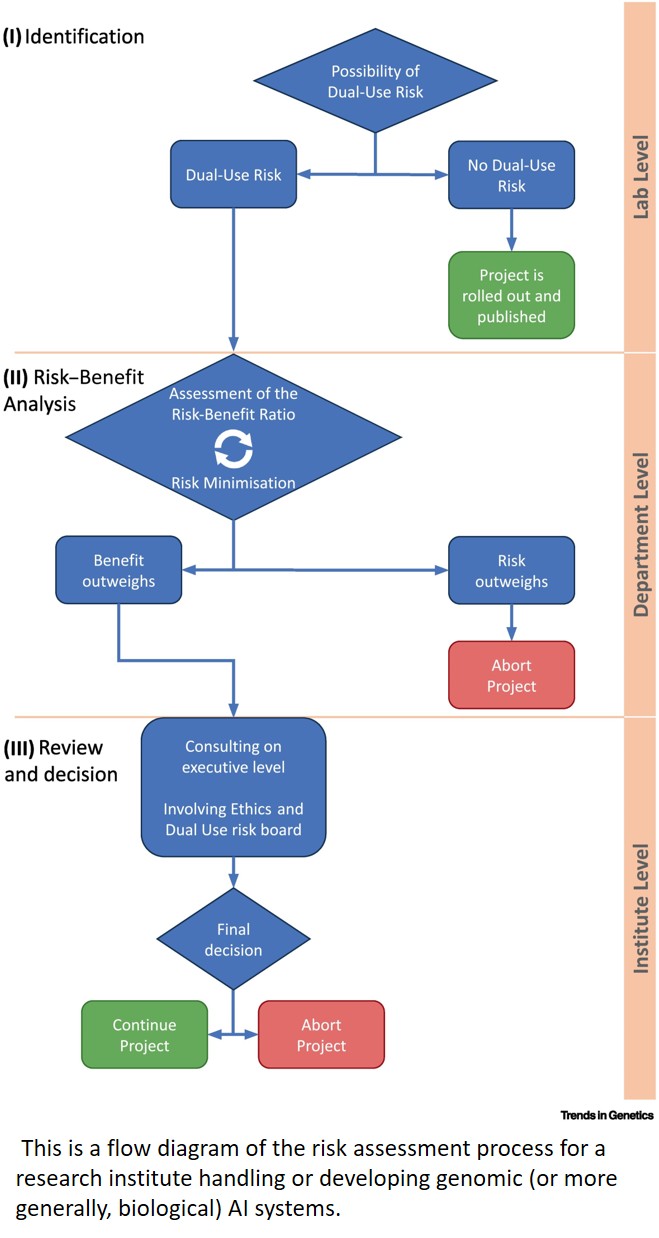
The EU AI Act has classified genomic artificial intelligence applications as high risk, establishing new regulatory standards that mandate rigorous bias assessments, transparency requirements, and comprehensive risk management throughout the development and deployment lifecycle.
https://www.cell.com/trends/genetics/fulltext/S0168-9525(26)00092-2
https://sciencemission.com/artificial-intelligence-in-genomics