

Immune modulation by endothelial cells in atherosclerosis
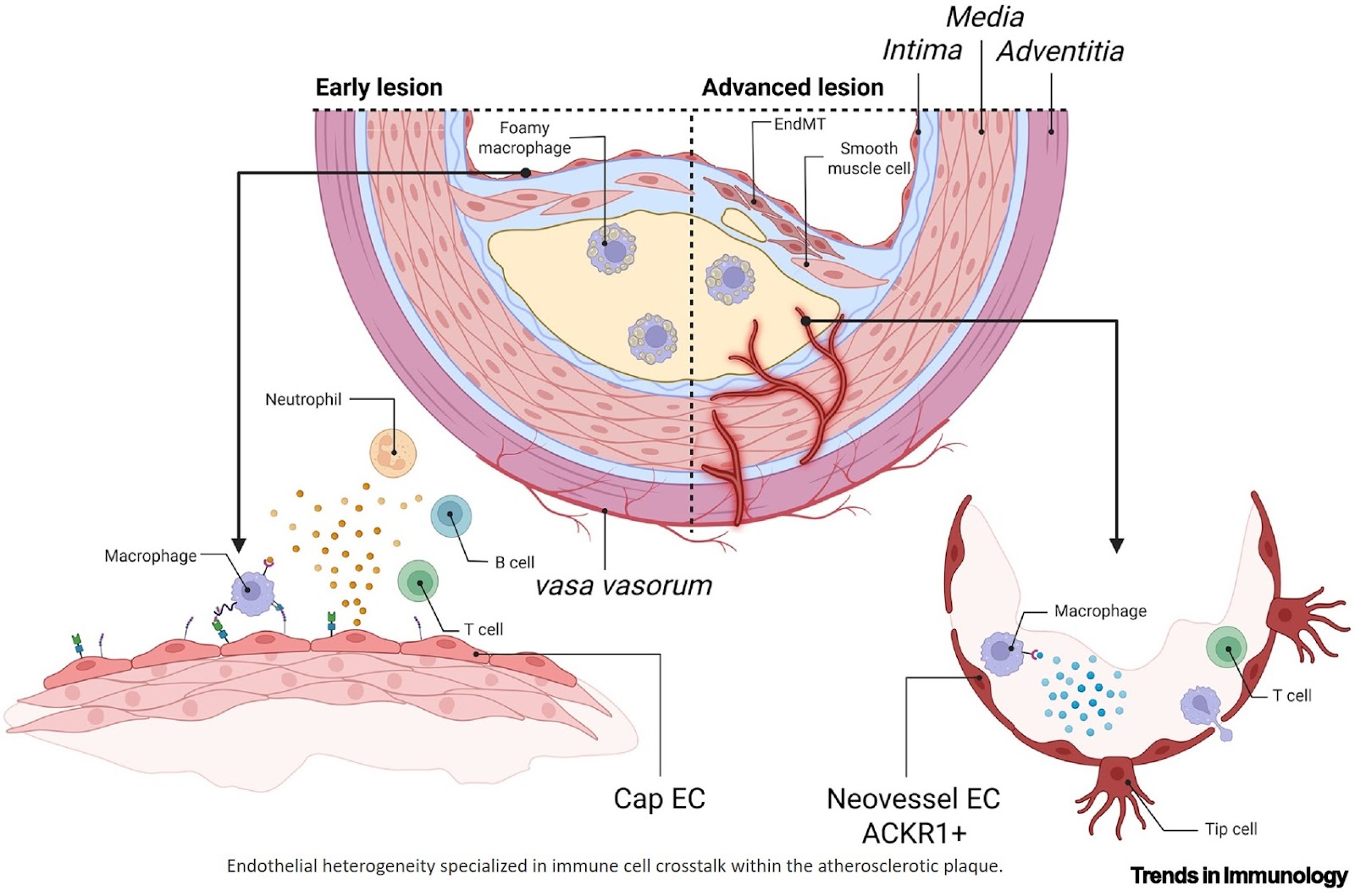
Endothelial cells actively regulate immune cell recruitment and behavior, controlling adhesion, activation or suppression, and transmigration throughout all stages of atherosclerotic plaque development. Endothelial cells communicate with immune cells via an integrated network of signaling molecules.
These include chemokines (e.g., C-C motif chemokine ligand 2 and CXC motif chemokine 12), cytokines (e.g., interleukin-1β and interleukin-6), adhesion molecules (e.g., Vascular Cell Adhesion Molecule-1 and Intercellular Adhesion Molecule-1), extracellular vesicles, and immunemodulatory proteins such as PDL-1.
Endothelial cell heterogeneity is stageand region-dependent within atherosclerotic plaques: among others, specialized inflammatory and angiogenic endothelial cell phenotypes coordinate immune cell recruitment and activation locally, while endothelial cell-derived cytokines/ chemokines and extracellular vesicles may propagate low-grade systemic inflammation.
https://www.cell.com/trends/immunology/fulltext/S1471-4906(26)00041-4
https://sciencemission.com/immune-cell-responses-in-atherosclerosis