

Insular cortex is a link between sensory experience and bodily consequences
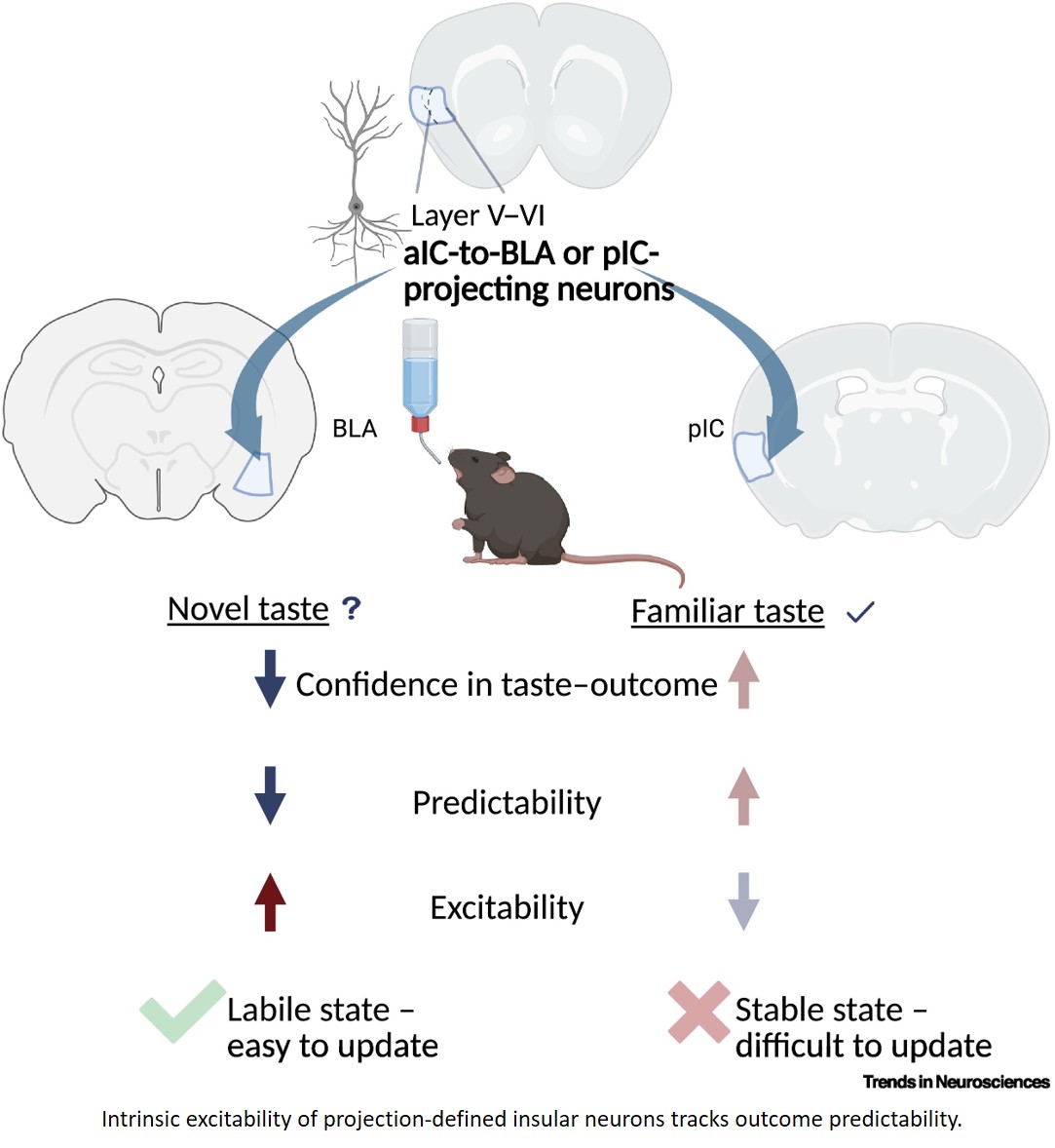
The insula links sensory cues to predicted bodily consequences across taste, visceral, metabolic, and immune domains.
Taste learning provides a circuit-level model for how insular pathways encode, update, retrieve, and reinstate learned cue–body associations.
Anterior–posterior, laminar, projection defined, inhibitory, and neuromodulatory mechanisms provide distinct routes for insular output selection.
Physiological state and developmental history bias whether insular associations are stabilized, updated, or retrieved.
Conditioned immune responses extend this framework to learned physiological control, while shared taste–immune microcircuits remain unresolved.
https://www.cell.com/trends/neurosciences/fulltext/S0166-2236(26)00141-4