

How LRRK2 mutation disrupts dopamine signaling in Parkinson’s disease
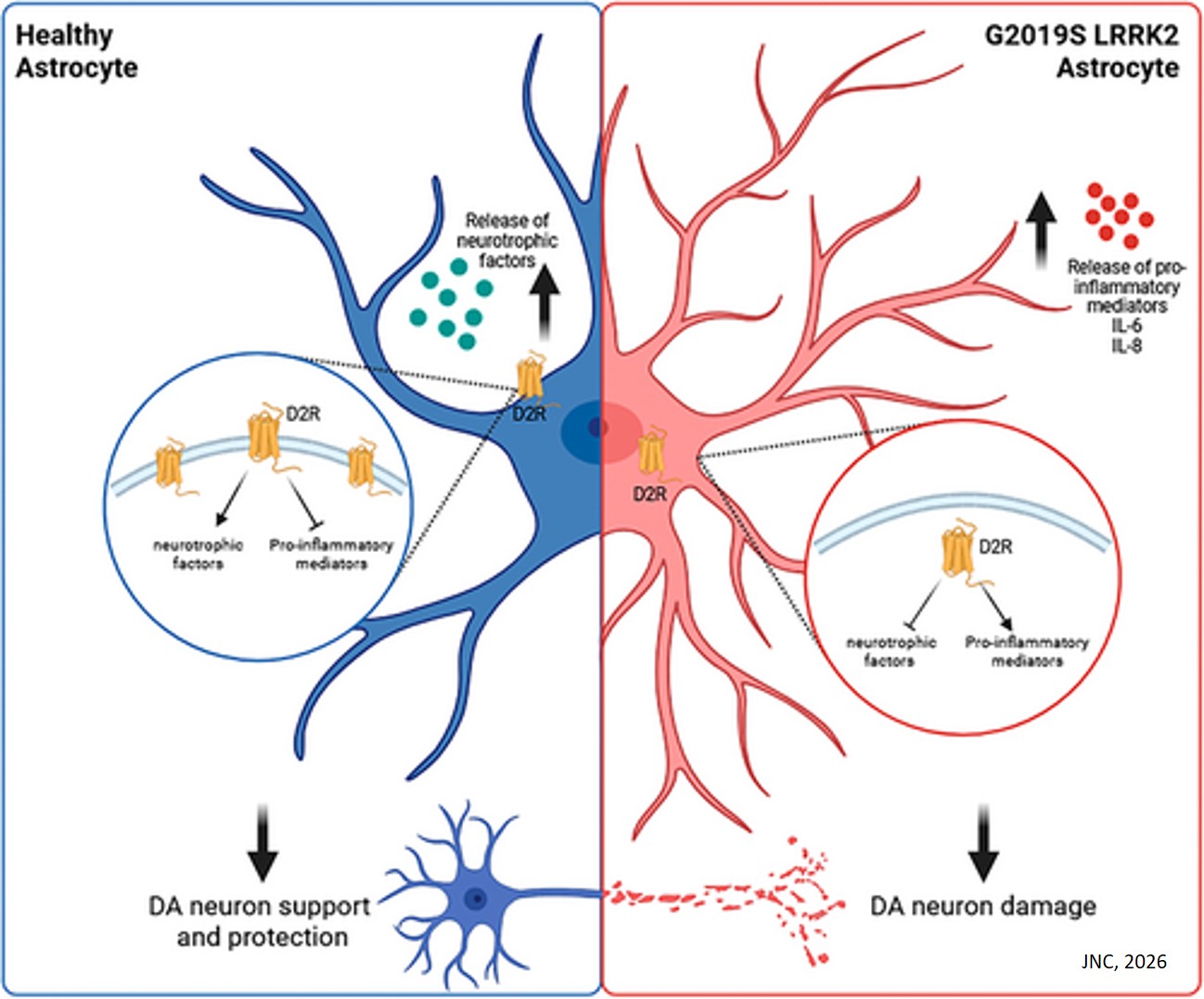
In addition to maintaining neuronal homeostasis, astrocytes in the brain express variety of neurotransmitter receptors to sense extracellular signals and respond by releasing neuroactive mediators.
Astrocytes also express dopamine (DA) receptors (D2R), and release trophic factors to suppress neuroinflammation.
The researchers in this study generated human astrocytes from induced pluripotent stem cell (iPSC) lines derived from two PD patients bearing LRRK2 kinase activating mutation.
The authors show that LRRK2 mutated astrocytes displayed a reactive phenotype with increased secretion of inflammatory cytokines. They also demonstrate reduced membrane expression of D2R in LRRK2 mutated astrocytes.
Inhibiting the abnormally increased kinase activity was able to revert the PD astrocytes' reactive phenotype and to rescue the D2R membrane localization.