

Mental privacy and brain–computer interfaces
Brain–computer interface technologies are advancing rapidly and are expected to soon deliver considerable benefits for people affected by brain and spinal disorders and injuries.
The integration of artificial intelligence with brain–computer interfaces has accelerated the development of decoding models that now reconstruct perceived and imagined experiences, inner speech, and intentions with increasing accuracy and detail.
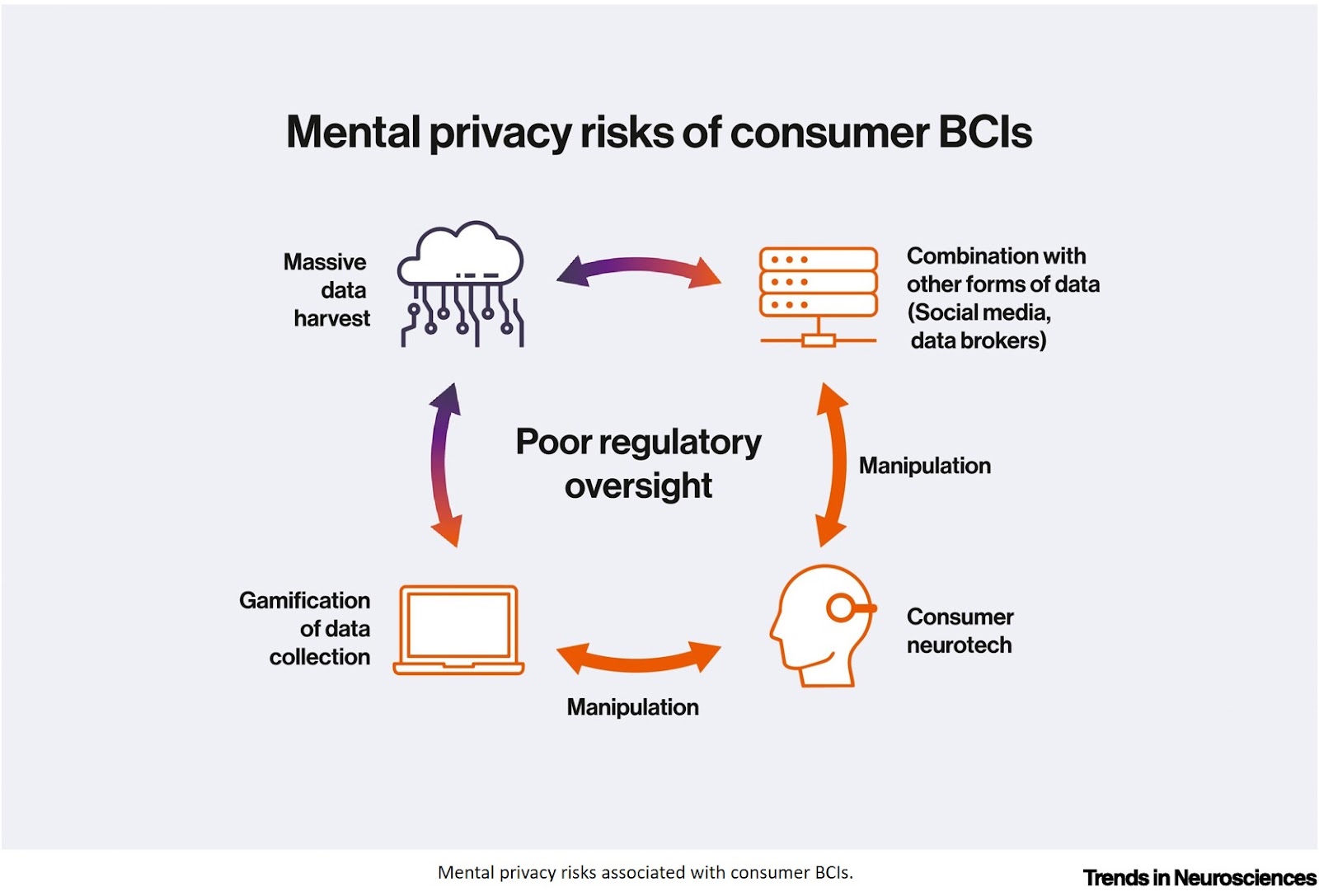
A consumer market is also emerging, with little regulatory oversight and with the potential for mass adoption, posing a risk to mental privacy and cognitive liberty.
The authors argue that designing brain–computer interfaces with built-in privacy protections and ensuring that brain data are excluded from the commercial data economy are essential to safeguarding mental privacy.
https://www.cell.com/trends/neurosciences/fulltext/S0166-2236(26)00185-2