

Metastatic niche in organoid models
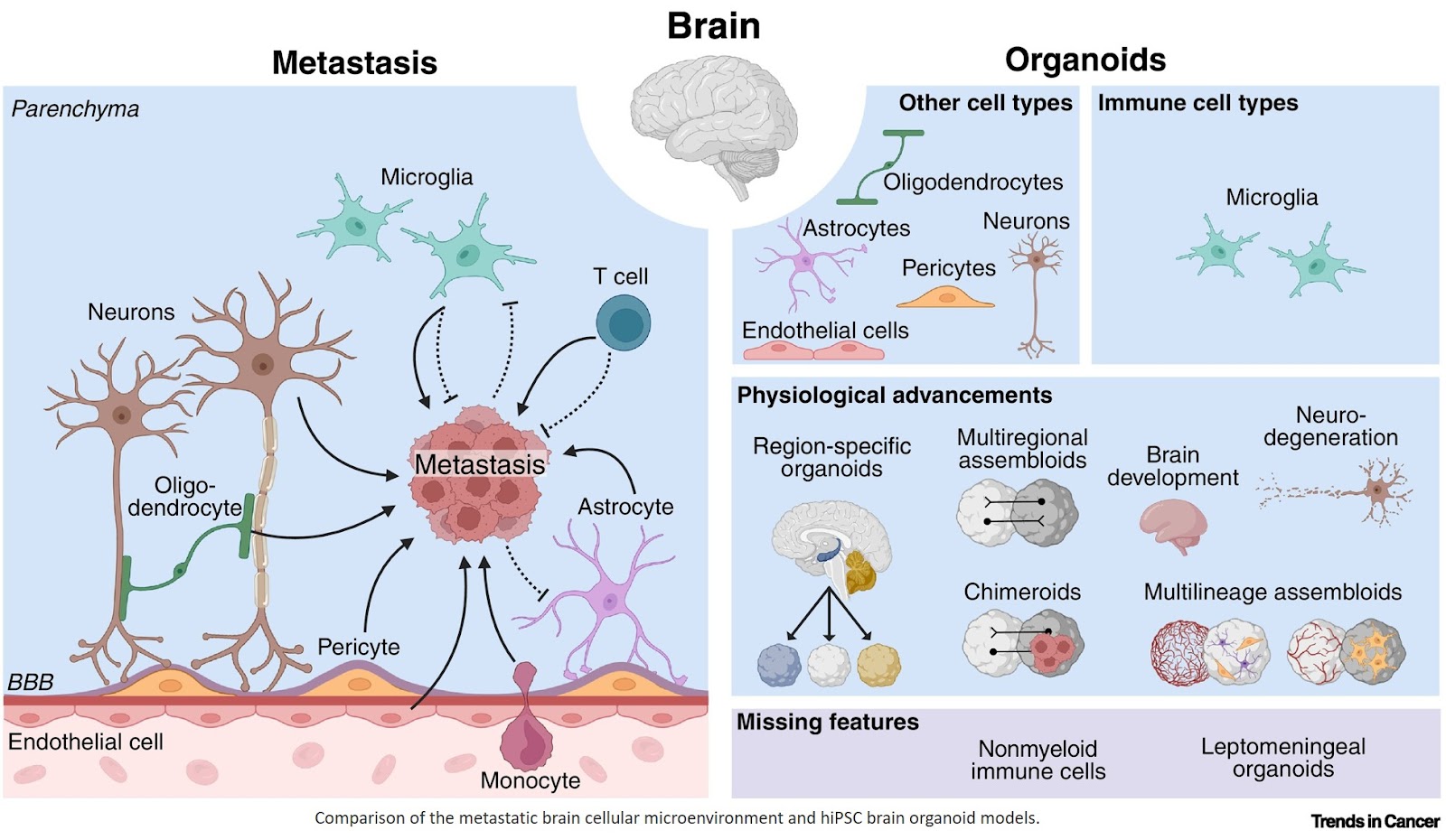
The mortality rate of cancer patients remains high, mainly due to the lack of metastasis-tailored treatments, highlighting the need for alternative experimental approaches that capture metastatic development in a human context.
Human-induced pluripotent stem cell derived organoids cocultured with cancer cells (‘chimeroids’) have the potential to emulate aspects of colonized organ specific microenvironments and offer an alternative platform for target identification and drug discovery, as these models are amenable to scalable genetic and chemical perturbation screens.
Conceptually, organoid models have progressed from epithelial-only organoids to multilineage, niche enriched systems incorporating stromal, vascular, and tissue-resident immune components, thereby bringing in vitro models closer to organ-specific metastatic microenvironments.
Yet no single organoid model fully recapitulates the entire complexity of an organ in vivo; thus, model selection must be driven by the specific scientific question, ensuring that the relevant stage of metastatic development and organ microenvironment are appropriately represented.
https://www.cell.com/trends/cancer/fulltext/S2405-8033(26)00036-1
https://sciencemission.com/organoid-models-emulating-metastatic-niches