

Microglia in systemic neuroimmune communication
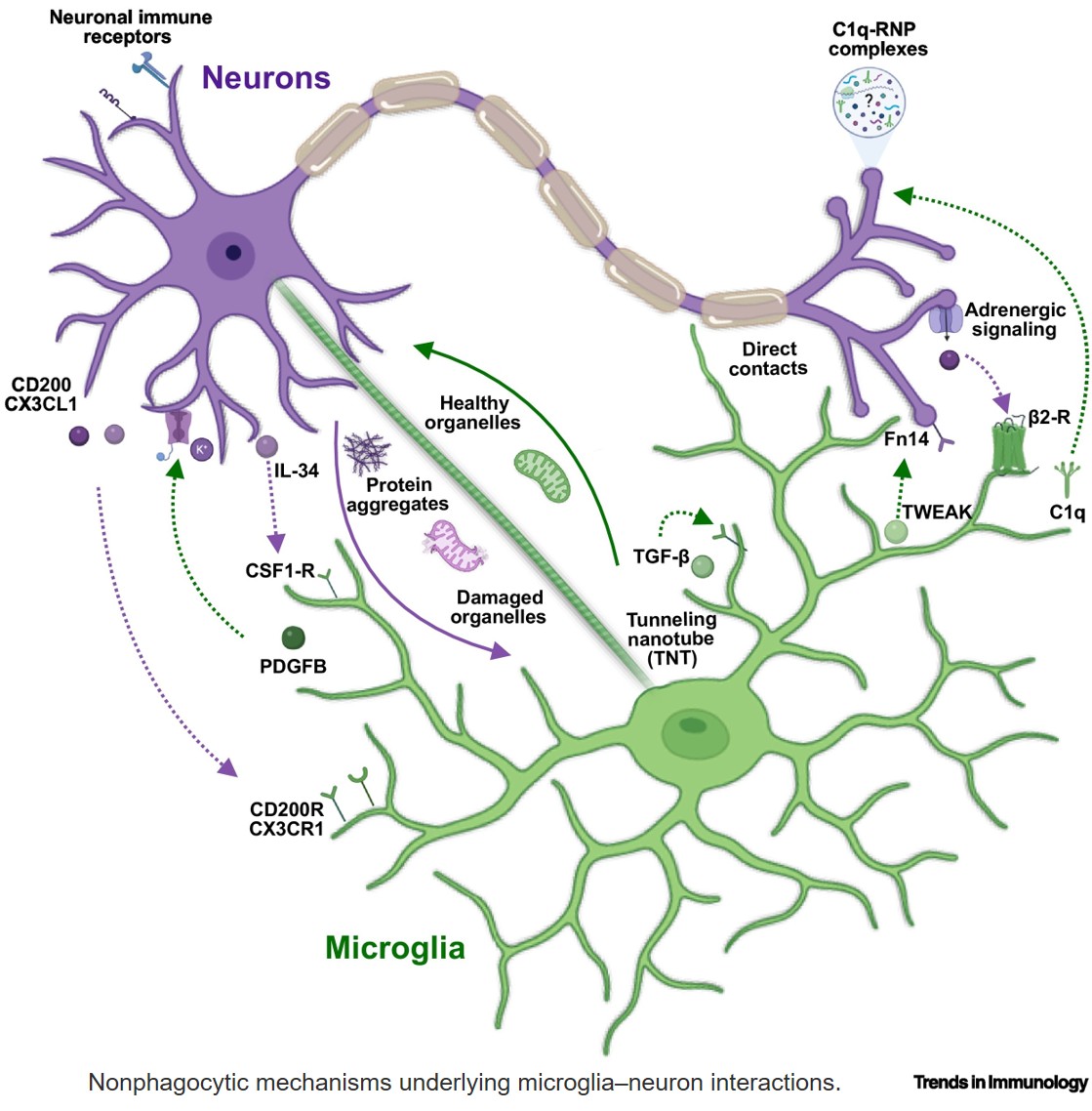
Microglia are the immune cells of the brain parenchyma and exhibit various transcriptional signatures, indicating diverse functions during development, adulthood, and aging in both healthy and diseased conditions.
Microglia are the primary phagocytes of the brain, but their functions extend beyond this role. They impact neurons, astrocytes, and oligodendrocytes through direct interactions or the secretion of immune molecules.
Microglia are long-lived and can develop ‘immune memory’, allowing them to impact brain functions long after local or systemic perturbations.
Microglia respond to peripheral cues, including immune activation, diet, exercise, and pain, which can drive lasting changes in their function and affect brain health.
Technological advances have enabled the comparison of rodent and human microglial states and function.
https://www.cell.com/trends/immunology/fulltext/S1471-4906(25)00310-2
https://sciencemission.com/Microglia-in-systemic-neuroimmune