

Protein regulation by carbamate post-translational modifications
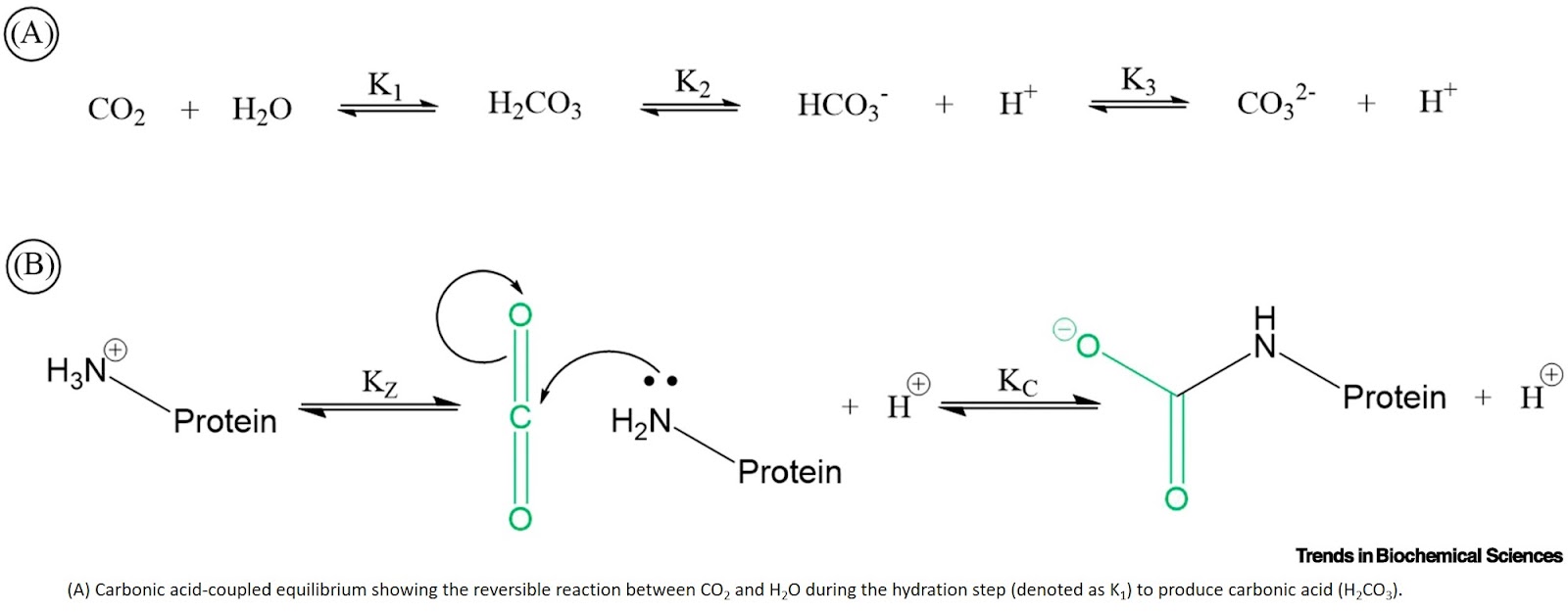
Carbon dioxide can modulate cellular processes through the carbamate posttranslational modification on select lysine ε-amino groups.
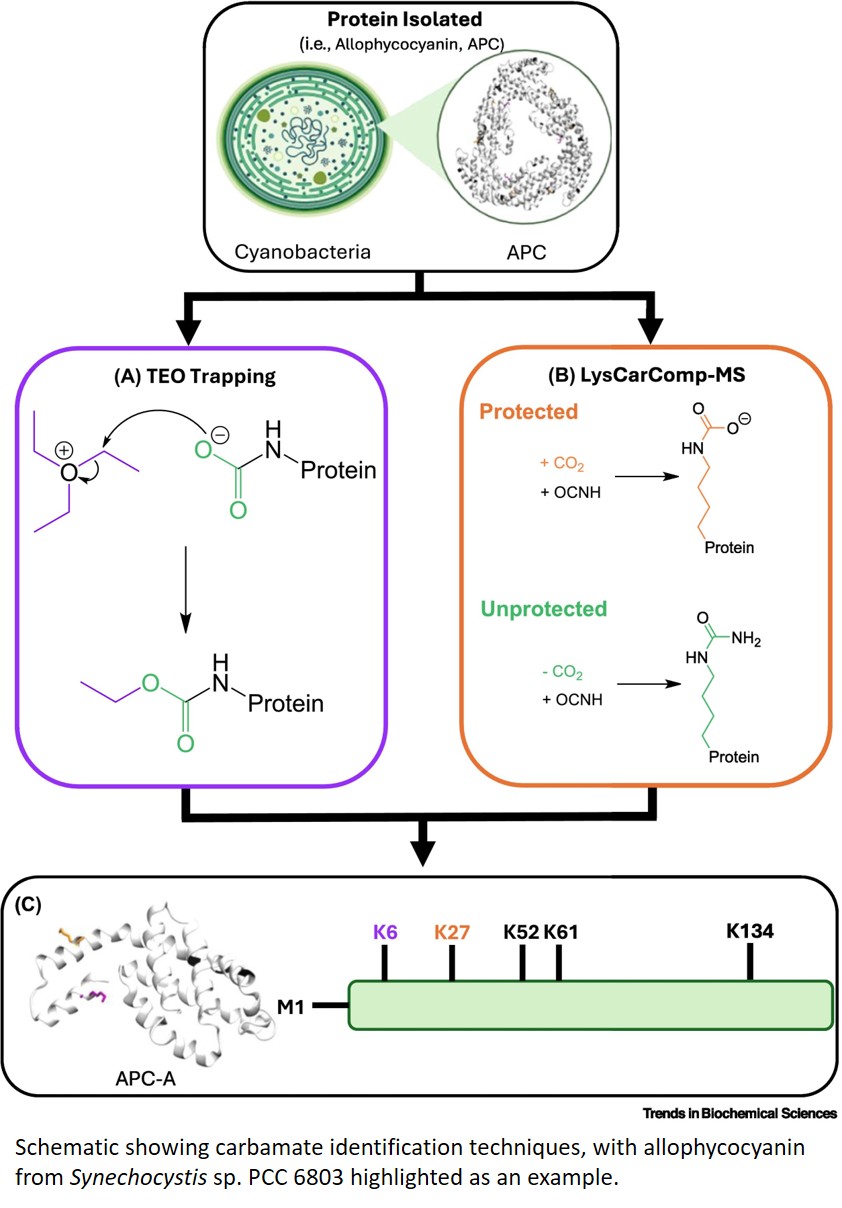
Carbamate chemistry, including the rapid reversibility of the reaction, made discovery of new carbamylation sites challenging.
Recent methodological advances have led to the increased identification of carbamate post-translational modifications on a variety of proteins across species.
Complementary computational prediction models have been demonstrated to predict a subset of carbamate posttranslational modifications, in particular those which are metal-stabilised or found on buried lysines.
Increased understanding of carbon dioxide-mediated carbamylation could provide candidates for therapeutics in relation to pathological evaluation of carbon dioxide, or mechanisms to increase crop yields via engineering improved mechanisms of carbon dioxide capture.
https://www.cell.com/trends/biochemical-sciences/fulltext/S0968-0004(26)00323-3