
Third primary bile acid protects the neonates from infections and GI disorders
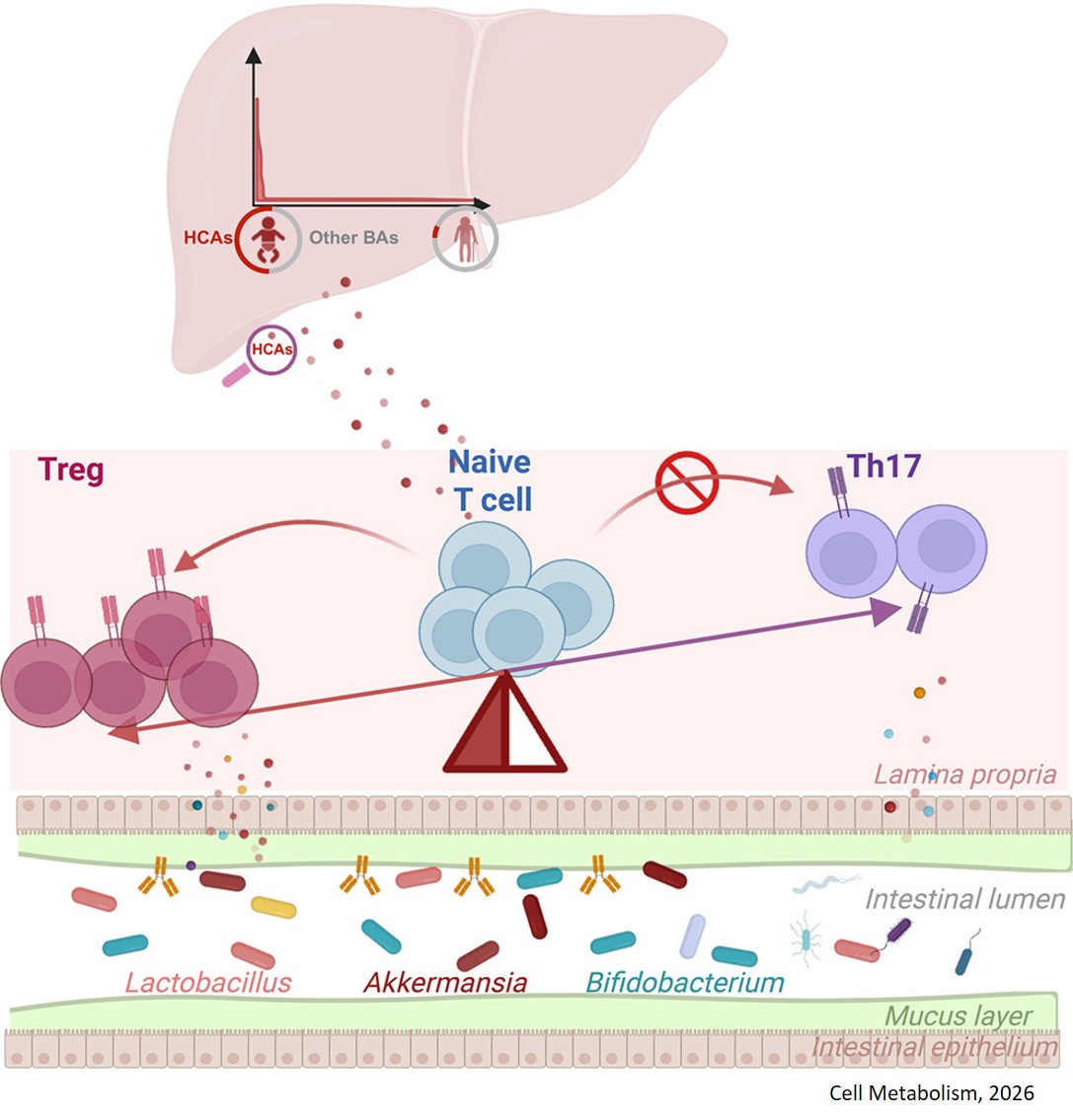
Human neonates harbor abundant hyocholic acids (HCAs), synthesized by fetal hepatic CYP3A7 as unique primary bile acids distinct from classic CA and CDCA.
The study identifies the "third primary bile acid" pathway that functions as a crucial metabolic shield in newborn infants. The research shows HCAs—which are virtually absent in adults—dominate early life to coordinate the gut-immune axis and establish a healthy microbiome.
Acting as a transient intestinal immune buffer, HCAs promote Treg cells and suppress Th17 cells, facilitating homeostatic microbiome colonization and protecting infants against gastrointestinal disorders and infections. . As the HCA pool naturally declines weeks later, the infant's mucosal barrier stabilizes, allowing Th17 cells to safely mature and provide permanent, lifelong infection resistance.
The researchers discovered that neonates born with higher native HCA levels showed a significantly reduced incidence of infections, allergic conditions, and gastrointestinal disorders (like necrotizing enterocolitis) during their first year of life.
https://www.cell.com/cell-metabolism/fulltext/S1550-4131(26)00154-3
https://sciencemission.com/Hyocholic-acids-shape-neonatal-immune-tolerance