

How circadian rhythms impact bone cell function and skeletal health
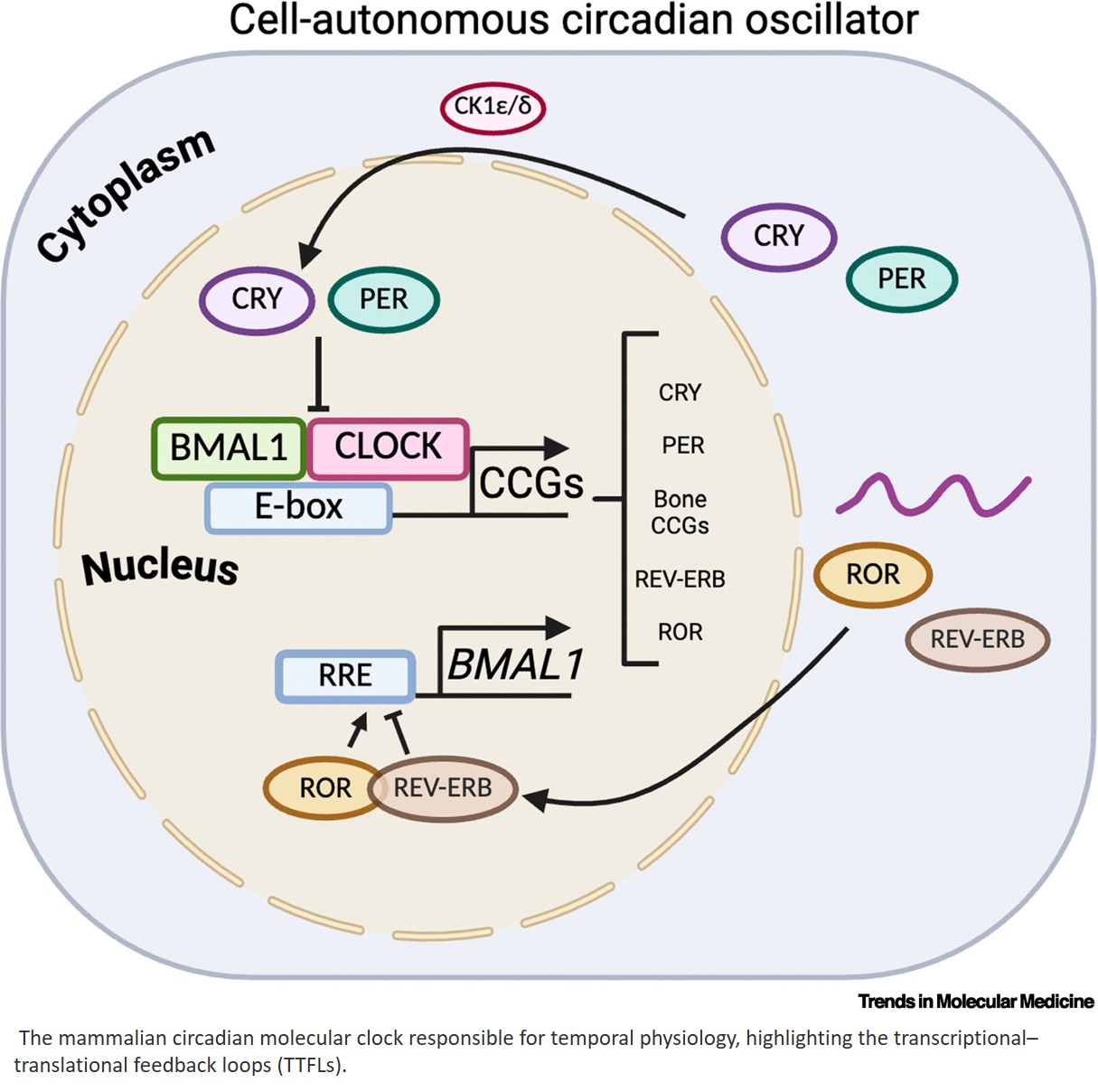
Bone tissues show clear daily rhythms, coordinated by clock proteins in osteoblasts, osteoclasts, and osteocytes.
Core clock proteins such as brain and muscle ARNT-like protein 1, cryptochromes, periods, nuclear receptor subfamily 1 group D receptors, and retinoic acid receptor-related orphan receptors contribute differently to bone formation and resorption.
Endocrine signals, such as glucocorticoids and melatonin, and organ-derived signals, such as those from the gut and liver, reveal that the rhythms in bone are influenced by whole-body circadian coordination.
Mechanical loading, including exercise, interacts with circadian timing, leading to stronger or weaker bone adaptation depending on the time-of-day.
These insights further support the development of chronotherapeutic strategies that align bone-targeted treatments and regenerative approaches with the body’s internal circadian timing.
https://www.cell.com/trends/molecular-medicine/fulltext/S1471-4914(26)00090-0