

How neurons regulate intestinal immune homeostasis
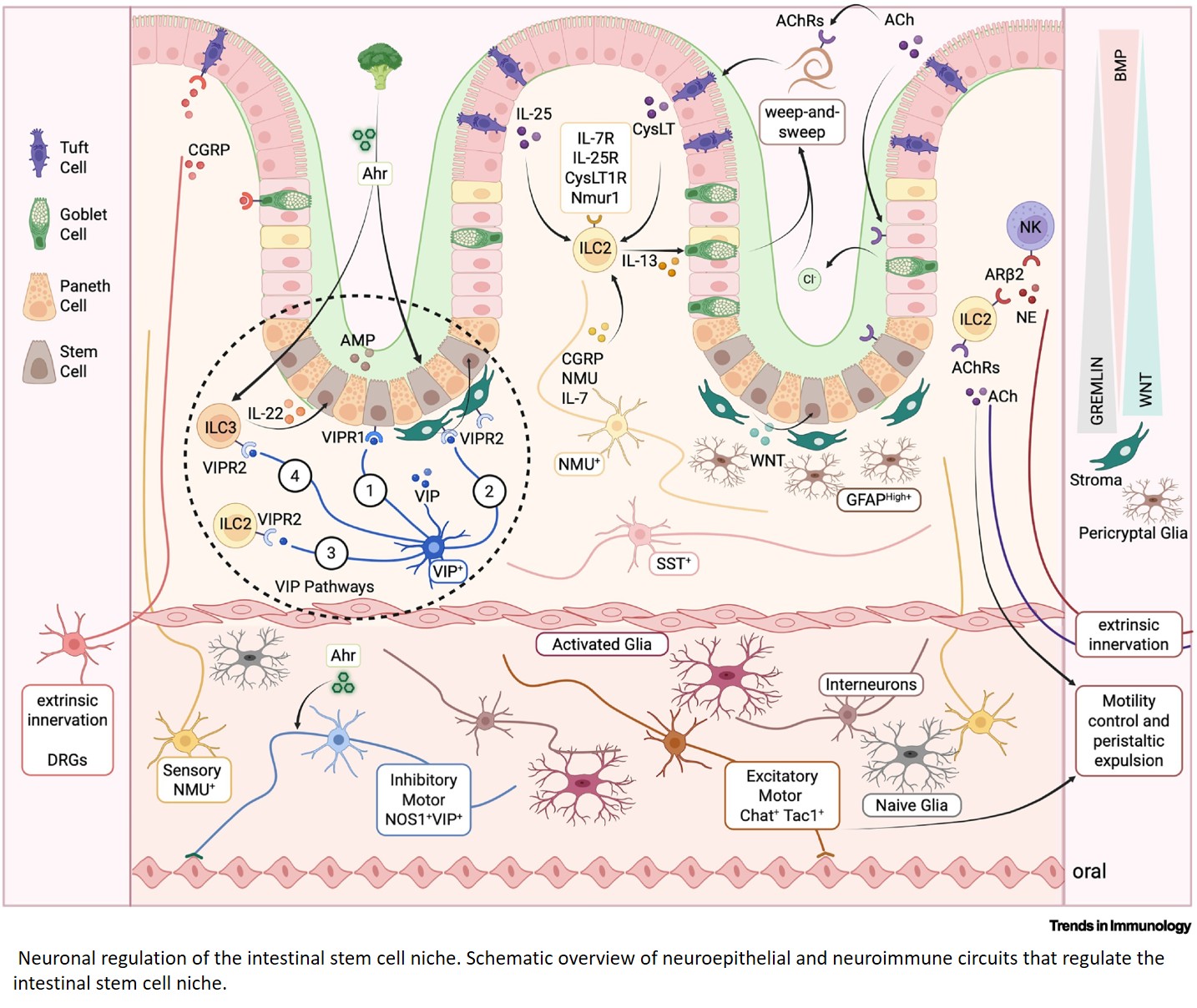
The enteric nervous system is part of the stem cell niche, interacting with various components, including epithelial, immune, and stromal cells.
The neuroepithelial unit determines cell fate decisions of epithelial stem cells, thereby regulating immune homeostasis in the intestine and complementing neural regulation of immune cells at barrier surfaces.
Vasoactive intestinal peptide–vasoactive intestinal peptide receptor 1 signaling axis is the first direct neuronal regulator of the intestinal stem cell niche.
Disruption of the vasoactive intestinal peptide–vasoactive intestinal peptide receptor 1 neuroepithelial signaling circuit results in increased differentiation of secretory epithelial cells, including tuft cells, and unleashes a type 2 immune response that promotes worm expulsion and allergic lung inflammation at the expense of type 1 immunity.
The neuroepithelial unit might provide a new perspective on how food uptake is sensed and integrated by the enteric nervous system to balance nutrient absorption and immunity at barrier surfaces.
https://www.cell.com/trends/immunology/fulltext/S1471-4906(26)00221-8
https://sciencemission.com/Neuronal-regulation-of-intestinal-stem-cells