

How sleep affects microglial functions in Alzheimer’s disease
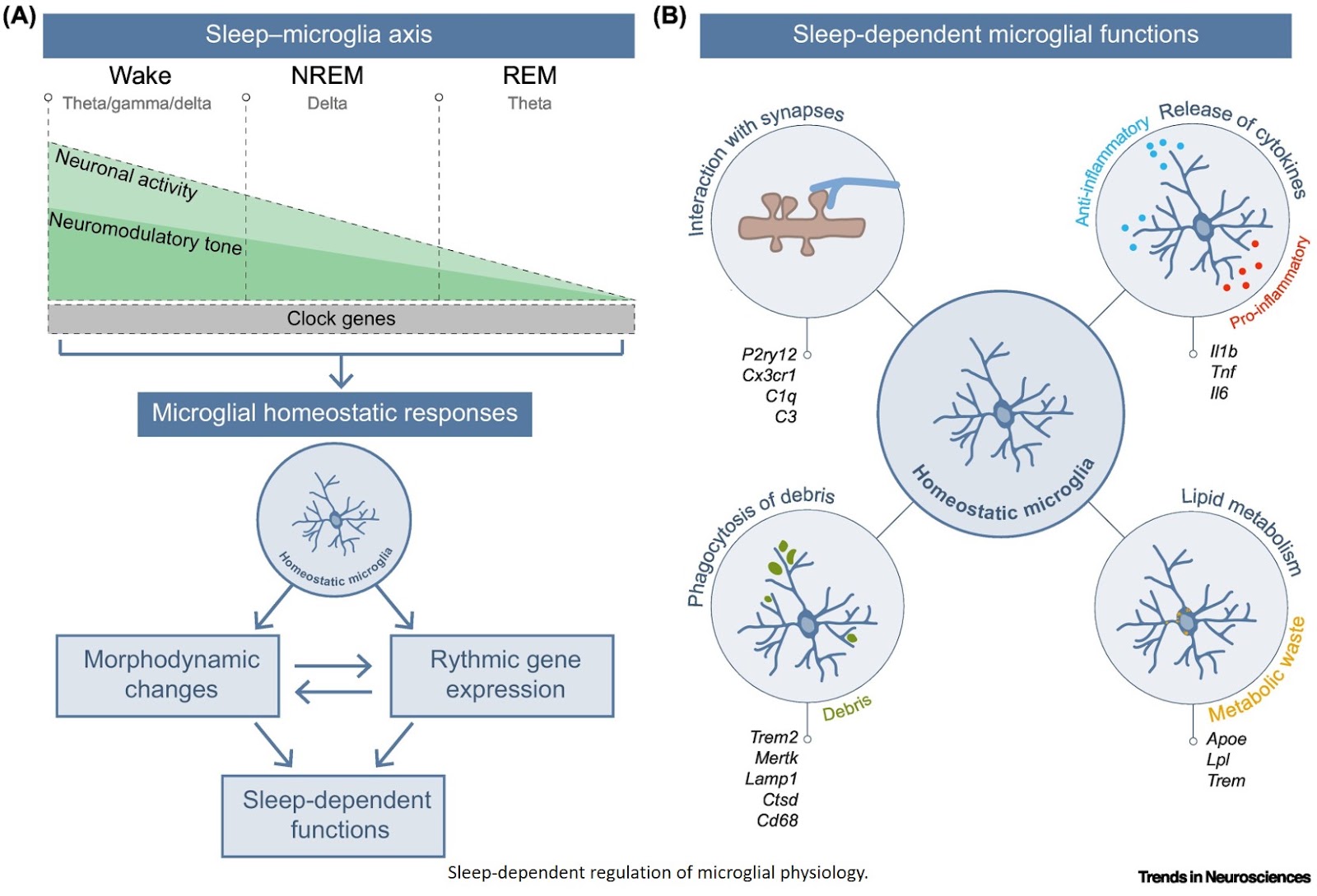
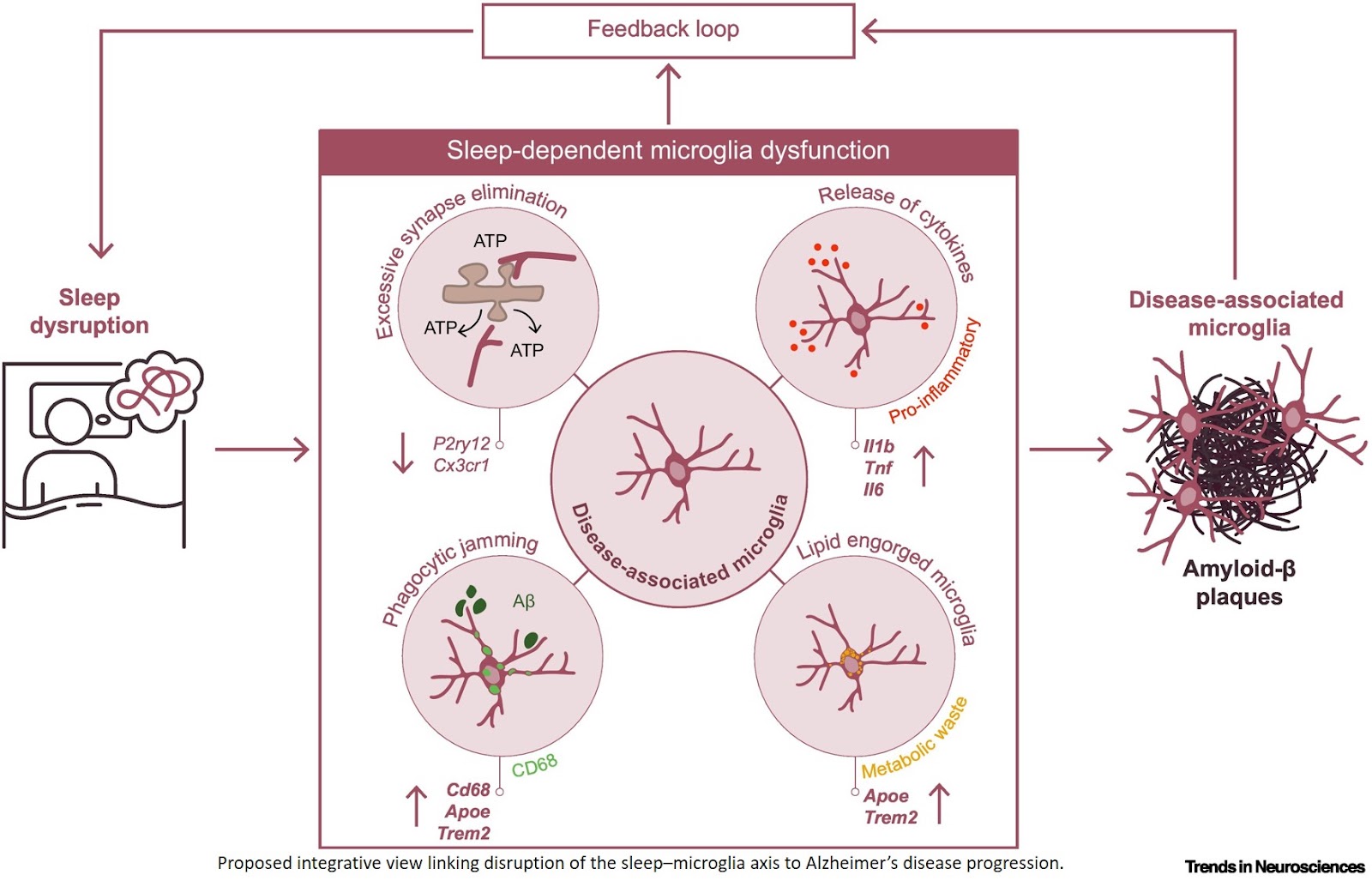
Sleep and circadian timing shape microglial morphology, transcriptional programs, and signaling.
During sleep, microglia preferentially regulate neuroinflammatory tone, refine synapses, and aid metabolic waste clearance.
Sleep-dependent microglial functions contribute to memory consolidation and brain proteostasis.
In Alzheimer’s disease, disruption of the sleep–microglia axis drives a feedforward loop of inflammation, impaired clearance, and synaptic loss.
Sleep-targeting interventions may recalibrate microglial states, offering a potential therapeutic avenue in Alzheimer’s disease.
https://www.cell.com/trends/neurosciences/fulltext/S0166-2236(26)00187-6