

How phage-encoded transcription and sigma factors reprogram host cells
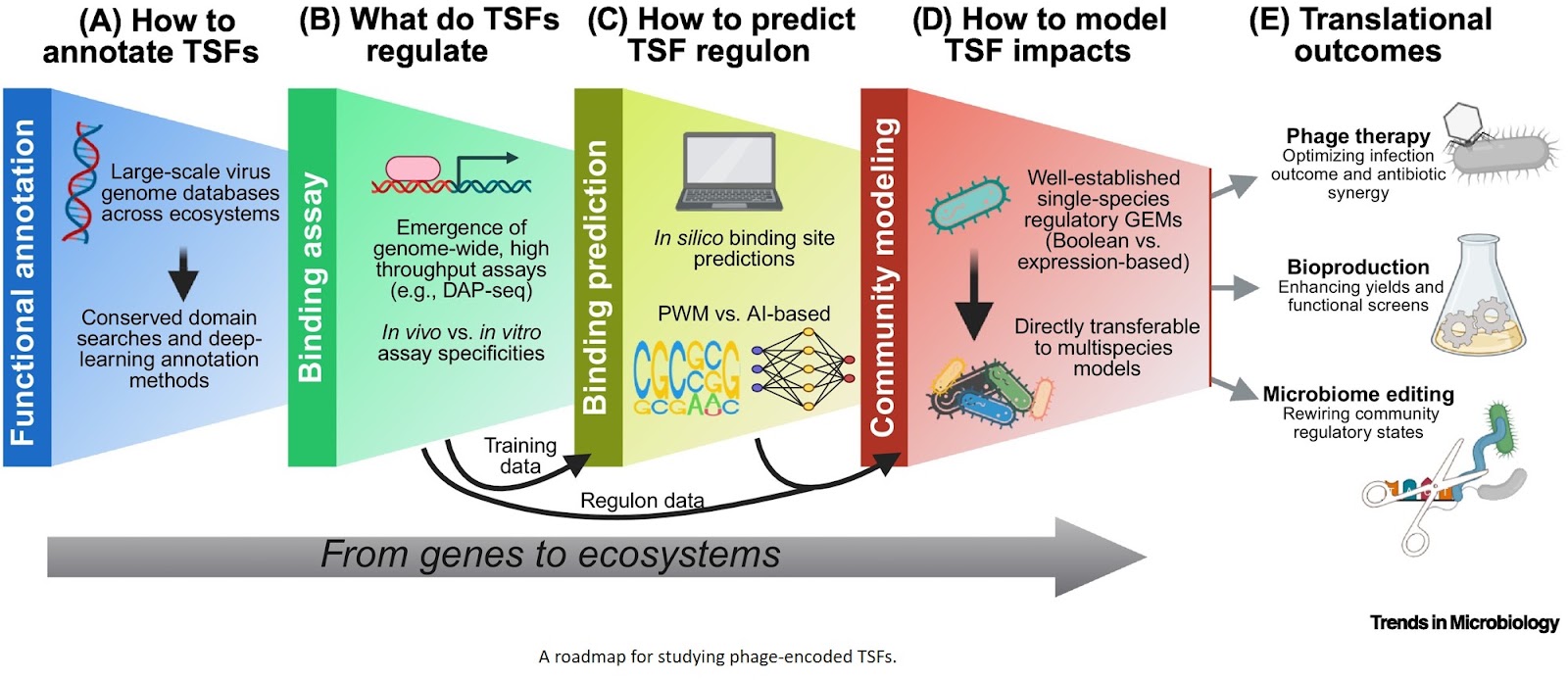
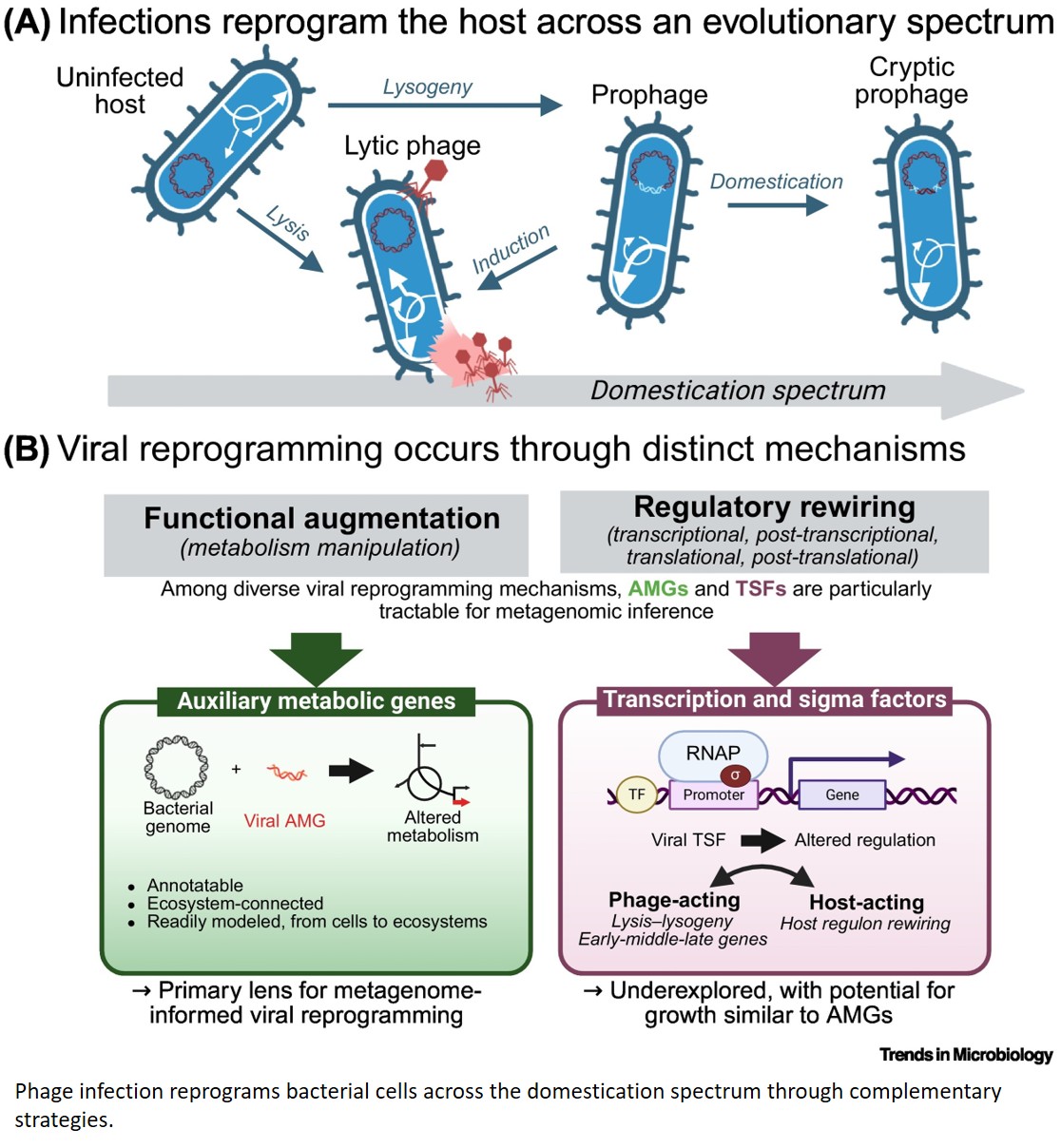
Phage-encoded transcription and sigma factors represent an underexplored viral reprogramming tool, tractable for metagenomic inferences, and complement auxiliary metabolic genes in shaping virocell physiology.
They can have dual phage-acting and/or host-acting roles. Emerging genomic surveys reveal that transcription and sigma factors are widespread in specific phage lineages.
Experimental studies across a domestication continuum (from degraded cryptic prophages to active temperate and lytic phages) show that host-acting transcription and sigma factors can rewire broad cellular phenotypes, including stress responses, metabolism, virulence, dormancy, and morphology—linking viral infection to ecologically relevant traits.
Recent advances in genomics, DNA binding assays, and regulation-aware modeling now make transcription and sigma factors tractable for systematic metagenome-based exploration, connecting viral regulation to ecosystem processes.
https://www.cell.com/trends/microbiology/fulltext/S0966-842X(26)00159-9