

Cortical mechanisms of speech adaption in dyslexia
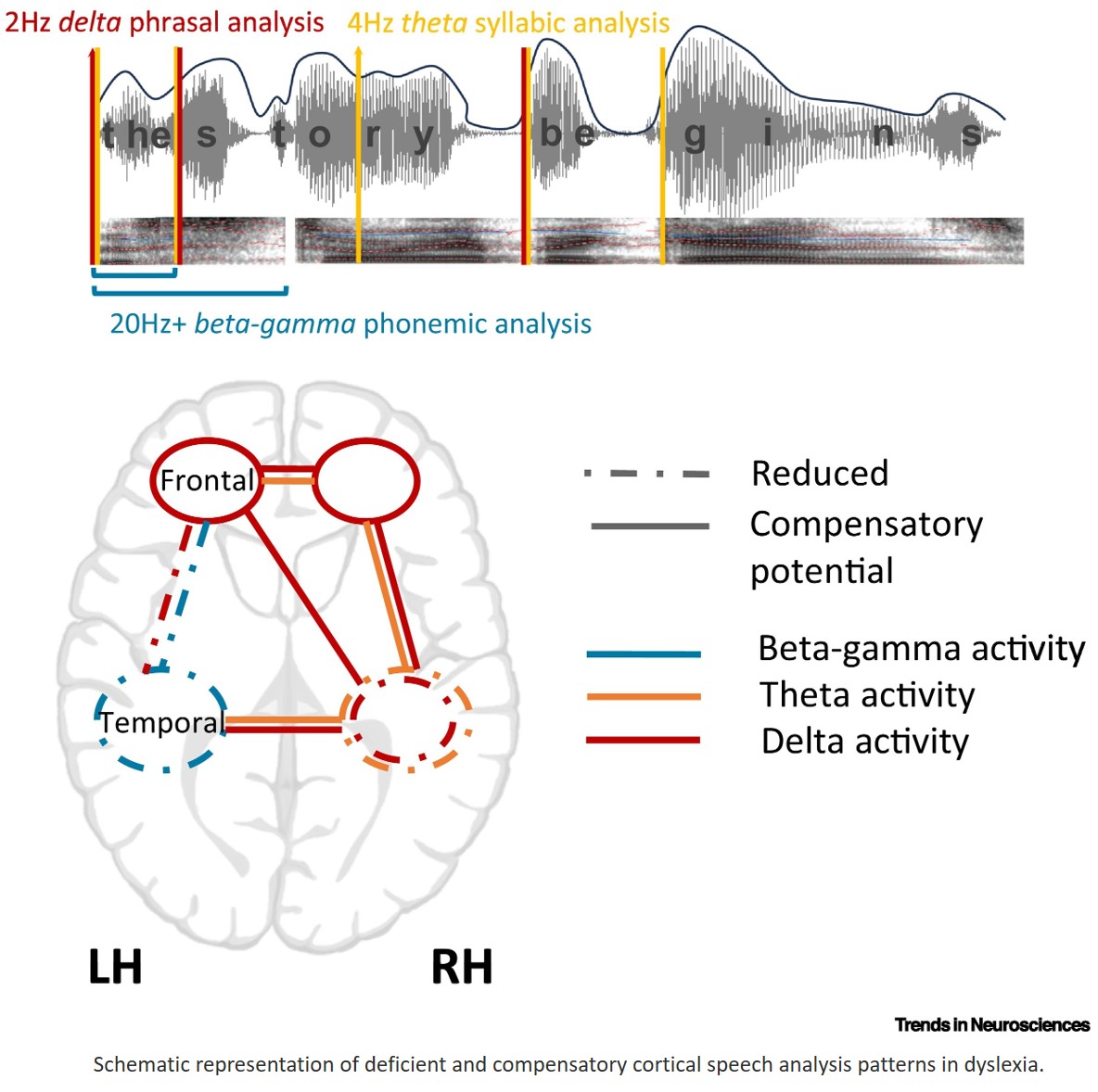
Dyslexia is associated with phonological deficits and atypical cortical tracking of speech across frequency bands; yet the links between cortical tracking and speech analysis in dyslexia are inconsistent.
Despite phonological deficits, speech comprehension is largely intact in dyslexia, suggesting that aspects of atypical cortical speech tracking may indicate adaptive and compensatory mechanisms.
A key compensatory mechanism in dyslexia may involve a rebalance of hemispheric processing, driven by increased interhemispheric connectivity and the recruitment of bilateral top-down networks.
This results in greater reliance on lexico-semantic processing in the delta band in individuals with dyslexia. Bilingualism and musical practice are examples of long-term exposure to complex auditory environments that can lead to neurocognitive adaptations comparable to those seen in dyslexia.
https://www.cell.com/trends/neurosciences/fulltext/S0166-2236(25)00261-9