

How tau oligomers triggers synapse loss
Cognitive decline in Alzheimer’s disease and related dementias is associated with synapse loss. Accumulated tau oligomers in the Alzheimer’s brain inhibit synaptic plasticity and cause synapse loss but the exact mechanism is not known.
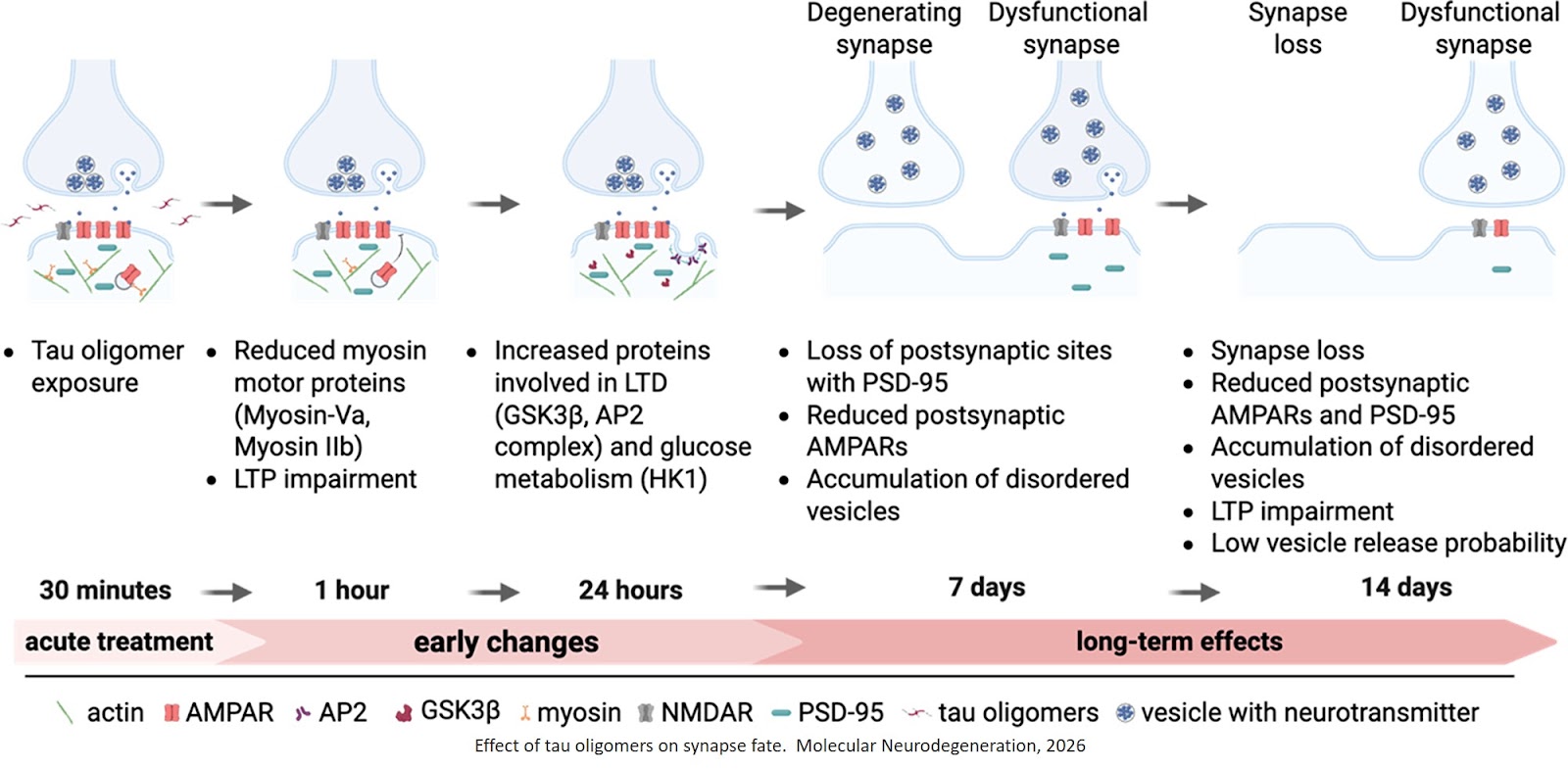
The authors show time-line of the various biochemical events following tau-oligomer exposure in human iPSC-derived neurons.
Immediately after tau oligomer-exposure, the authors observed downregulation of the postsynaptic actin motor proteins Myosin-Va and Myosin IIb, that coincided with impaired AMPA receptor (AMPAR) trafficking during synaptic plasticity resulting in long term downregulation of postsynaptic AMPAR levels and sustained synaptic plasticity impairment.
This was followed 24 h later by the upregulation of disease-related proteins, including GSK3β, at postsynaptic sites. Loss of PSD-95-labeled postsynaptic sites at 7 days after tau oligomer exposure, which preceded the loss of Synapsin-labeled presynaptic terminals at 14 days.
The authors also observed decreased presynaptic vesicles at the terminals which resulted in reduced vesicle release.
https://link.springer.com/article/10.1186/s13024-026-00928-2