

FINDING TROUBLE IN PAIRS: A SYNTHETIC GENETIC INTERACTION FRAMEWORK IN CHLAMYDOMONAS REINHARDTII
SEB ANNUAL CONFERENCE, FLORENCE -2026, CELL BIOLOGY ABSTRACT
Martin Mora-García (Institute of Microbiology CAS, Czech Republic), Ana Álvarez (Institute of Microbiology CAS, Czech Republic), Enes Göksal (Institute of Microbiology CAS, Czech Republic), Bipasha Bhattacharjee (Institute of Microbiology CAS, Czech Republic), Sien Audoor (Institute of Microbiology CAS, Czech Republic), Rabinder Singh (Institute of Microbiology CAS, Czech Republic), Veronika Kseliková (Institute of Microbiology CAS, Czech Republic), Kateřina Bišová (Institute of Microbiology CAS, Czech Republic)
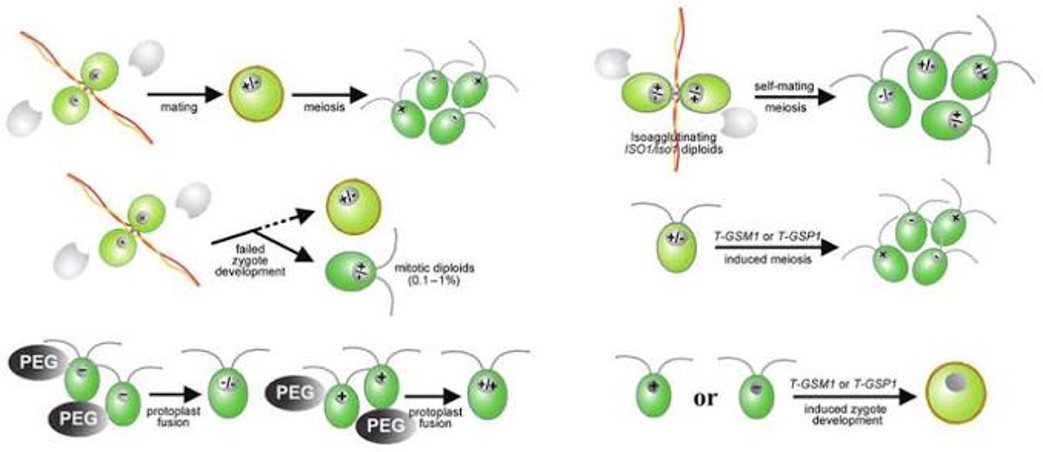
Across the genome, genes differ markedly in how their disruption influences cellular function. Disrupting some genes has strong effects, while others appear buffered under standard conditions. Strikingly, even “mild” perturbations can become detrimental when combined, revealing hidden functional dependencies. These genetic pairings expose buffering relationships that organise metabolism and growth. While systematic synthetic interaction mapping has transformed functional genomics in yeast, comparable approaches remain largely unexplored in unicellular photosynthetic model systems. This study establishes a proof-of-principle synthetic genetic interaction framework in unicellular green alga Chlamydomonas reinhardtii to uncover functional links between nutrient metabolism and TOR-dependent growth control. To enable controlled interrogation of this regulatory axis, we generated an inducible S6K1 knockdown strain, allowing conditional perturbation of a central growth regulator. This query strain is combined with selected metabolic mutants though classical sexual crossing, enabling systematic detection of synthetic sickness and lethality in double mutant progeny. By moving beyond single-gene analyses and examining genetic combinations under defined environmental conditions, this work aims to reveal how metabolic pathways buffer one another and coordinate cell growth. Ongoing interaction screens are establishing a methodological foundation for synthetic interaction analysis in microalgae and expanding systems-level genetics into a photosynthetic model organism.