

Fibroblast growth factor receptor (FGFR) rearrangements in cancer!
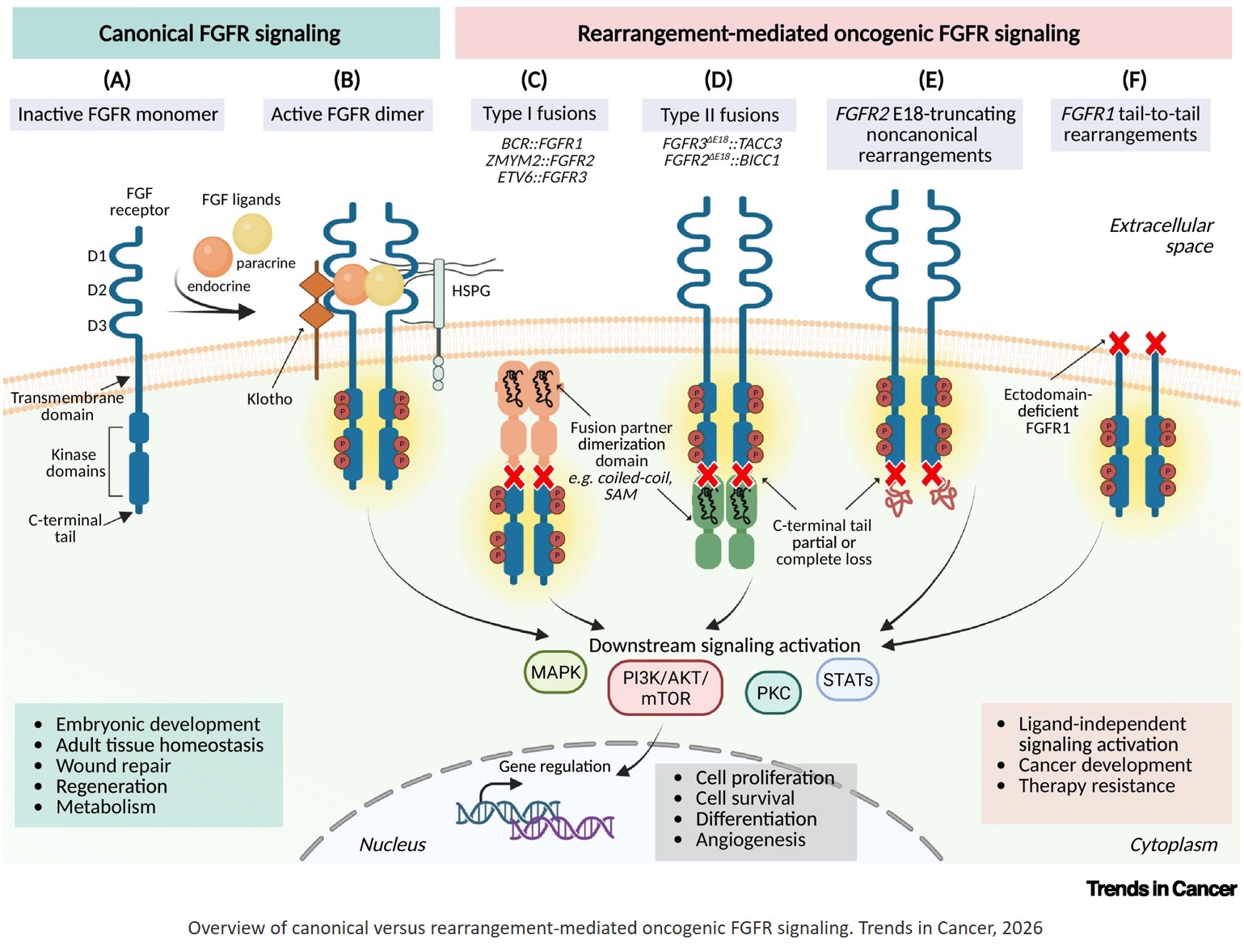
Fibroblast growth factor receptor (FGFR) rearrangements, including canonical inframe fusions and noncanonical structural variants, function as oncogenic drivers in multiple cancers.
Advances in next-generation sequencing technologies and the integration of multiomic diagnostics enable the detection of rare and complex noncanonical FGFR rearrangements that are expressed.
Noncanonical FGFR rearrangements that involve noncoding or intergenic regions can generate functional oncogenic isoforms through pseudoexon formation or promoter/enhancer hijacking.
Structural rearrangements that generate exon 18-truncated variants result in distinct functional consequences for FGFR2 versus FGFR3. FGFR rearrangements emerge as actionable biomarkers, guiding the use of FGFR-targeted therapy.
https://www.cell.com/trends/cancer/fulltext/S2405-8033(26)00023-3