

Glioblastoma isoform diversity mapping
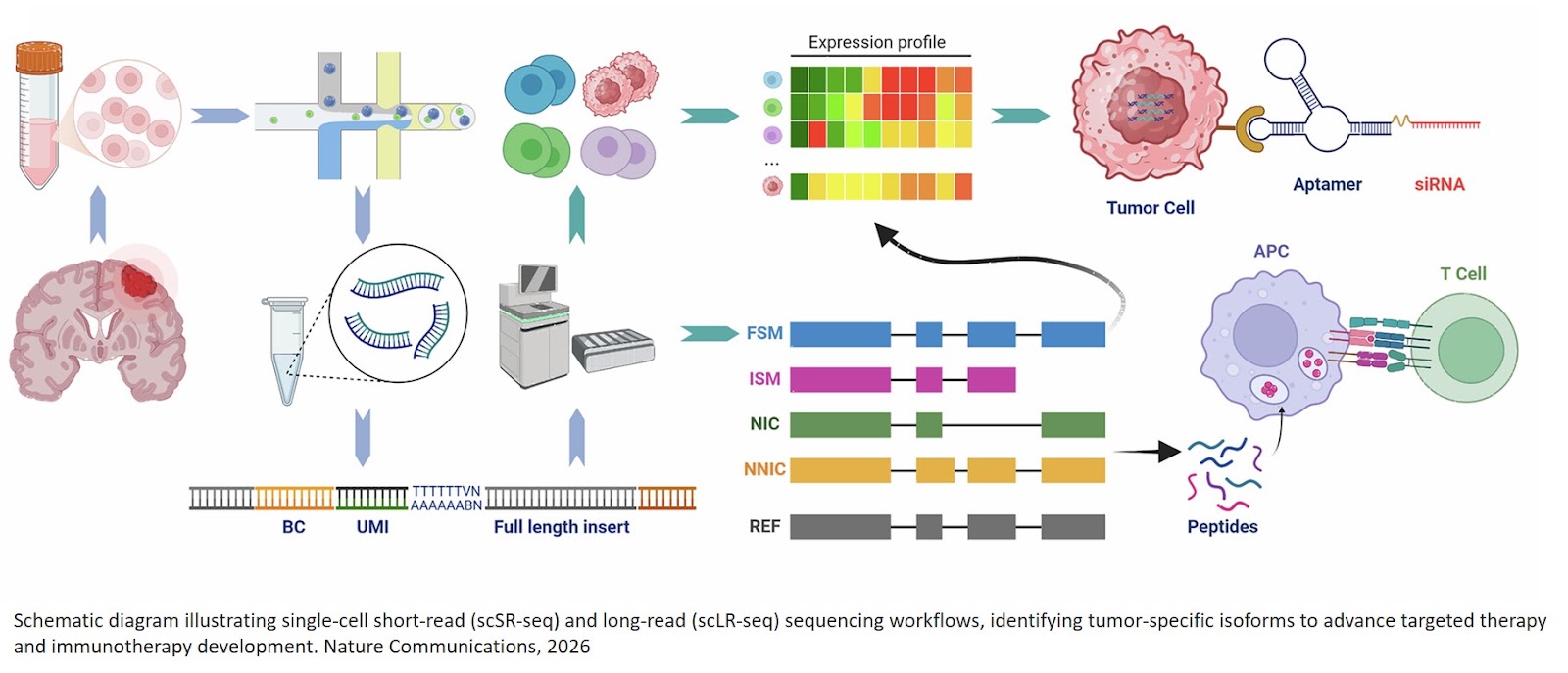
Researchers have achieved a major breakthrough in brain cancer research by developing the most comprehensive map to date of isoform diversity in glioblastoma, the most common and aggressive form of brain cancer in adults. Using advanced long-read single-cell sequencing, the team uncovered thousands of previously unknown tumor-specific genetic isoforms that had remained invisible to conventional approaches. The discovery reveals a new source of potential therapeutic targets, including candidates that could be harnessed for future personalised cancer vaccines and immunotherapies. The findings were published in Nature Communications.
Glioblastoma is notoriously difficult to treat because tumor cells within the same patient can behave, grow and respond to treatment differently. Understanding this cellular diversity is essential for developing more effective therapies.
Every gene in the human body can produce slightly different versions of its genetic instructions, known as isoforms. These variations can profoundly influence cellular function and in cancer, may determine whether tumour cells are recognised by the immune system or evade detection. Until now, the technology used to study individual cancer cells could read only short fragments of genetic information, limiting researchers’ ability to study full-length isoforms in individual cells.
The senior author said, ‘Using long-read sequencing and data from over 210,000 individual cells from 27 glioblastoma patients, the research team built the most comprehensive map of isoform diversity to date, encompassing both tumour cells and the surrounding immune and stromal cells that make up the tumour microenvironment. The study identified thousands of previously unannotated isoforms, including numerous novel isoforms found exclusively in tumor cells and absent from healthy tissues.’
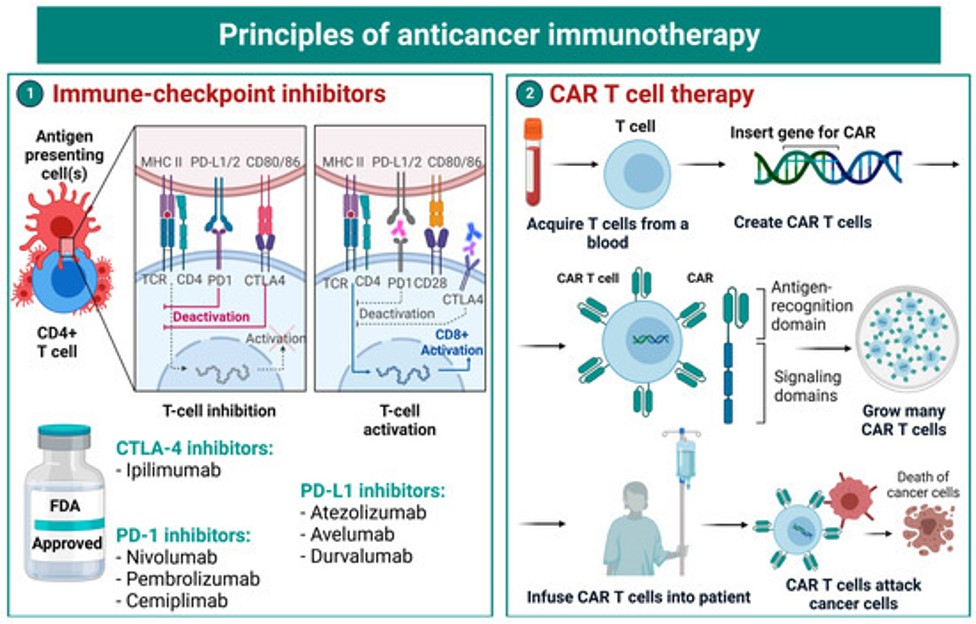
Importantly, a subset of these tumor-specific isoforms was predicted to bind strongly to major histocompatibility complex (MHC) class I molecules, which are responsible for presenting abnormal proteins to the immune system, enabling immune cells to recognise and target potentially harmful cells. These findings suggest that the newly identified isoforms may serve as potential neoantigens that could be targeted by future immunotherapies.
The researchers also established and validated an analytical framework for isoform discovery using clinical long-read single-cell data, providing a foundation for cancer researchers worldwide.
Glioblastoma remains one of the greatest challenges in neuro-oncology because of its remarkable cellular diversity. While the discovery does not immediately change current treatment options for glioblastoma patients, it has important implications for the future development of precision oncology and personalised immunotherapy.
One of the most promising frontiers in oncology is the development of personalised anti-cancer vaccines designed to train a patient's immune system to recognise and eliminate cancer cells. The success of these vaccines depends on identifying high-quality targets that are unique to each patient’s tumor.
‘Our discovery of tumour-specific isoforms reveals a new class of potential neoantigens and suggests that many promising therapeutic targets may have remained entirely invisible to existing approaches,’ said another author. ‘By expanding the pool of candidate neoantigens available for personalised cancer vaccines and immunotherapies, our research findings represent an important step towards next-generation immunotherapies for brain cancer and open the door to more precise and individualised treatment strategies for patients with glioblastoma.’
https://www.nature.com/articles/s41467-026-72258-2
https://sciencemission.com/Mapping-glioblastoma%E2%80%99s-isoform