




Sepiapterin Responsiveness Over 14 Days in Children and Adults with Phenylketonuria: Pooled Results from Three Phase 3 Clinical Trials
Annual Clinical Genetics Meeting, March 2026
Melissa D. Lah, MD, FACMG, Associate Professor of Medical and Molecular Genetics, Indiana University Health, Melissa D. Lah, MD, FACMG, Nicola Longo, MD, PhD, FACMG, Maria Giżewska, PhD, Janet A. Thomas, MD, FACMG, Amaya Bélanger-Quintana, PhD, Ida Vanessa D. Schwartz, MD, PhD, Heidi Peters, MBBS, BS, PhD, FRACP, Kimberly Ingalls, PhD, Zhenming Zhao, PhD, Neil Smith, PharmD, Ania C. Muntau, MD
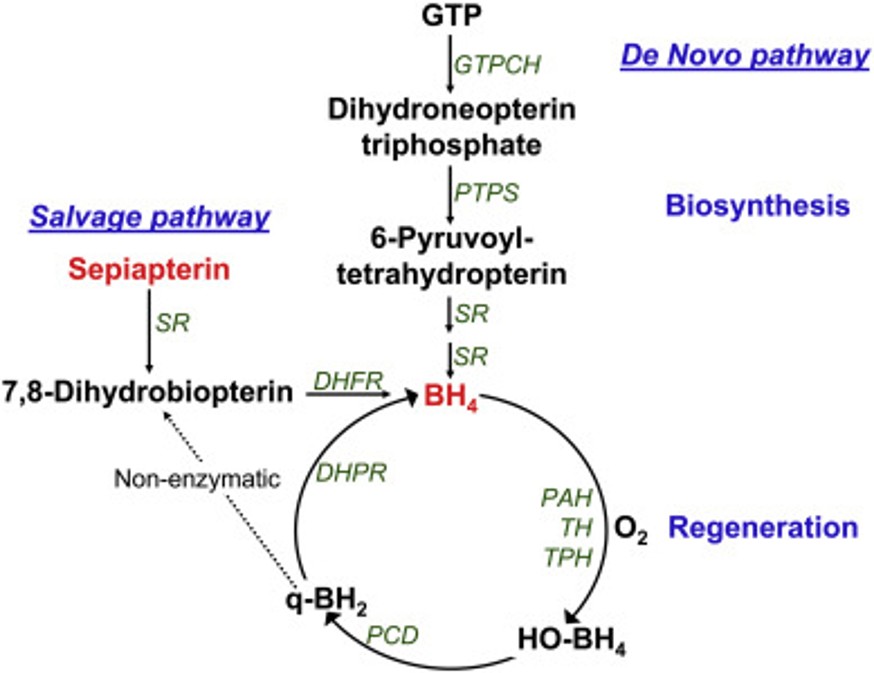
Introduction: Phenylketonuria (PKU) is an inborn error of phenylalanine (Phe) metabolism caused by a deficiency of Phe hydroxylase (PAH). PAH converts Phe to tyrosine; therefore, a deficiency in PAH leads to elevated blood Phe levels that, if left untreated, can lead to neurocognitive impairment and psychosocial disorders. Management options for people with PKU include a lifelong Phe-restricted diet or pharmacological therapy.
Sepiapterin (Sephience), a novel formulation of endogenous sepiapterin, is an oral therapy approved for the treatment of children and adults with PKU in several regions, including the USA and Canada (aged ≥1 month) and the EU, Switzerland and Australia (all ages). The efficacy and safety of oral sepiapterin were assessed in three international Phase 3 studies: APHENITY (NCT05099640), the APHENITY Extension Study (NCT05166161) and AMPLIPHY (ISRCTN79102999).
This analysis assessed the (1) overall response rates to sepiapterin treatment over 14 days, and (2) the time for participants to have a sustained response following treatment initiation with sepiapterin, in APHENITY, the APHENITY Extension Study and AMPLIPHY.
Methods: A total of 298 children and adults with uncontrolled PKU (blood Phe ≥360µmol/L) in APHENITY (n=156), the APHENITY Extension Study (n= 60) and AMPLIPHY (n= 82) underwent a 14-day, open-label response test with sepiapterin (up to 60 mg/kg/day). Blood Phe levels were measured at baseline (Days −1 and 1 pre-dose) and at three time points during the first 14 days of sepiapterin treatment (APHENITY and the APHENITY Extension Study: Days 5, 10 and 14; AMPLIPHY: Days 7, 10 and 14). To assess individual sepiapterin responsiveness, mean blood Phe values from the three post-treatment time points were compared with the mean value of the two pre-dose time points. Participants were considered responsive to sepiapterin treatment if they achieved a mean reduction in blood Phe concentration of ≥15% from baseline over the first 14 days of treatment. The proportion of responsive participants was assessed, and among these, the proportion of participants achieving a reduction of ≥30% was also evaluated. Time to reach a reduction of ≥15% and ≥30% was estimated using Kaplan–Meier analysis among participants who had a sustained reduction of this magnitude from its first occurrence.
Results: Overall, 77.2% of participants (230/298) were classified as responsive to sepiapterin treatment with a reduction from baseline in blood Phe of ≥15% in the first 14 days of treatment in APHENITY (n=114), the APHENITY Extension Study (n=47) and AMPLIPHY (n=69). Of these participants, 87.8% (202/230) achieved a reduction from baseline in blood Phe levels of ≥30% in the first 14 days of treatment. Among those classified as responsive (n=230), mean (SD) blood Phe levels decreased from 728.6 μmol/L (292.8 μmol/L) at baseline to 304.2 μmol/L (226.7 μmol/L) over the first 14 days of treatment, representing a mean (SD) absolute reduction of 424.4 (221.0) μmol/L and a mean (SD) percent reduction of 58.7% (20.3%). Among participants who achieved a sustained reduction in blood Phe levels from baseline of ≥15% (n=222) and ≥30% (n=190), the median and 90th percentile times to response were 5.0 and 8.0 days for both.
Conclusion: Most participants enrolled in the Phase 3 APHENITY and AMPLIPHY studies and the APHENITY Extension Study achieved a sustained response to sepiapterin within 14 days, supporting the use of a response test conducted over at least 14 days to identify patients likely to benefit from sepiapterin treatment.