

Restoring inhibitory neuron plasticity may reverse neurodevelopmental disorder symptoms
Some of the symptoms of neurodevelopmental disorders (NDDs) such as autism spectrum disorder and epilepsy may result from dysfunction of certain neurons in the brain and their ability to change their properties in response to experiences—a process called experience-dependent plasticity. In preclinical research published in Nature, a team of investigators identified genes involved in these neurons’ plasticity and then demonstrated benefits to overexpressing one key gene.
“Cognitive impairment and seizures are hallmarks of neurodevelopmental disorders and represent a large, unmet clinical need,” said the senior author. “We show in proof-of-concept studies that targeting one candidate gene could be sufficient to reverse developmental deficits, even in adulthood.”
The team screened for genes involved in the plasticity of a specific type of brain cell known as parvalbumin inhibitory neurons. The researchers chose to further pursue a gene, Meis2, which they found is expressed at low levels in parvalbumin inhibitory neurons but is elevated in response to experience.
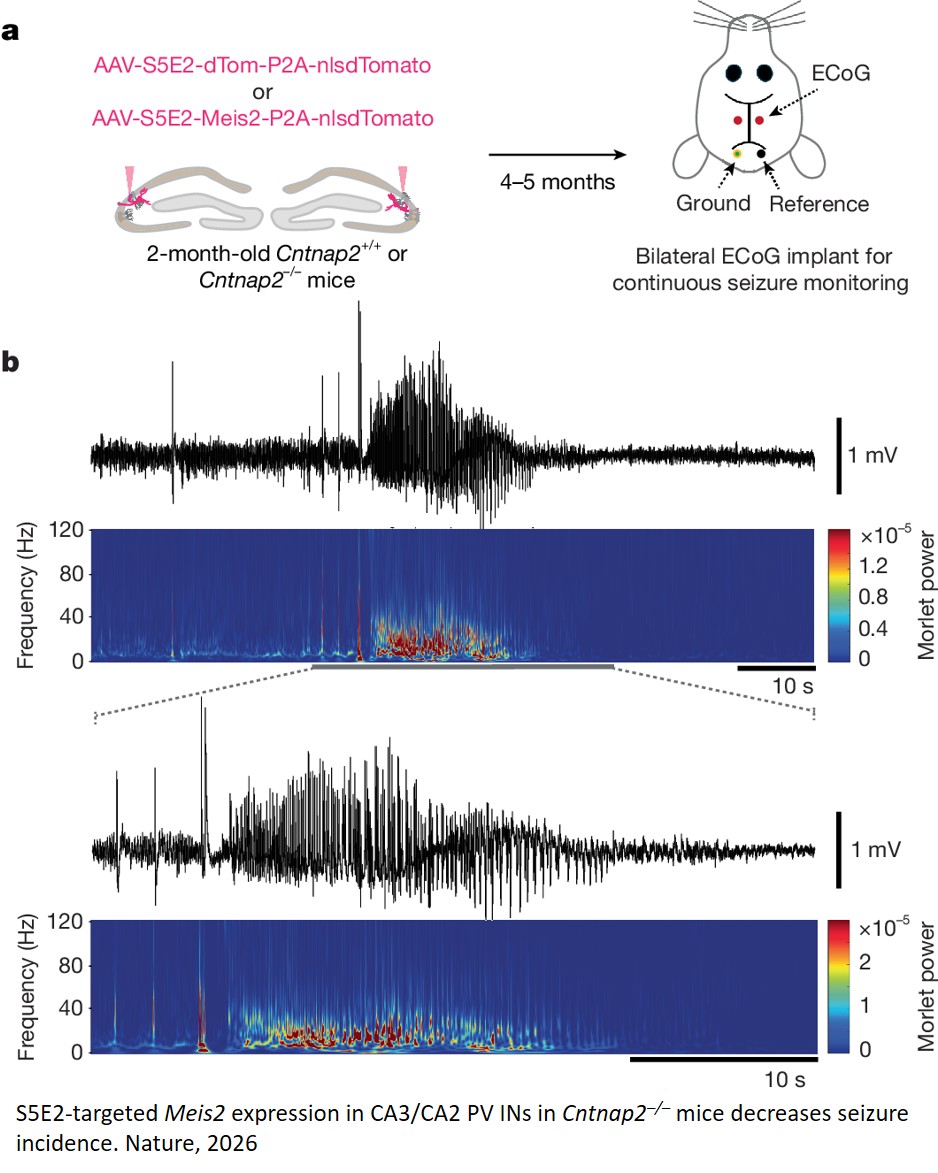
Using gene therapy, the authors found that boosting Meis2 expression in parvalbumin inhibitory neurons in a widely used NDD mouse model rebalanced excitation and inhibition in the brain, restored experience-dependent plasticity, and improved spatial and social memory.
The same intervention also reduced seizure frequency and corrected abnormalities in brain network activity important for cognition, suggesting broad functional recovery.
“The development of new therapeutics for NDDs is dependent on understanding the mechanisms by which risk genes cause impairments,” said the author. “The path from mechanism to therapy is a long and arduous one, but starting with a deep insight into mechanism is crucial to increasing the likelihood of success.”
https://www.nature.com/articles/s41586-026-10907-8
https://sciencemission.com/Procognitive-restoration-of-PV-neuron-plasticity