


Targeting cGAS-STING pathway in human diseases
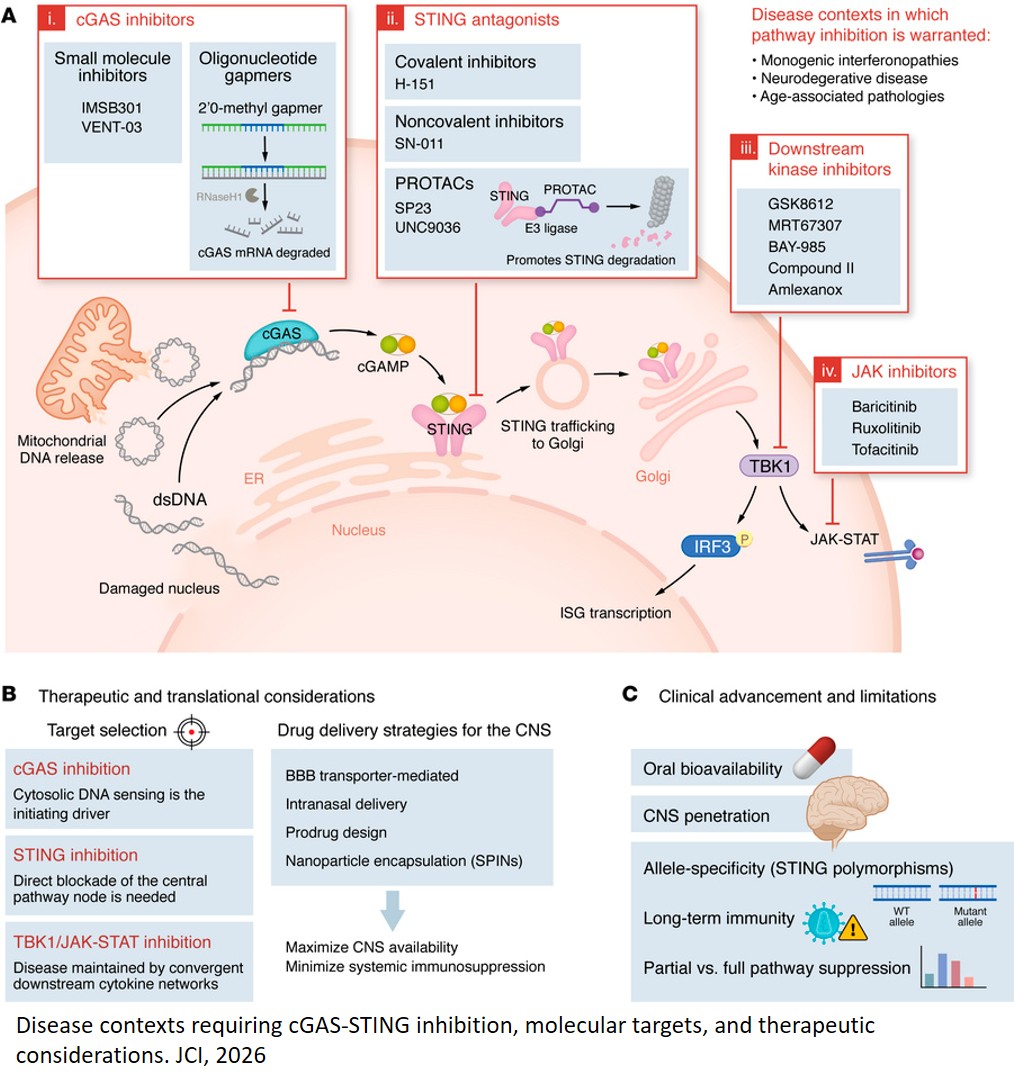
The review details how dysregulated cGAS-STING signaling drives an array of autoinflammatory, neurodegenerative, and cancerous diseases.
The cGAS-STING pathway serves as an evolutionary alarm system designed to detect anomalous DNA in the wrong cellular compartment. When double-stranded DNA (dsDNA) leaks into the cytoplasm—due to viral infection, chromosomal instability, or mitochondrial damage—the enzyme cGAS binds to it. Upon activation, cGAS synthesizes a secondary messenger molecule called 2',3'-cyclic GMP-AMP (cGAMP). cGAMP binds directly to STING at the endoplasmic reticulum. STING then translocates to the Golgi apparatus, recruiting TBK1 and IRF3 to drive the expression of type I interferons (IFNs) and pro-inflammatory cytokines.
The researchers discuss agonist and antagonist strategies targeting the cGAS-STING pathway in cancer, infectious disease, neurodegeneration, and interferonopathies.
They also discuss the underperformance of first generation of STING agonists. The authors also provide suggestions on how cGAS-STING agonists could be modulated rationally.