

Human model of childhood dementia from drug screen and AI
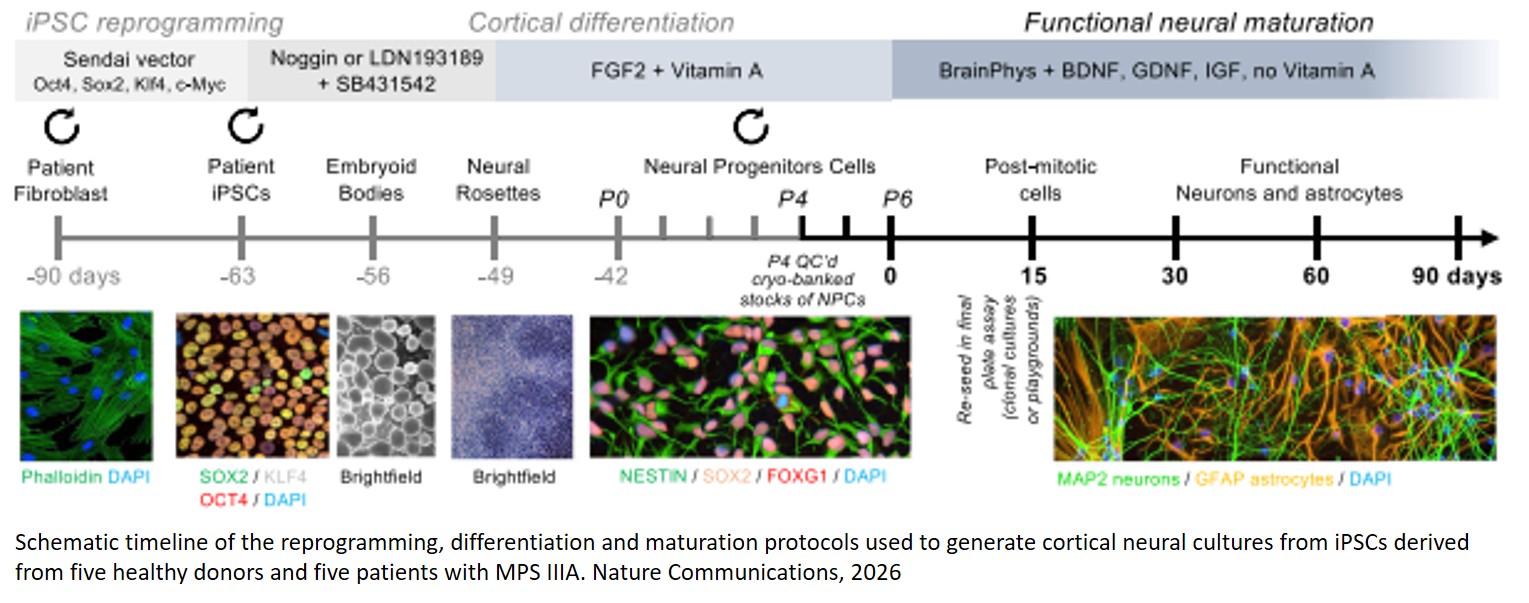
In a new study published in the prestigious Nature Communications journal, medical researchers used patient-derived brain cells grown in the lab, combined with advanced imaging and artificial intelligence, to rapidly test approved drugs and pinpoint those that improve brain cell health.
The research focused on Sanfilippo syndrome, a devastating childhood dementia that causes progressive loss of memory, behavior and physical abilities. There are currently no widely available treatments.
Sanfilippo syndrome is one of more than 100 genetic disorders that together affect 1 in 2900 children in Australia and half of all children with dementia die by the age of ten.
To model the disease, researchers reprogrammed skin cells from affected children into brain cells that mimic how the condition develops. These cells reproduced key features of the disease, including toxic build-up, inflammation and ongoing cell loss.
Using this platform, the team screened 63 existing medicines and identified nine that significantly improved cell function within two weeks. Several of the drugs reduced brain cell damage, while others restored critical signalling linked to learning and behavior. The findings also suggest that combining treatments may produce stronger, longer-lasting effects.
“By combining human brain cell models with machine learning, we can quickly identify therapies that shift diseased cells toward a healthier state,” says the senior author.
“Our findings give us confidence that we can make a meaningful difference in the lives of children affected by these devastating disorders and turn those discoveries into treatments that can improve lives.”
Because the drugs are already approved for other conditions, they could move into clinical trials much faster than entirely new therapies—bringing help to families sooner.
“Almost all childhood dementias have a clear genetic cause, and gene therapies will remain essential to cure the disease. However, identifying therapeutics that can manage daily symptoms and slow irreversible brain damage in children until a cure is discovered is urgently needed. ”
In another recent Nature Communications publication, the team demonstrated for the first time that brain cells from children with Sanfilippo become abnormally excited during early brain development and get stuck in overdrive.
In the newly published work, the team has now used their platform to identify a combination of repurposed drugs that can return brain cell activity to healthy levels.
“This is really important, because if translated clinically, it may help the children manage troubling symptoms such as hyperactivity, while also protecting them from irreversible neuronal loss,” says the author.
While further studies are needed, the findings mark an important step toward faster, more practical treatments for childhood dementia.
https://www.nature.com/articles/s41467-026-76837-1
https://sciencemission.com/Drug-screen-and-AI-predict-neuroprotective-agents