
Role of hydrogen sulfide in crop salinity tolerance
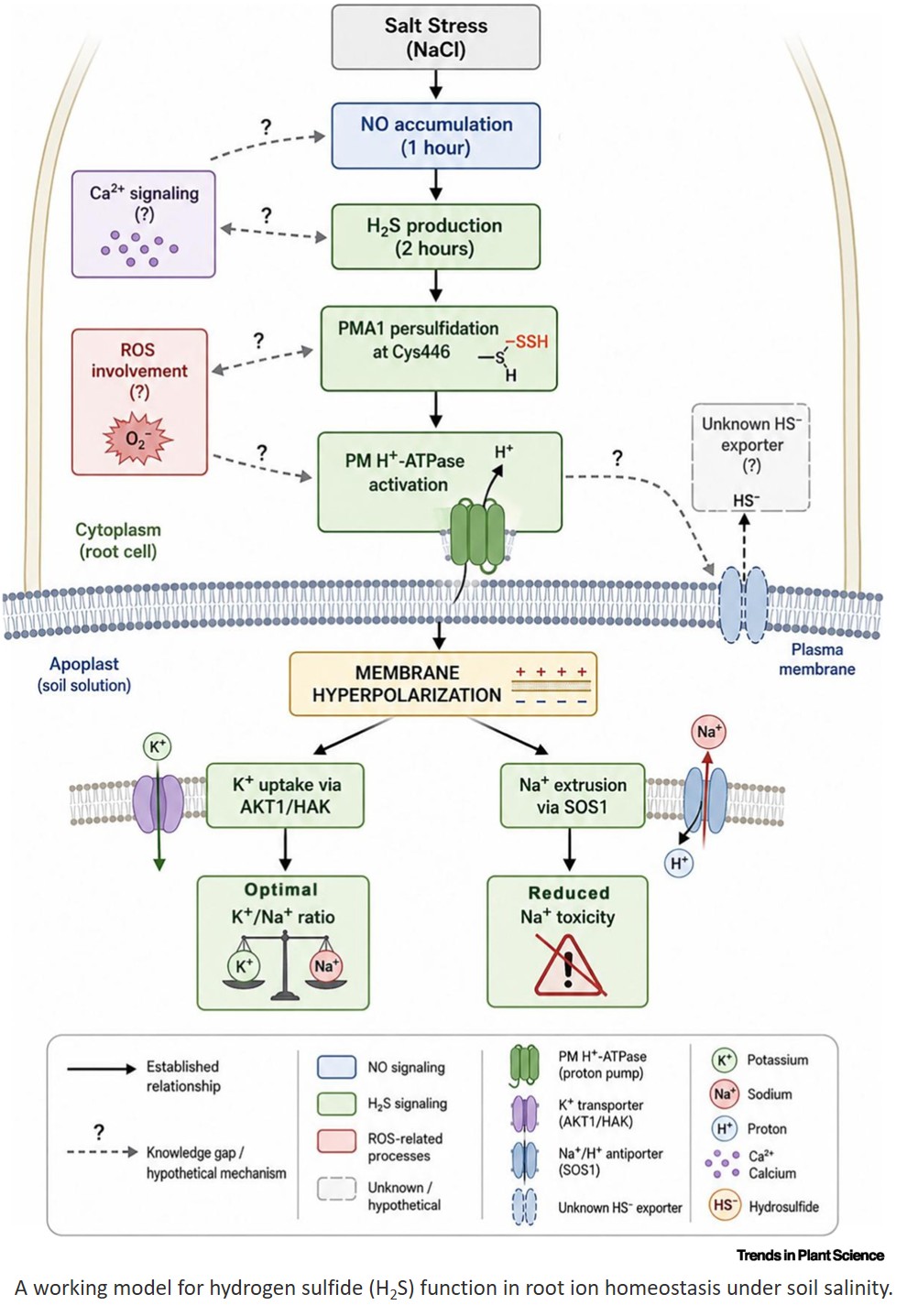
Hydrogen sulfide is proposed as a central signaling hub for plant salinity tolerance, but this concept is primarily supported by correlative pharmacological evidence.
Hydrogen sulfide regulates salinity tolerance through protein persulfidation, crosstalk with reactive oxygen species, nitric oxide, and hormones, to control ion transport and redox balance.
The field faces a causality misconception, as conclusions rely on pharmacological donors and constitutive mutants that mask spatial and temporal signaling dynamics.
Key unanswered questions include the existence of a specific ‘persulfidase’ and whether hydrogen sulfide acts as a primary signal or a secondary metabolic component.
Future progress requires a shift from bulk tissue analysis to in vivo, real-time visualization of hydrogen sulfide dynamics and the development of orthogonal tools to uncouple its signaling from native networks.
https://www.cell.com/trends/plant-science/fulltext/S1360-1385(26)00220-7
https://sciencemission.com/Hydrogen-sulfide-as-a-potential-translational-hub