

Signaling pathway in sensory neurons that promotes migraine-like pain behaviors
Molecular mechanisms underlying chronic migraine and associated signaling pathway is not clearly understood.
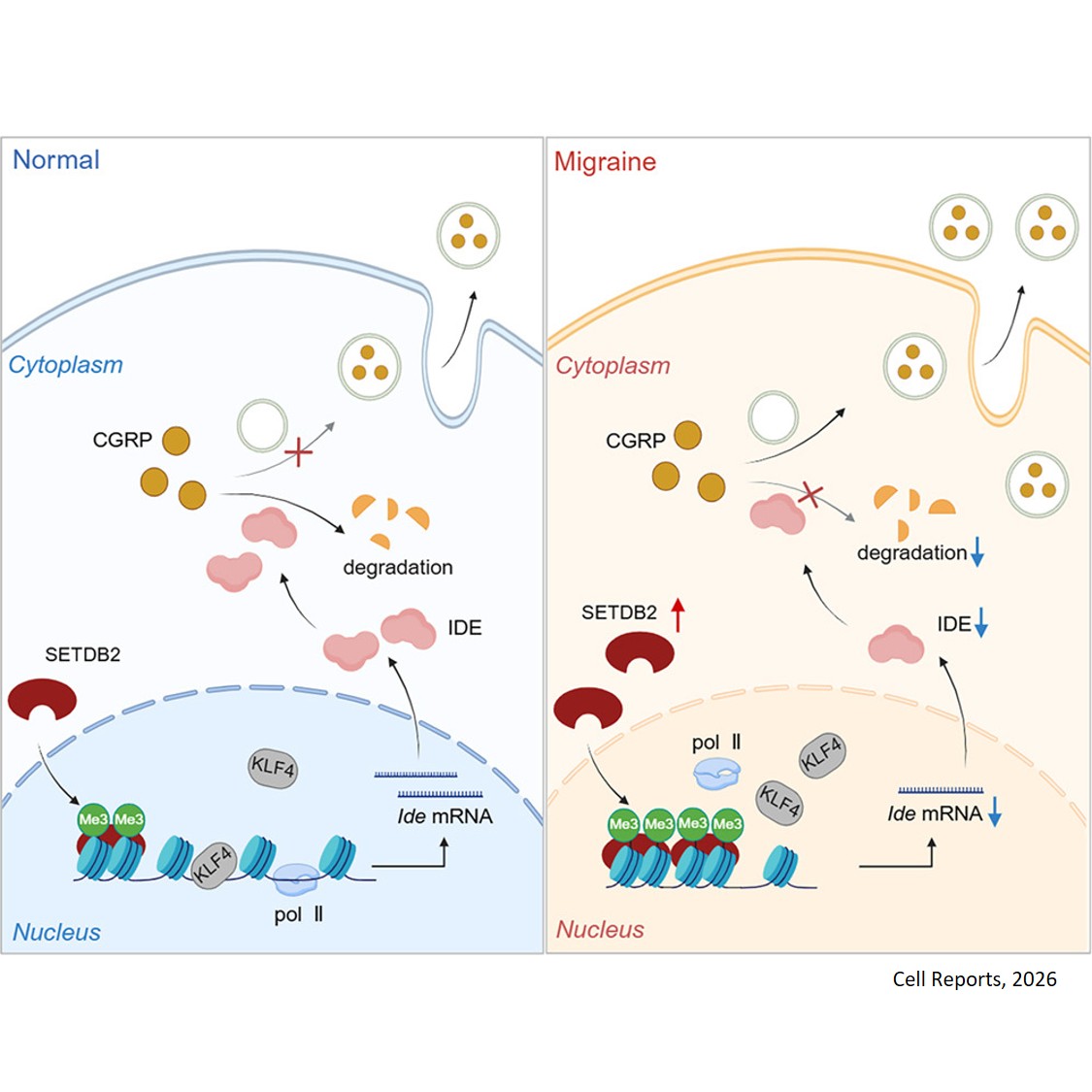
The researchers in this study determine SET-domain bifurcated histone lysine methyltransferase, SETDB2, in trigeminal ganglion (TG) neurons as a key mediator of migraine-like pain and show that SETDB2 is significantly upregulated in TG neurons in mice model for chronic pain.
They also demonstrate that SETDB2/KLF4/IDE/CGRP signaling axis in sensory neurons that triggers migraine like pain behaviors in mice.
Mechanistically, upregulated SETDB2 increases H3K9 trimethylation (H3K9me3) and impedes transcription factor KLF4 from binding to the promoter of the insulin-degrading enzyme (Ide) gene, thereby suppressing IDE expression and impairing degradation of calcitonin-gene-related peptide (CGRP) in TG neurons.
These findings suggest potential therapeutic targets for migraine management.
https://www.cell.com/cell-reports/fulltext/S2211-1247(26)00279-2
https://sciencemission.com/SETDB2-mediated-transcriptional-repression-of-IDE