


A new vulnerability in acute myeloid leukemia uncovered!
A study published in Nature Cell Biology reports a new vulnerability in acute myeloid leukemia (AML) that might lead to novel therapies to treat this cancer while minimizing harm to normal cells.
Researchers studied a new way that drugs that neutralize mutations of enzyme FLT3 work. “FLT3 mutations are one of the most common genetic drivers of AML. Other researchers have shown that inhibiting FLT3 stops AML cells from dividing and kills them by activating a self-destruct mechanism called apoptosis,” said the corresponding author.
“But like many other cancer therapies, resistance to FLT3 inhibitors and relapse are common. We explored the possibility that FLT3 inhibitors also lead to cancer death in a different way that we might be able to leverage to overcome therapy resistance.”
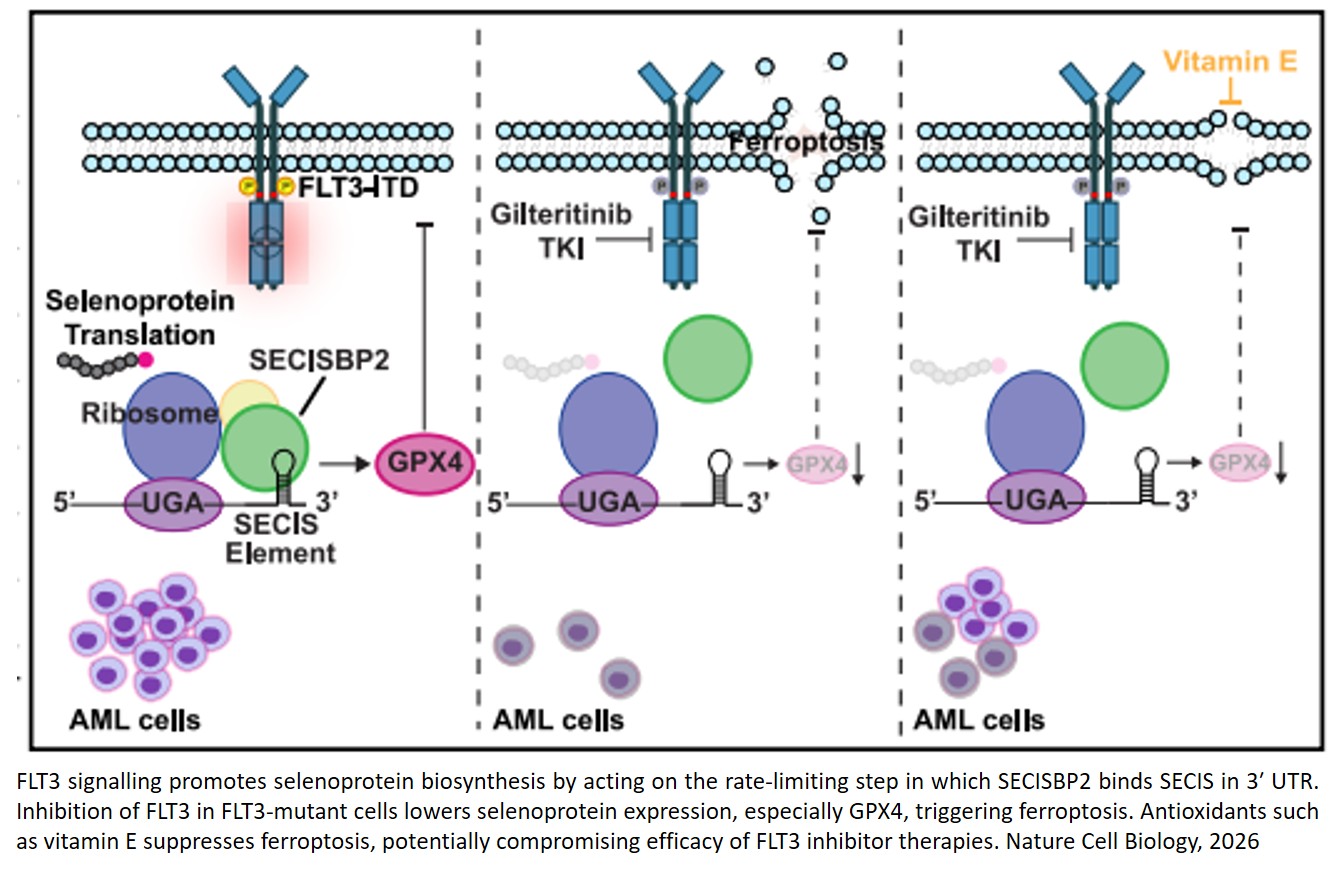
“This mechanism involves lipid peroxidation – oxygen damages lipids in cells in ways that cause cell death,” said the author. “This is the first time FLT3 has been connected to ferroptosis."
Digging deeper into the mechanism, the authors found that mutant FLT3 proteins in AML cells activate a protein called GPX4, which in turn prevents ferroptosis. “GPX4 belongs to the selenoprotein family known to be involved in reducing lipid peroxidation,” the author said. “FLT3 inhibitors prevent the production of selenoproteins, including GPX4. Then, cancer cells do not have enough GPX4 to prevent lipid peroxidation and die.”
Data from AML patients revealed that leukemia samples resistant to FLT3 inhibitor gilteritinib often overexpress genes involved in selenoprotein production. This suggests that one way leukemia cells could escape treatment is by boosting the selenoprotein pathway.
The authors also found that dietary vitamin E, which attenuates ferroptosis, can markedly reduce the efficacy of the gilteritinib. This study highlights ferroptosis as a vulnerability in FLT3-mutant AML and suggests that consuming high amounts of vitamin E intake may compromise the efficacy of FLT3 inhibitors by suppressing ferroptosis.