



Blood test to predict Alzheimer’s years before symptoms or brain scan changes
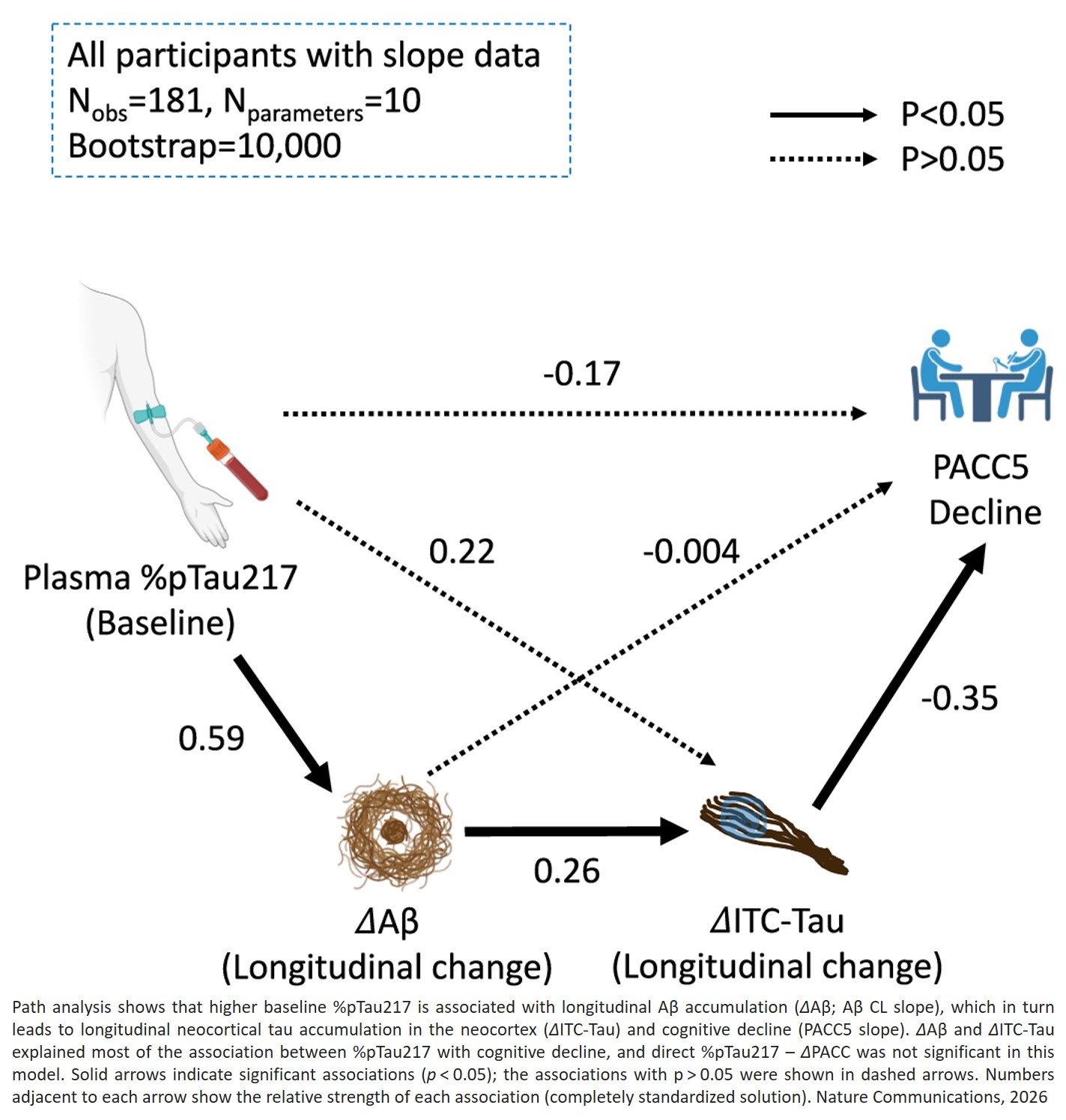
A new study has found that a blood test of plasma phosphorylated tau 217 (pTau217), an Alzheimer's disease biomarker, can predict the progression of amyloid PET scan changes and cognitive decline in cognitively healthy older adults. The findings may help push back the clock to enable simpler, earlier disease prediction and indicate who may be at risk for cognitive decline. The results are published in Nature Communications.
“We used to think that PET scan detection was the earliest sign of Alzheimer’s disease progression, revealing amyloid accumulation in the brain 10 to 20 years before symptoms appear,” said the lead author. “But now we are seeing that pTau217 can be detected years earlier, well before clear abnormalities appear on amyloid PET scans.”
Last year, the U.S. Food and Drug Administration cleared the first blood test for Alzheimer's disease, paving the way for a cheaper, less invasive alternative to lumbar punctures and PET scans. The new study adds important evidence about the predictive potential of these kinds of blood tests.
This prospective cohort study followed 317 cognitively healthy older adults for an average of eight years. Participants, who ranged in age from 50 to 90 years, had blood tests for pTau217, repeated amyloid and tau PET scans and long-term cognitive testing. The researchers examined whether baseline and changing pTau217 levels predicted future amyloid buildup, tau accumulation (the abnormal buildup of misfolded tau proteins inside brain neurons) and cognitive decline.
Researchers found that higher levels of pTau217 predicted a faster buildup of Alzheimer's disease pathology, even when initial brain scans appeared normal. Increases in pTau217 frequently occurred before amyloid PET scans became positive, highlighting the biomarker's ability to detect changes earlier. Importantly, participants with low pTau217 levels at the start of the study were very unlikely to accumulate significant amyloid-beta on their PET scans over many years of follow-up.
“What stood out in our study is that even when amyloid scans appear normal in the clinic, the pTau217 biomarker can identify individuals who later become amyloid-positive,” said the author. “It also shows that those with low pTau217 levels are likely to stay amyloid-negative for several years.”
While it’s too early to recommend pTau217 testing for older adults, the authors hope the study results will serve as a scalable screening tool for clinical trials targeting Alzheimer's disease prevention and will help identify individuals at higher risk. Eventually, biomarker blood tests could be used for routine health maintenance and may offer a more affordable alternative to amyloid PET scans.
“As the field is evolving quickly, we’re excited to see discoveries on the research side being rapidly translated to clinical application,” said a co-senior author. “By anticipating who's going to turn amyloid-positive in the future, we are trying to push back the clock to enable earlier Alzheimer's disease prediction.”