

Bone aging effect on neurovascular dysfunction and neurodegeneration
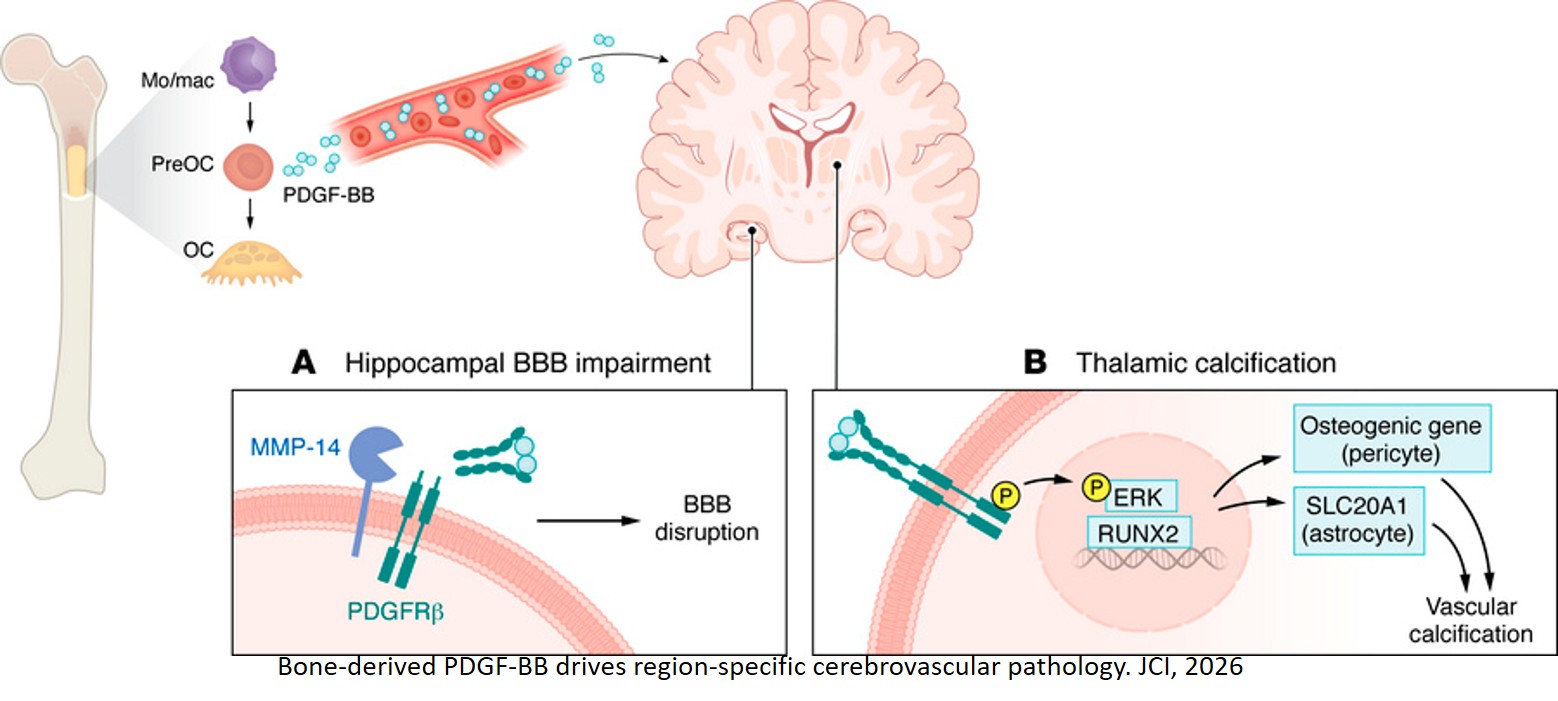
The researchers in this review "bone-cerebrovascular axis," explaining how structural and cellular aging of the skeleton directly causes blood-brain barrier (BBB) degradation, microvascular damage, and neurodegenerative disease.
As we age, bone resorption by osteoclasts begins to outpace bone formation by osteoblasts, the endocrine molecules released into the blood change drastically:
The Decline of Osteocalcin (OCN): In a young skeleton, osteoblasts secrete high amounts of carboxylated osteocalcin. OCN easily crosses the BBB, where it binds to neurons to support neurotransmitter synthesis, spatial memory, and learning. During skeletal aging, total systemic levels of active OCN drop significantly, robbing the brain of a critical survival factor.
The Rise of DKK1: Aging osteoblast-lineage cells increase their secretion of Dickkopf-1 (DKK1). Circulating DKK1 travels to the brain's blood vessels and acts as a potent antagonist of the canonical Wnt/β-catenin signaling pathway. Because endothelial Wnt signaling is the master genetic switch that keeps the BBB sealed, DKK1 overexpression directly dismantles the tight junctions holding brain capillaries together.
Osteocyte-Derived FGF23 Toxicity: Aging osteocytes upregulate the systemic release of Fibroblast Growth Factor 23 (FGF23). Chronically high levels of FGF23 injure the brain's microvasculature, promoting capillary rarefaction (loss of vessel density) and pathologically altering vascular smooth muscle cells.
Osteoclast Overdrive and PDGF-BB: Hyperactive osteoclasts dump excessive amounts of Platelet-Derived Growth Factor-BB (PDGF-BB) into systemic circulation. When continuously elevated in the blood, PDGF-BB acts as a major driver of cerebrovascular calcification, a condition heavily linked to cognitive deficits, movement disorders, and an increased risk of seizures in elderly populations.
This review transforms how we approach neurodegenerative therapy. It suggests that clinicians cannot successfully treat a disease like Alzheimer's or vascular dementia by looking only at the brain. Stabilizing bone mineral density, blocking osteoclast over-activation, and preserving a youthful skeletal secretome represent a vital, untapped clinical frontier to protect the brain's blood vessels and halt cognitive decline.