

PROTEIN TARGETS OF CO2-DEPENDENT LYSINE CARBOXYLATION IN THE MOUSE BRAIN
SEB ANNUAL CONFERENCE, FLORENCE -2026, POSTTRANSLATIONAL MODIFICATION AND STRESS RESPONSE
Jasper Carlsen (Aarhus University, Denmark), Rasmus H Hansen(Aarhus University, Denmark), Amanda Bundgaard (Aarhus University, Denmark), Johan Palmfeldt (Aarhus University, Denmark), Angela Fago (Aarhus University, Denmark)
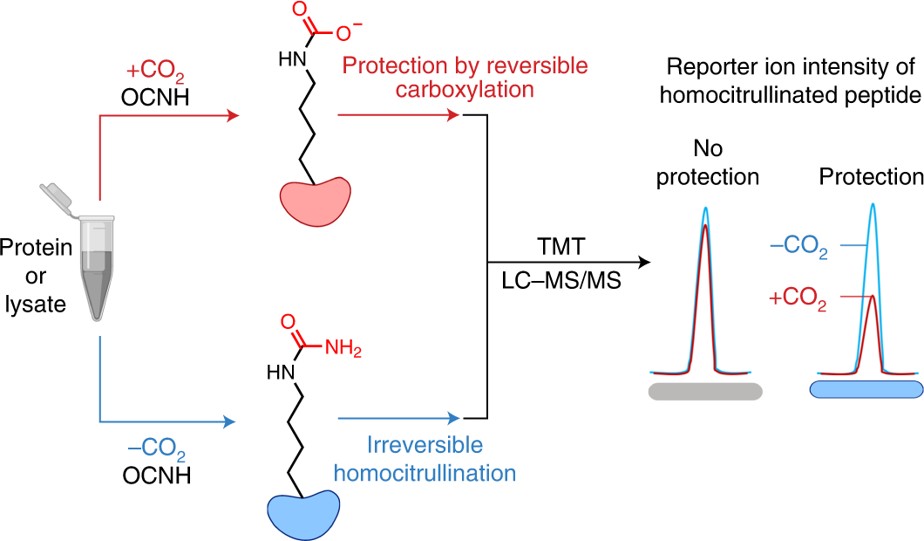
CO2 is a main product of aerobic energy metabolism. Once formed in solution, it equilibrates to carbonic acid, lowering local pH. Whereas indirect effects of CO2on proteins and enzymes via such pH changes are well known, it is often ignored that freely dissolved CO2in itself is not biologically inert. CO2is an electrophile capable of reacting with lysine amines on proteins thus forming negatively charged lysine carbamates. The prerequisite for this non-enzymatic post translational modification, and likely the reason it has garnered little attention, is that the lysine must be neutral rather than positive. Free lysine has a pKa of 10.5 but specific protein microenvironments may alter this significantly thus forming specific sites susceptible to CO2binding, as is for example the case in the active site of the CO2-fixing plant enzyme RuBisCO. Recently, novel chemo-proteomics methods have targeted lysine carbamate formation and demonstrated in plant and bacterial proteomes, that it is much more common than previously appreciated. Curiously however, only a few animal proteins have been studied. We present here the first proteome-wide mapping of lysine carboxylation in mouse brain and identify a range of proteins with CO2-receptive lysines including particularly cytoskeletal proteins, glycolytic enzymes and myelin sheath-associated proteins. We identify several novel CO2-binding sites on hemoglobin and demonstrate functional effects of CO2 on lactate dehydrogenase at physiological pH. Overall, our data adds new nuances to the sensing and handling of CO2andimplicates CO2as a signaling entity.