
Eosinophil extracellular traps
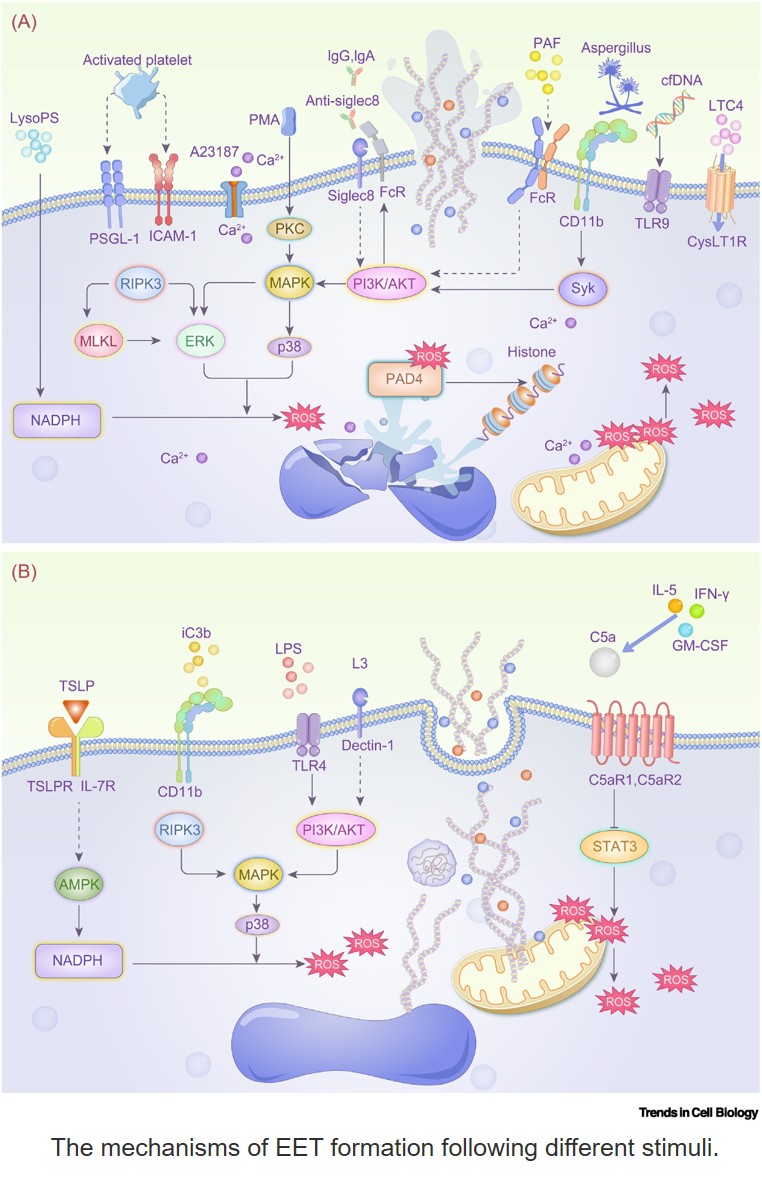
Like neutrophil extracellular traps, eosinophil extracellular trap formation also involves two distinct processes: suicidal EETosis and vital eosinophil extracellular trap release.
Eosinophil extracellular trap contains chromatin and/or mitochondrial DNA, granular proteins, nuclear histone variants, cytosolic mediators, cytoskeletal proteins, organelle proteins, and cell membrane proteins.
There are at least four major classes of stimuli that contribute to eosinophil extracellular trap formation via NADPH induced reactive oxygen species generation and/or peptidylarginine deiminase4-dependent histone citrullination pathways.
Cell necrosis, autophagy, and apoptosis, disease status and severity, and eosinophil subtypes all affect eosinophil extracellular trap formation.
The diversities of DNA sources and granule protein types in eosinophil extracellular trap all determine eosinophil extracellular trap’s functional heterogeneity, depending on stimulation environments and disease status.
https://www.cell.com/trends/cell-biology/fulltext/S0962-8924(26)00041-3