

Role of FGF21 in reducing ER stress
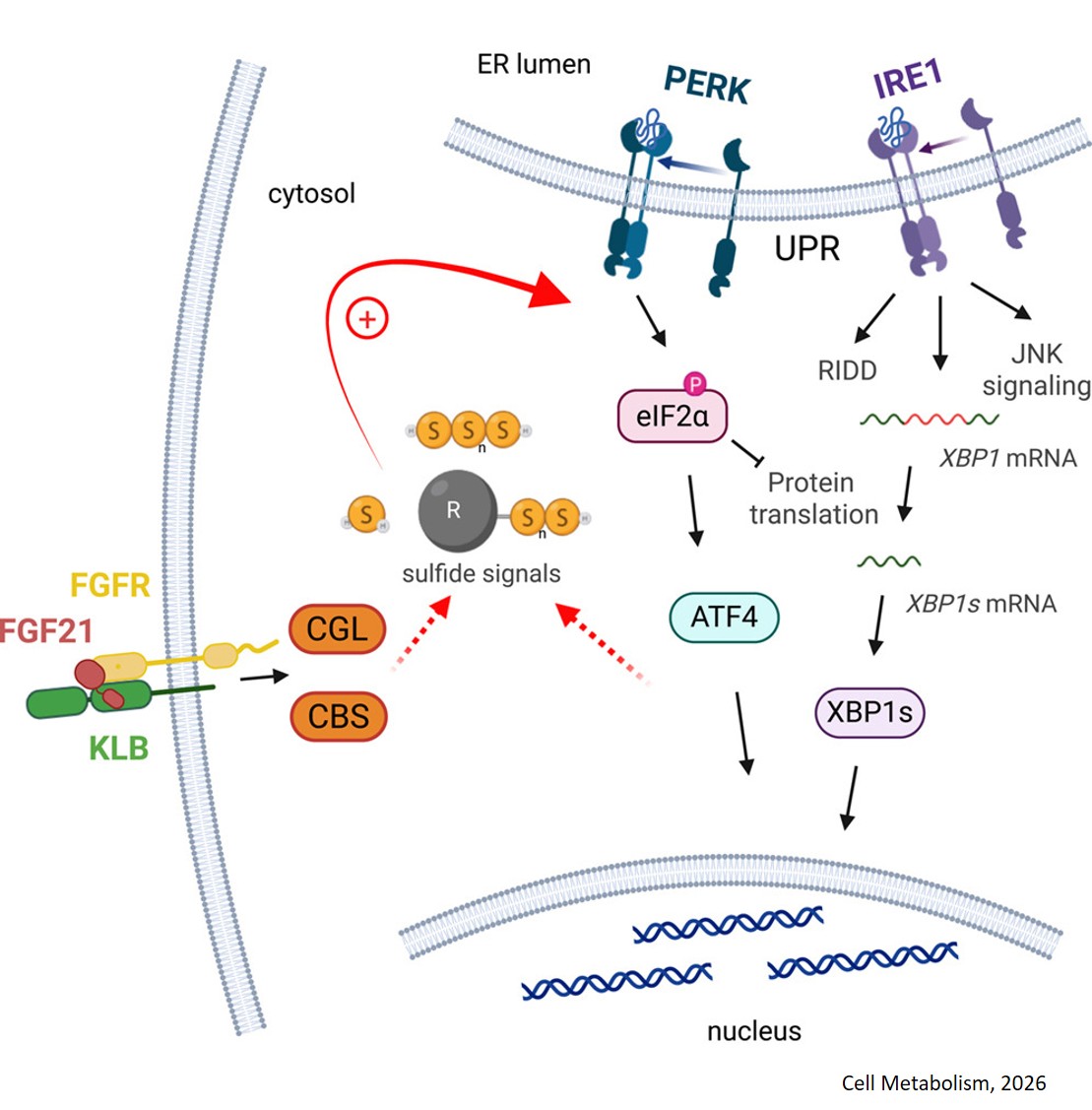
The authors in this study show that FGF21 , a metabolic regulator, acts as a vital component of the cellular protein quality control machinery.
FGF21 binds to its target receptor complex, β-klotho (KLB), on the cell surface.
The authors show that the activated KLB receptor sits in close spatial proximity to enzymes that generate sulfide signals. FGF21 signaling triggers an increase in the enzymatic production of cellular hydrogen sulfide (H₂S).
FGF21 and sulfide signaling do not trigger or initiate the UPR or ISR on their own, but, act as an "amplifier" or support system, dramatically strengthening the pre-existing response only when the cell experiences active protein-folding stress.
Blocking sulfide signals results in the inability of FGF21 to support the stress response and Injecting an H₂S donor molecule into mice perfectly mimicked the protective effects of FGF21.
Thus, FGF21 promotes metabolic adaptation, stress resilience, and healthy aging.
https://www.cell.com/cell-metabolism/fulltext/S1550-4131(26)00221-4