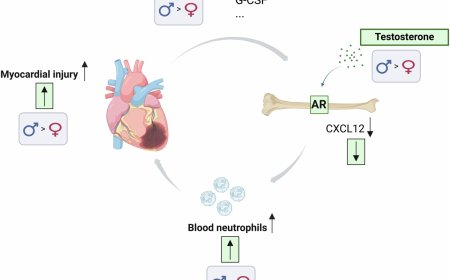


Hypothalamus-heart-tumor axis in environmental eustress protection against cardiotoxicity and tumor growth
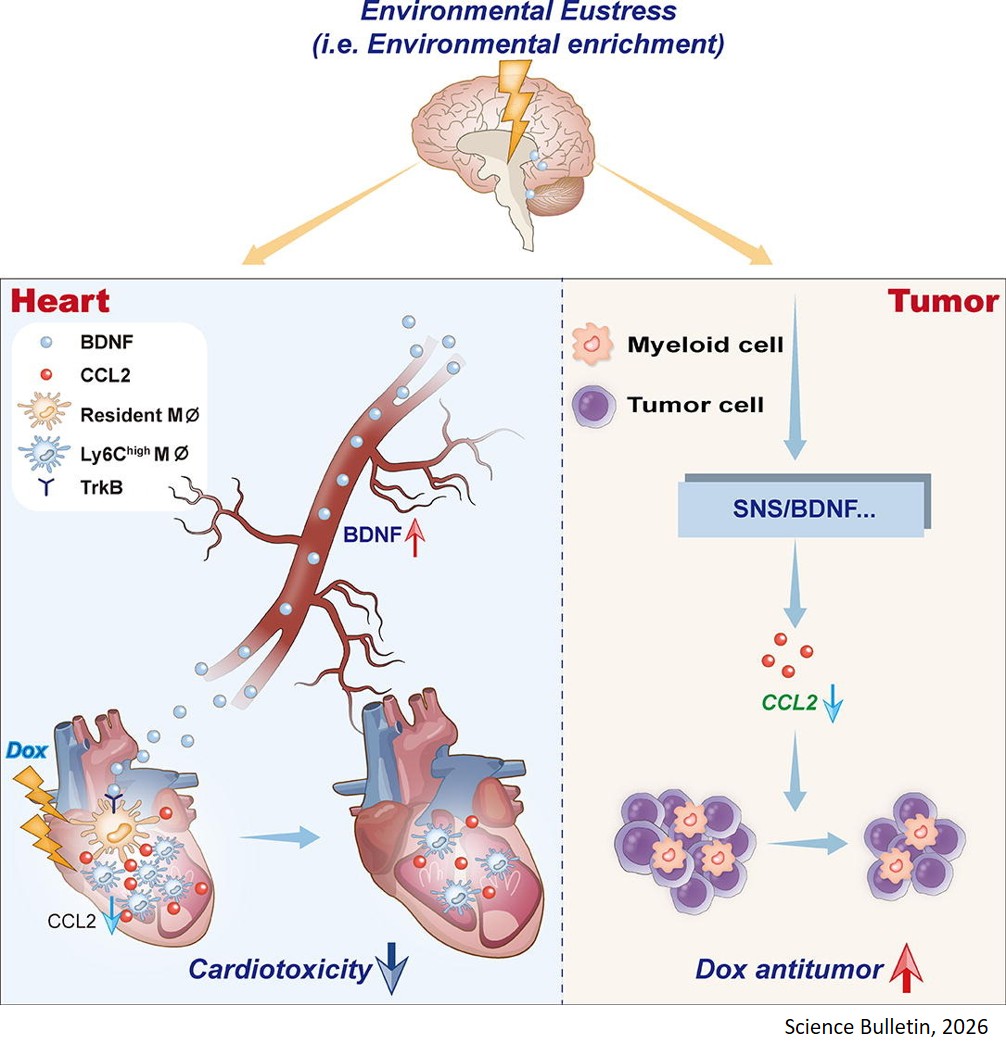
Recently, a research team published a paper in Science Bulletin to study the clinical challenge of doxorubicin-induced cardiotoxicity and explores the potential of eustress as a non-pharmacological intervention that simultaneously alleviates cardiac damage and enhances anti-tumor efficacy.
Doxorubicin is a widely used chemotherapeutic agent for various malignancies, but its dose-dependent cardiotoxicity severely limits its clinical application and compromises patients' long-term survival and quality of life. Effective interventions for chemotherapy-related cardiotoxicity remain scarce, highlighting the urgent need for non-invasive, low-toxicity strategies in the field of cardio-oncology.
Psychological and emotional factors are key environmental variables that regulate physiological and pathological processes. While distress has been established as a risk factor for cardiovascular disease and tumor progression, the therapeutic potential of eustress remains largely unexplored.
The enriched environment (EE) model serves as a classic experimental paradigm for studying eustress. Previous studies have shown its protective effects in myocardial infarction and stroke, yet its role and mechanism in the context of chemotherapy-induced cardiotoxicity combined with tumor progression remain unclear.
The study found that immune-inflammatory pathways represent the core biological process regulated by EE in doxorubicin-induced cardiac injury. Specifically, EE selectively reduced the cardiac infiltration of pro-inflammatory Ly6Chigh monocytes/macrophages. Mechanistic investigations identified the chemokine Ccl2 as a key effector molecule underlying EE-mediated cardioprotection.
EE intervention significantly downregulated Ccl2 expression in cardiac tissue. In Ccl2 knockout mice, the protective effects of EE against doxorubicin-induced myocardial injury and its inhibitory effect on Ly6Chigh macrophage infiltration were markedly diminished.
Further validation indicated that EE-mediated regulation of Ccl2 involves hypothalamic BDNF signaling, as disruption of hypothalamic BDNF expression reversed both Ccl2 downregulation and cardioprotection induced by EE.
Through multidimensional functional validation experiments, the team demonstrated that in the EE group, cardiac Ccl2 expression was significantly reduced, Ly6Chigh macrophage infiltration decreased, and myocardial inflammatory injury was substantially alleviated.
In tumor-bearing mouse models, EE not only attenuated cardiac damage but also significantly enhanced the anti-tumor efficacy of chemotherapy. The underlying tumor-regulatory mechanism involved Ccl2 downregulation in the tumor microenvironment, which reduced the infiltration of immunosuppressive G-MDSCs and M2-type tumor-associated macrophages, while increasing the proportion of cytotoxic CD8⁺ T cells and anti-tumor M1-type macrophages, thereby remodeling the tumor immune microenvironment to enhance chemotherapy response.
This study proposes for the first time the concept of a "hypothalamus-heart-tumor axis," systematically revealing the dual effects of eustress—cardioprotection and chemotherapy sensitization—in the setting of chemotherapy-induced cardiotoxicity coexisting with tumors. It establishes Ccl2 as a core intervention target in cardio-oncology.
These findings not only expand the understanding of psychological and emotional factors in disease regulation but also provide a safe, accessible, non-pharmacological intervention strategy for managing chemotherapy-related cardiotoxicity in cancer patients, with significant theoretical implications and translational potential.
https://www.sciencedirect.com/science/article/abs/pii/S2095927326007206