

Peripheral inflammaging drives neurodegeneration
A study published in Cell Reports fundamentally shifts the understanding of neurodegeneration, proving that neurological decline can be initiated by cellular aging defects located entirely outside the central nervous system.
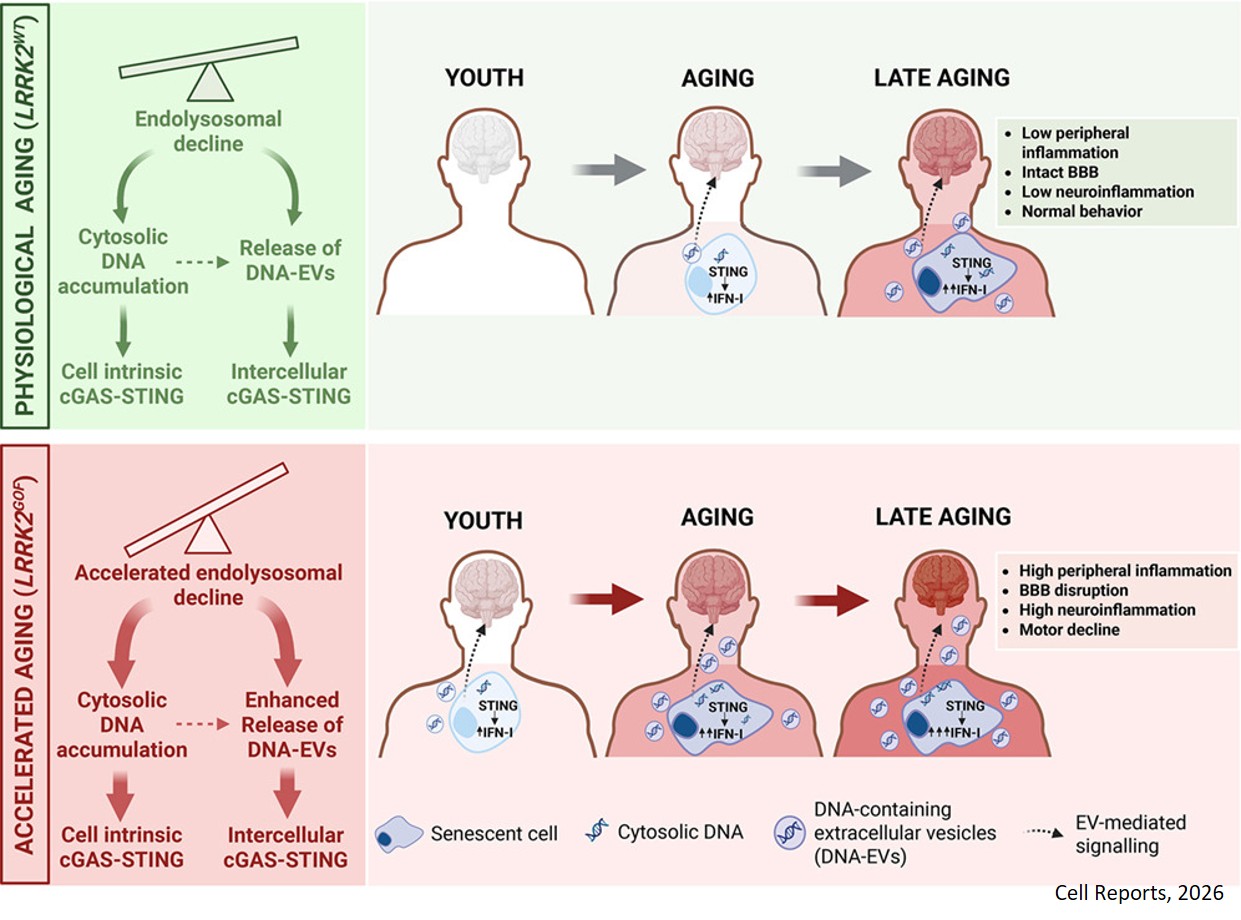
Using human patients and mouse models, the research team mapped how a genetic risk factor for Parkinson's disease—the LRRK2 gain-of-function mutation—forces cells to mimic advanced chronological aging.
Both natural aging and the LRRK2{GoF} mutation trigger a breakdown in the cell's waste-disposal machinery (the endolysosomal syste) resulting in escape of damaged self-DNA from degradation and builds up inappropriately in the cell's cytoplasm.
Peripheral cells packages this misplaced self-DNA into tiny, membrane-bound cargo carriers called extracellular vesicles (EVs) and shed them into circulation.
These DNA-stuffed EVs travel through the body, where they are taken up by neighboring and distant host cells. The introduction of foreign cytosolic DNA activates the cGAS-STING pathway, unleashing a massive type 1 interferon (IFN-I) inflammatory response.
Chronic low-grade inflammation begins entirely in the body's periphery, long before any neurological symptoms show up. Over time, this systemic STING-driven inflammation degrades and compromises the integrity of the blood-brain barrier.
Once the BBB is breached, inflammatory EVs flood the brain, prompting localized neuroinflammation that specifically kills off dopaminergic neurons, leading to the motor deficits characteristic of Parkinson’s disease.
https://www.cell.com/cell-reports/fulltext/S2211-1247(26)00718-7
https://sciencemission.com/STING-dependent-peripheral-inflammaging